



Blog

All Hammond Chevrolet Dealer Ross Downing Chevrolet Hammond Chevrolet Service Chevy Silverado 1500
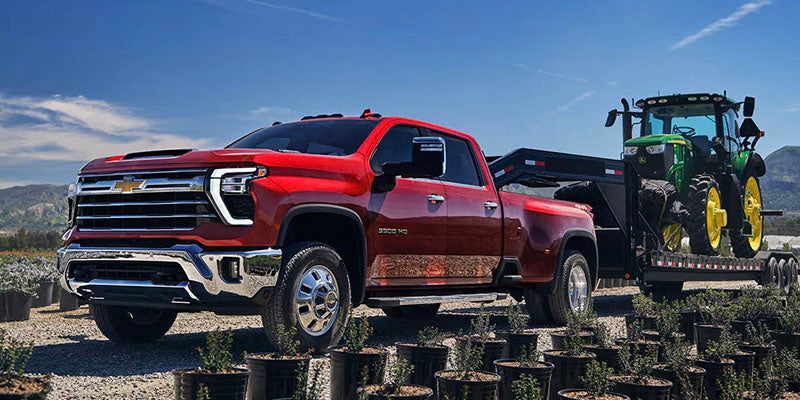
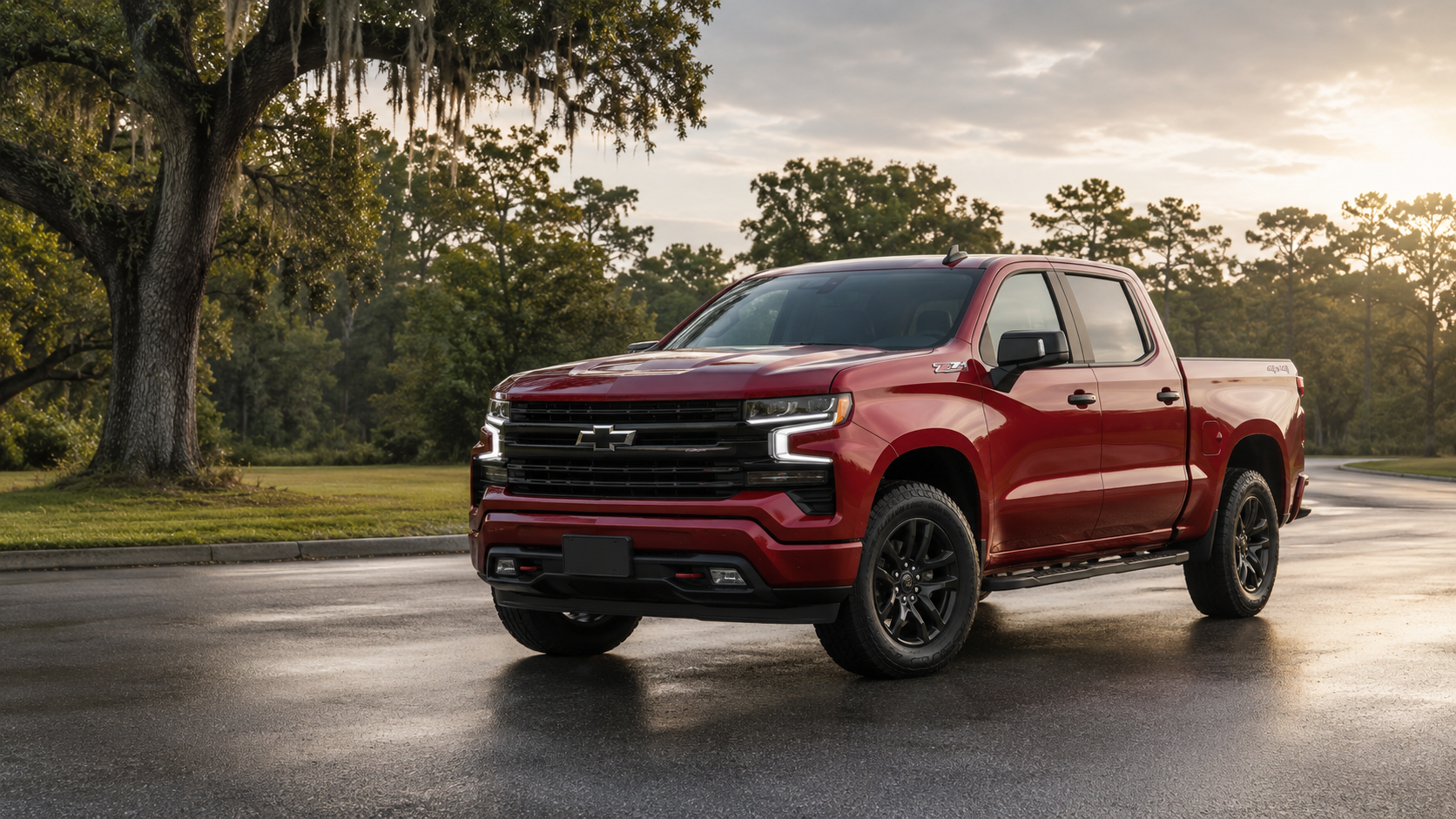
Red 2026 Chevrolet Silverado 1500 on a road in Southeast Louisiana
in Chevy Silverado 1500

2026 Chevrolet Silverado 1500 Buyer’s Guide for Southeast Louisiana

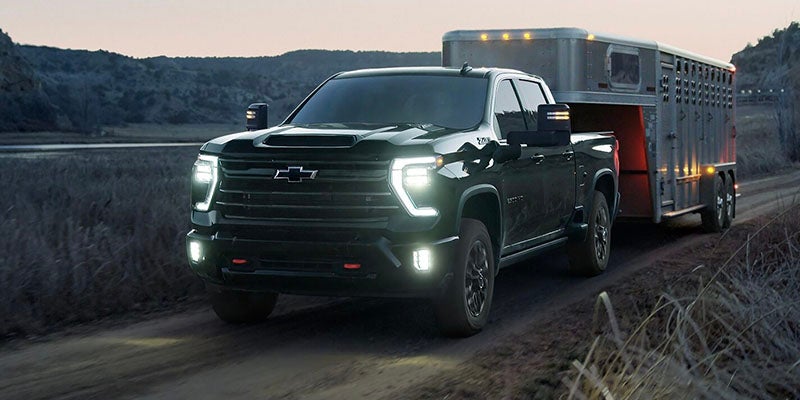
The 2026 Chevrolet Silverado 1500 is a full-size light-duty pickup offering four engines, nine trim levels, available four-wheel drive and up to 13,300 pounds of trailering capability when properly configured. For Southeast Louisiana buyers, the right Silverado depends on how the truck will be used: commuting, job-site work, towing a boat or camper, navigating rural property or serving as an everyday family vehicle. Ross Downing Chevrolet created this guide to help truck shoppers throughout Hammond, Ponchatoula, Covington, Mandeville, Denham Springs, Baton Rouge and the surrounding communities compare the 2026 Silverado 1500 lineup. 2026 Silverado 1500: Quick Facts Specification 2026 Chevrolet Silverado 1500 Available engines Four Maximum available trailering 13,300 pounds Maximum available payload 2,260 pounds Maximum available torque 495 lb.-ft. Best available highway fuel economy EPA-estimated 28 mpg Available camera views Up to 14 Available center touchscreen 13.4 inches Available Driver Information Center 12.3 inches Available drivetrain Two-wheel drive or four-wheel drive Trailering, payload and fuel-economy figures vary by engine, cab, bed, drivetrain, axle ratio and installed equipment. Always verify the ratings of the specific truck before purchasing. Which 2026 Silverado 1500 Engine Is Best? The 2026 Silverado 1500 offers four engine choices. Each one fits a different type of Louisiana truck buyer. TurboMax 2.7L Turbocharged Engine The TurboMax engine produces 310 horsepower and 430 lb.-ft. of torque and is paired with an eight-speed automatic transmission. This engine is a strong fit for buyers who want responsive low-end torque without automatically moving into a V8. It is standard on several popular trims, including WT, Custom, LT and RST. Best suited for: Daily driving, general truck use, contractors, utility trailers and buyers focused on value. 5.3L EcoTec3 V8 The available 5.3L EcoTec3 V8 produces 355 horsepower and 383 lb.-ft. of torque through a 10-speed automatic transmission. It offers the familiar power delivery many longtime truck owners expect from a Chevrolet V8 while remaining versatile enough for commuting, hauling and recreational towing. Best suited for: Drivers wanting traditional V8 performance and balanced everyday capability. 6.2L EcoTec3 V8 The available 6.2L EcoTec3 V8 produces 420 horsepower and 460 lb.-ft. of torque. It is also paired with a 10-speed automatic transmission. This is the most powerful gasoline engine available in the Silverado 1500. It is offered on select configurations of the RST, LT Trail Boss, LTZ, High Country and ZR2. Best suited for: Buyers prioritizing strong acceleration, gasoline-powered towing and premium or off-road configurations. Duramax 3.0L Turbo-Diesel The available Duramax 3.0L Turbo-Diesel produces 305 horsepower and a lineup-leading 495 lb.-ft. of torque. Chevrolet lists an available maximum trailering capacity of 13,300 pounds and an EPA-estimated highway rating of up to 28 mpg. For Southeast Louisiana drivers who regularly tow boats, campers or equipment—or spend significant time traveling I-12, I-55 and other highways—the Duramax can provide an appealing combination of torque, range and towing capability. Best suited for: Regular towing, longer highway trips and buyers who value diesel torque and fuel range. How Much Can the 2026 Silverado 1500 Tow? A properly equipped 2026 Chevrolet Silverado 1500 can tow up to 13,300 pounds. Chevrolet identifies this maximum with a specific Double Cab, Standard Bed and Duramax Turbo-Diesel configuration. That does not mean every Silverado can tow 13,300 pounds. The exact rating depends on: Engine Cab and bed configuration Two-wheel drive or four-wheel drive Axle ratio Trailering equipment Passenger and cargo weight The individual truck’s Gross Combined Weight Rating Louisiana buyers towing bay boats, bass boats, campers, enclosed trailers or work equipment should compare the trailer’s fully loaded weight—not simply its advertised empty weight—to the rating of the specific Silverado. The truck’s payload rating also matters because passengers, equipment in the bed and trailer tongue weight all count against available payload. Which Silverado Trim Is Right for You? Silverado WT The Work Truck emphasizes essential capability, durable materials and practical equipment. It is a logical starting point for commercial users, fleets and buyers who want a straightforward truck. Silverado Custom The Custom adds more exterior style and everyday convenience while maintaining a value-focused position in the lineup. Standard equipment includes the TurboMax engine, 20-inch wheels and a Trailering Package. Custom Trail Boss The Custom Trail Boss adds a two-inch factory suspension lift, Z71 Off-Road equipment, skid plates, an automatic locking rear differential and an Autotrac two-speed transfer case. It may appeal to drivers who regularly travel muddy job sites, hunting property, camps or unimproved roads. Silverado LT The LT is one of the strongest all-around choices for an everyday truck. It introduces the available 13.4-inch touchscreen and 12.3-inch Driver Information Center while retaining a broad selection of engines and configurations. Silverado RST The RST combines Silverado capability with a sportier, street-oriented appearance. Body-color exterior elements and available black wheels give it a cleaner look without sacrificing access to all four engine options. LT Trail Boss The LT Trail Boss combines the LT’s interior technology with the factory lift and Z71 hardware of the Trail Boss platform. It is a good middle ground for drivers who want an off-road-ready truck without giving up the larger digital displays. Silverado LTZ The LTZ adds leather-appointed seating, expanded camera technology and additional driver-assistance features. It is well suited to buyers who tow or travel frequently and want a more premium cabin. Silverado High Country High Country is the luxury-focused Silverado 1500. Available features include Super Cruise driver assistance with trailering capability on compatible roads, premium leather and up to 14 available camera views. Silverado ZR2 The ZR2 is the lineup’s most specialized off-road model. It includes Multimatic DSSV dampers, front and rear electronic locking differentials, 33-inch mud-terrain tires and substantial underbody protection. Is the Silverado 1500 a Good Truck for Southeast Louisiana? The Silverado 1500 fits many of the ways trucks are actually used in Southeast Louisiana. Available four-wheel drive can provide additional traction on loose boat ramps, wet job sites, gravel roads and rural property. The available Multi-Flex Tailgate offers six configurations for loading, unloading and accessing the bed, while the Durabed includes 12 standard tie-downs. Buyers who spend most of their time commuting between Hammond, Covington, Baton Rouge and the New Orleans area may prefer the comfort and technology of an LT, RST or LTZ. Drivers towing frequently may benefit from the Duramax engine and available trailering technology. Customers traveling to camps, hunting property or rough job sites may prefer a Trail Boss or ZR2. Four-wheel drive can improve traction, but it does not eliminate the need to slow down on wet roads or increase a truck’s braking capability. Silverado Technology and Trailering Features Available technology includes: 13.4-inch center touchscreen 12.3-inch Driver Information Center Wireless Apple CarPlay and Android Auto compatibility Google built-in compatibility Up to 14 available camera views In-Vehicle Trailering App Trailer Side Blind Zone Alert Custom trailer profiles Pre-departure trailering checklists Available Super Cruise on High Country The available camera system can be particularly helpful when connecting a trailer, maneuvering around a crowded boat launch or parking a full-size truck in tighter spaces. Frequently Asked Questions What is the maximum towing capacity of the 2026 Chevrolet Silverado 1500? The 2026 Silverado 1500 can tow up to 13,300 pounds when properly equipped. Actual capacity depends on the truck’s engine, cab, bed, drivetrain and trailering equipment. Which 2026 Silverado engine has the most torque? The Duramax 3.0L Turbo-Diesel has the most available torque at 495 lb.-ft. Which Silverado engine has the most horsepower? The 6.2L EcoTec3 V8 produces the most horsepower at 420. Which 2026 Silverado gets the best highway fuel economy? Chevrolet lists an EPA-estimated rating of up to 28 mpg highway for properly configured Silverado models with the Duramax 3.0L Turbo-Diesel. Does the 2026 Silverado 1500 offer four-wheel drive? Yes. Four-wheel drive is available across much of the Silverado 1500 lineup and standard on certain off-road-oriented configurations. Which Silverado trims have a factory lift? The Custom Trail Boss and LT Trail Boss include a two-inch factory suspension lift. The ZR2 also features a two-inch lift along with more specialized off-road hardware. Which Silverado trim offers Super Cruise? Super Cruise is available on the 2026 Silverado High Country. When properly equipped, the system can provide hands-free driver assistance while trailering on compatible roads. Super Cruise is a driver-assistance technology and does not replace attentive driving. Where can I find a 2026 Chevrolet Silverado 1500 near Hammond, Louisiana? Ross Downing Chevrolet offers new Silverado 1500 trucks at 600 South Morrison Boulevard in Hammond, Louisiana. Shoppers can browse current Silverado 1500 inventory, compare available configurations and schedule a test drive. Find Your 2026 Silverado 1500 at Ross Downing Chevrolet A Silverado that works well for a daily commuter may not be the right truck for someone towing a heavy camper or hauling equipment every week. Engine, drivetrain, cab, bed and trailering equipment should be evaluated together. The team at Ross Downing Chevrolet can help you compare available 2026 Silverado 1500 trucks based on how you intend to use the vehicle—not simply the trim badge on the door. Explore the 2026 Chevrolet Silverado 1500, search current inventory or visit Ross Downing Chevrolet at 600 South Morrison Boulevard in Hammond. Vehicle specifications were verified in September 2026 using Chevrolet's official 2026 Silverado 1500 information. Features, specifications, ratings, fuel economy, trailering capacity, equipment and availability vary by configuration and are subject to change. EPA-estimated fuel economy; actual mileage will vary. Always confirm specifications, equipment and ratings for the individual vehicle before purchase. using Chevrolet’s official 2026 Silverado 1500 information. Features, ratings, availability and incentives may change.

Read More
Chevy Maintenance Schedule for Brake Service in Louisiana

Chevy Maintenance Schedule for Brake Service in Louisiana

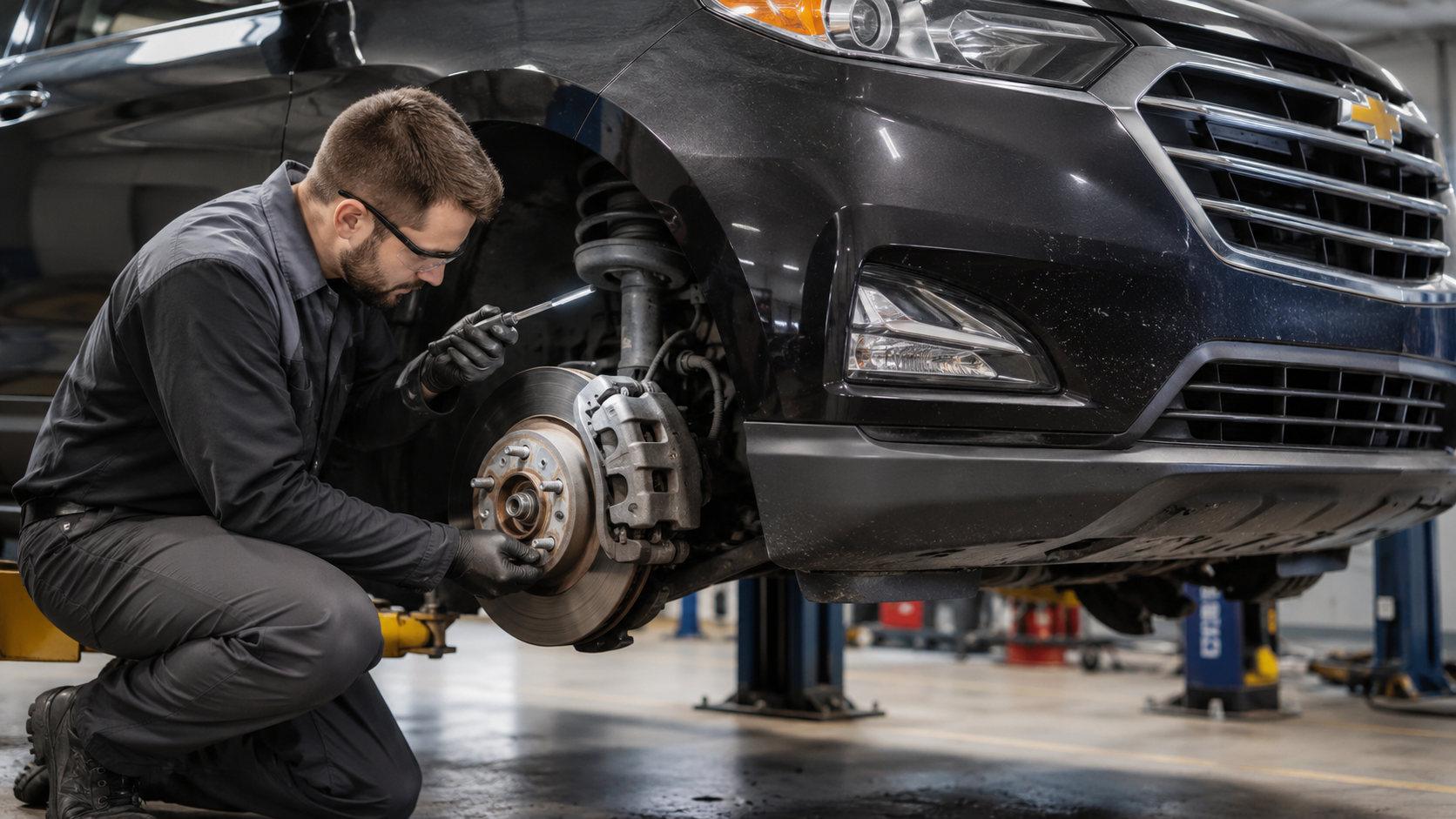
Chevy maintenance schedule planning for brake service starts with inspection results, mileage, and changes you notice while stopping. In addition, brake wear does not follow one fixed replacement number for every Chevrolet. Pad thickness, rotor state, pedal feel, noise, and warning lights all provide useful service clues. Therefore, routine checks matter even when the vehicle still stops normally. A brake inspection gives you a clearer view of wear before a small concern turns into a larger repair. When Should Chevy Brakes Be Inspected? Brake inspection timing depends on wear, mileage, and the way the vehicle is used. Chevrolet does not publish one universal brake replacement interval for every model. Instead, inspection findings show whether pads, rotors, fluid, or related parts need attention. Therefore, scheduled maintenance visits are a good time to check brake components. Mileage still works as a planning reminder. However, it should not replace a physical inspection. Still, two Chevrolets with similar mileage can show very different pad thickness. Stop and go traffic, frequent towing, hills, and repeated hard stops can increase brake wear. For this reason, ask about pad thickness and rotor state during routine service. A technician can also check hoses, lines, calipers, and fluid. That gives you a clearer view than mileage alone. In addition, your owner information can provide model specific service guidance. What Squealing and Grinding Can Mean Brake noise can point to contact between worn friction parts and the rotor surface. Some Chevrolet brake pads use metal wear indicators that touch the rotor as pad material becomes thin. That contact can create chirping, squealing, or whistling. Therefore, repeated noise during normal stops deserves an inspection. Grinding needs faster attention. It can indicate severe pad wear or contact that should not continue. In addition, damaged hardware or rotor concerns can create harsh sounds. The exact cause requires inspection, but the sound should not be ignored. Before scheduling service, note when the noise occurs: Listen for noise during light stops, firm stops, or both. Notice whether the sound comes from one wheel area or several. Pay attention to grinding, squealing, chirping, or metal scraping sounds. Therefore, these details give the technician a clearer starting point. They also separate a brief surface noise from a repeated braking concern. What Brake Pedal Changes Can Tell You Pedal feel can reveal changes that are not visible from outside the vehicle. A pulsing pedal during ordinary stops may point toward rotor or hardware concerns. However, pedal pulsation during ABS operation can be normal. The timing of the sensation matters. A low or sinking pedal deserves attention as well. Hydraulic pressure moves through brake fluid, hoses, lines, and calipers. A change in pedal travel can point toward a fluid or hydraulic concern. Therefore, unusual softness or extra travel should be checked. Pulling during braking can also signal uneven braking force. In addition, longer stopping distance can point toward worn friction parts or another brake concern. If the vehicle no longer stops the way it usually does, schedule an inspection promptly. How the Brake Pad Life Monitor Works Some Chevrolet vehicles use a Brake Pad Life Monitor. The display estimates remaining pad life through sensor data and vehicle information. Therefore, the percentage gives owners another service planning tool. However, the monitor does not inspect every brake component. It does not physically check rotor wear, fluid leaks, hose damage, or caliper movement. For this reason, the display should work alongside regular brake inspections. If the percentage drops low, review the message with a Chevrolet service technician. In addition, pay attention to noise, pedal changes, and warning lights even when the display shows remaining pad life. A physical inspection can identify concerns outside the monitor's scope. What Happens During Chevy Brake Service? A brake inspection checks friction parts, hydraulic parts, and related hardware. The technician starts by examining components that create and control braking force. That includes pads, rotors, calipers, hoses, lines, and brake fluid. During the inspection, the technician may: Measure brake pad thickness and inspect the friction material. Examine rotors for wear, scoring, cracking, or surface damage. Check calipers, hoses, lines, and nearby parts for leaks or damage. Still, the inspection does not automatically mean every brake part needs replacement. Instead, the findings show which components still have usable life. They also identify parts that need service now. Therefore, you can review the inspection results before approving repairs. When Brake Symptoms Need Faster Attention Some brake concerns should move ahead of routine maintenance planning. A persistent brake warning light deserves prompt attention. Chevrolet notes that the light can point to a brake concern or low brake fluid. Therefore, do not wait for the next scheduled visit if the light stays on. Grinding, reduced stopping force, a very low pedal, or a sinking pedal also deserve faster service. In addition, sudden changes in braking should be treated differently from gradual wear. If stopping feels unsafe, move the vehicle to a safe place and arrange service. A clear description of the symptom gives the service team useful information. Note when it started, when it occurs, and whether the problem changes with speed. Ross Downing Chevrolet in Hammond can inspect the brake components and explain what the findings mean. That makes the next service decision easier to understand.
Chevy Equinox Features for a Family of Four in Louisiana

Chevy Equinox Features for a Family of Four in Louisiana

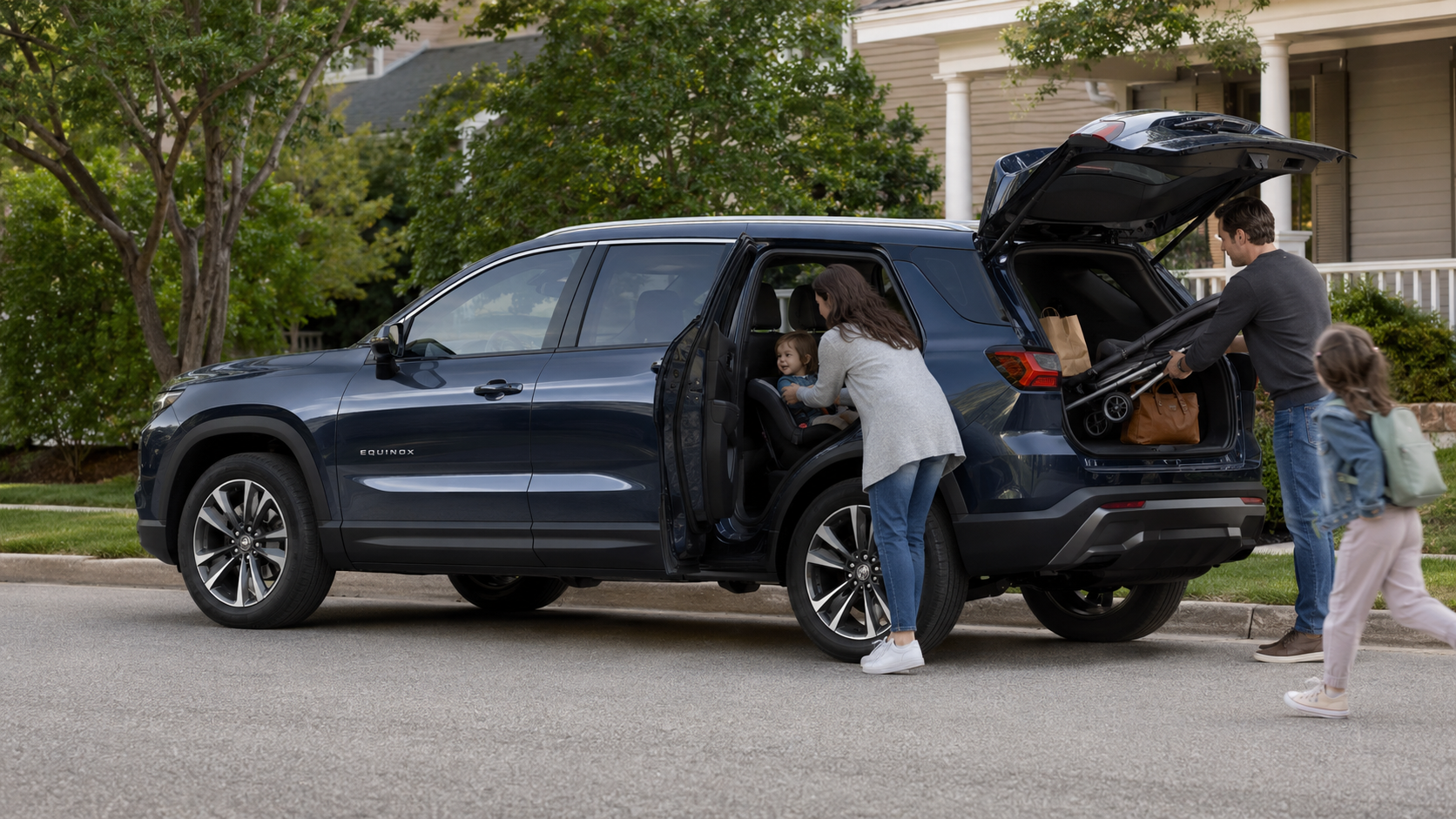
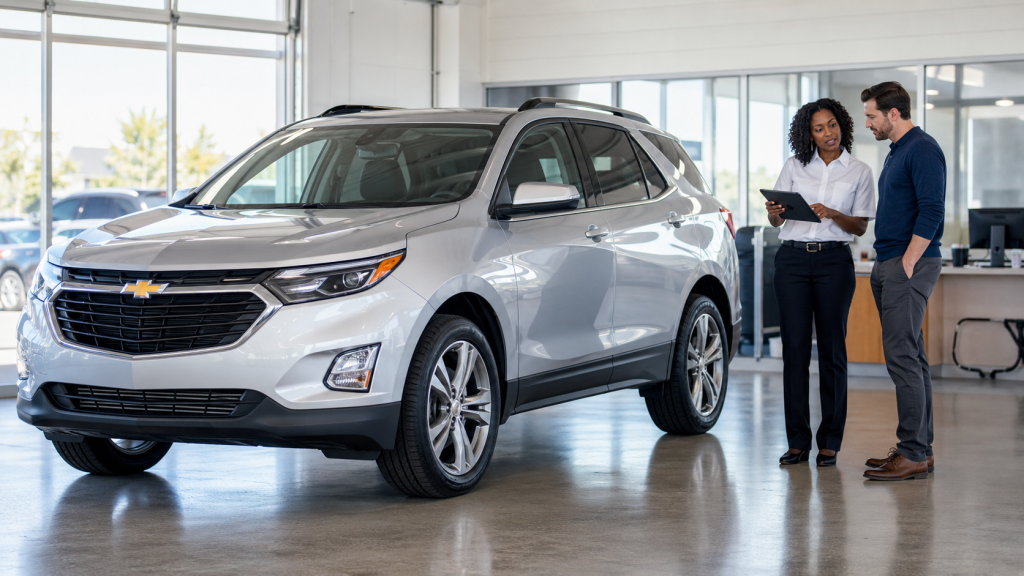
Chevy Equinox features can support a family of four when rear seat room, car seat access, and cargo space matter. In addition, family fit depends on how those areas work together during normal errands and longer trips. Two children may need car seats, backpacks, snacks, and room to grow. Therefore, rear seating must work with cargo space instead of competing with it. The Equinox gives families a five passenger cabin with useful second row room and flexible storage. Is the Chevy Equinox Big Enough for a Family of Four? Family fit means four people can sit comfortably while the cabin still carries the gear they need. The Equinox provides 39.9 inches of rear legroom and 39.2 inches of rear headroom. Therefore, children have room to sit behind adults without forcing the front seats unusually far forward. That space also gives older children more room as they grow. Rear legroom matters because child restraints use some of the same front to back space. A rear facing seat can extend toward the front seat. By contrast, boosters and forward facing seats use the bench differently. For this reason, families should test their own restraints before deciding whether the space works. In addition, the Equinox seats five people. A family of four can place two children across the second row while both front seats remain available. That layout leaves the center rear position open for small items or occasional use. Still, restraint width can change how much usable room remains between the two seats. Can Two Car Seats Fit in the Chevy Equinox? The Equinox second row provides two lower anchor positions for compatible child restraints. It also provides three top tether anchors for forward facing seats. Therefore, two child seats can use dedicated lower anchor locations without sharing one anchor point. Cars.com found room for two child restraints in its 2025 Equinox test. In addition, the lower anchors earned strong marks for access. That matters because easier access can reduce awkward reaching during installation. However, families should still follow the child restraint maker and vehicle instructions for each seat. Different restraint types change how the second row feels. Rear facing seats need more front to back clearance. Forward facing seats need a top tether connection. Boosters depend more on belt access and seat contour. Therefore, your current restraint type should guide the test fit. Before making a decision, check these points: Install both child restraints in the positions you expect to use every day. Confirm the front seats stay comfortable after the restraints are secured. Check buckle access, door opening space, and room around each child seat. Cargo Space With All Four Seats Occupied The Equinox provides about 29.8 cubic feet behind the second row. That means the cargo area remains usable while four people keep their seats. Therefore, families can load groceries, a stroller, backpacks, or sports equipment without folding the rear bench. Why does seats up cargo space matter? Families usually carry people and gear at the same time. Maximum cargo figures can look impressive, but they assume rear seating is no longer needed. In addition, daily errands rarely allow parents to fold the entire second row. The cargo floor also includes hidden storage beneath it. That area can hold smaller items away from larger bags. Items such as reusable bags, emergency supplies, cleaning supplies, or charging cables can stay separated. Furthermore, an available AutoSense power liftgate can make loading easier when both hands are full. Still, cargo shape matters as much as volume. A folded stroller may take more floor length than grocery bags. Likewise, sports equipment may stack differently than luggage. Therefore, families should bring the largest item they carry regularly when they test the cargo area. Folding the Rear Seat for Larger Loads A 60/40 split rear bench lets one section fold while the other remains upright. That gives families a way to carry longer items without giving up the entire second row. Therefore, one child can remain seated while part of the bench opens into the cargo area. With the rear seating folded, the Equinox provides up to 63.5 cubic feet of cargo room. That extra space can support larger household items or trip gear. However, the split design may matter more during routine family use than the maximum figure. A parent might fold the smaller section for a long box while keeping two seating positions available. Another family may fold the larger section while one child rides in back. In addition, the hidden floor compartment remains useful for smaller items that should stay separate. This arrangement gives the cabin more ways to handle changing loads. Instead of choosing between all passenger space or all cargo space, families can mix the two. Therefore, the split bench becomes useful when weekend errands look different from weekday routines. Know Where the Family Fit Has Limits The Equinox works well for two child restraints, but three across may not fit every restraint combination. Cars.com did not find room for three car seats across its test vehicle. Therefore, households expecting three child restraints should test carefully before choosing the Equinox. Why does this limit matter for a family of four? It may not matter today, but future seating plans can change. A growing household may later need another restraint, an adult passenger, or more rear seat width. For this reason, families should think beyond the current school year or current restraint stage. In addition, a five passenger rating does not mean every seating combination will feel equally roomy. Child restraints differ in width, shell shape, and belt path. Two narrow boosters may leave more center space than two wide convertible seats. Therefore, the most useful test is the one using your own family gear. A larger three row SUV may make more sense when you need extra seating positions or wider rear seat options. The Equinox remains a strong fit for many four person households because its cabin and cargo area work together well. Put the Space Together for Your Family The Chevy Equinox features that matter most for a family of four are easy to evaluate in person. Rear seat room, car seat placement, cargo space, and split folding all shape the final decision. Therefore, bring the items that define your normal week when you test the SUV. A useful family fit check includes: Bring both child restraints and install them in the second row. Load the stroller, sports bag, or largest item you carry regularly. Sit in every occupied seat and check entry, buckle access, and cargo reach. That test shows whether the Equinox fits your household without relying only on measurements. Ross Downing Chevrolet in Hammond offers in person reviews of seating, cargo room, and family fit. The right choice should support the people and gear you carry most.

Silverado 1500 vs F150 Comparison for Louisiana Drivers

Silverado 1500 vs F150 Comparison for Louisiana Drivers

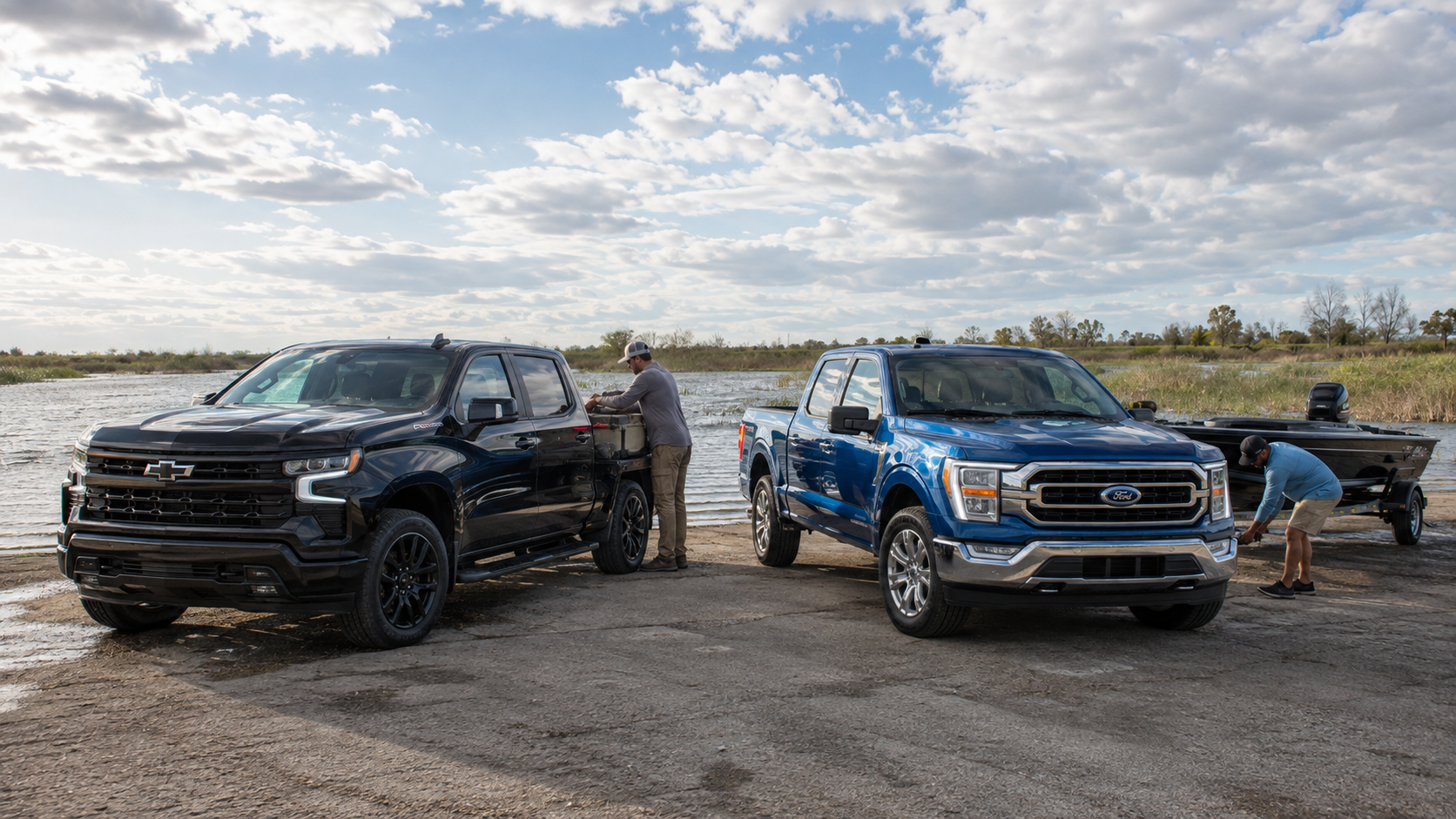
Silverado 1500 vs F150 comparisons make more sense when you match each truck to the jobs you expect. In addition, Louisiana truck owners may tow boats, utility trailers, campers, or equipment across the same week. Therefore, headline ratings alone do not tell the whole story. Furthermore, engine choice, cab layout, bed length, drivetrain, and trailering equipment all change what each truck can handle. The strongest comparison starts with the exact setup you plan to buy. Does the F150 Tow More Than the Silverado 1500? Maximum towing is a setup specific rating, not a number that applies to every truck. Still, Ford lists a higher maximum figure for the F150. Chevrolet lists a slightly lower maximum for the Silverado 1500. However, that small gap only applies to trucks equipped to reach those published limits. With that in mind, ask one question first. Will the truck on the lot match the setup behind the maximum number? The answer requires checking engine, cab, bed, drivetrain, axle equipment, and trailering packages. Therefore, two trucks wearing the same badge can carry very different tow ratings. Moreover, the Silverado 1500 can reach 13,300 pounds in an approved setup. Ford lists up to 13,500 pounds for the F150 with specific equipment. That 200 pound difference sounds simple, yet it does not settle the comparison by itself. Instead, compare the exact trucks you are considering against the trailer you plan to pull. Towing and Payload Measure Different Loads In addition, towing measures the trailer weight the truck can pull. Payload measures weight carried by the truck itself. That includes passengers, cargo, installed equipment, and trailer tongue weight. Therefore, both numbers deserve attention before you connect a trailer. Should towing or payload matter more for your setup? You need both, because a trailer can stay within one limit while pushing another too far. Tongue weight transfers part of the trailer load onto the truck. In addition, people and cargo inside the cab or bed also count toward payload. Consequently, setup checks matter more than a single maximum figure. A crew cab with passengers, tools, and towing gear may have less remaining payload than an empty truck. Likewise, a heavier trailer can add more tongue weight to the rear axle. For this reason, compare the truck's door label and trailering information with the loaded trailer you expect to use. Compare Diesel, Turbo Gas, V8, and Hybrid Choices Furthermore, engine choice changes how the Silverado 1500 vs F150 comparison feels under load. Chevrolet offers TurboMax, two V8 choices, and the 3.0L Duramax diesel. Ford offers turbocharged V6 choices, a V8, and the PowerBoost full hybrid. Each layout reaches torque through a different mechanical path. For this reason, the Duramax uses diesel combustion and turbocharging to produce strong low speed torque. That can suit owners who spend substantial time towing or covering longer highway distances. By contrast, Ford's EcoBoost engines use turbochargers with gasoline power to build strong torque from smaller displacement. Ford also offers PowerBoost hybrid assistance. Its electric motor works with the gasoline engine and can supply onboard electrical power. Chevrolet does not offer a full hybrid Silverado 1500 in the current lineup. Therefore, shoppers who specifically want hybrid propulsion will find that choice on the Ford side. Before choosing an engine, compare these points: Check torque output where you expect to use it, not only peak horsepower. Match engine selection to trailer weight, annual mileage, and fuel preference. Review drivetrain and trailering package requirements for the exact rating you need. Which Truck Gives You More Bed Space? Furthermore, cargo volume measures the usable three dimensional space inside the bed. Bed length only measures one part of that area. Chevrolet publishes 62.9 cubic feet for its short bed and 71.7 for its standard bed. Its long bed reaches 89.1 cubic feet. Why does that matter for tools, coolers, and outdoor gear? Wider and deeper bed dimensions can create more usable space even when floor lengths look similar. Therefore, bed volume deserves attention beside the length printed on a specification sheet. Moreover, Chevrolet's comparison data gives the Silverado larger published cargo volume across corresponding bed categories. That can matter for owners carrying bulky equipment or several storage bins. Still, usable space should match the items you carry most. A longer bed may suit lumber or equipment. By contrast, a shorter box can be easier to place in tighter parking areas. In addition, bed access and cargo organization should be part of the comparison. Tie downs, bed steps, tailgate features, covers, and storage accessories can change how useful the space feels. Compare those details on the exact trim and box length you plan to use. Compare Trailering Technology by Task In addition, trailering technology works best when you match each feature to a specific towing task. Some tools assist while hitching. Others support trailer monitoring, reversing, or highway travel. Therefore, a longer feature list does not automatically make one truck the stronger fit. Which towing technology would you use most? Start with the part of towing that gives you the most work. Ford offers tools such as Pro Trailer Hitch Assist and Pro Trailer Backup Assist on eligible F150 setups. Chevrolet offers camera based trailering tools and available Super Cruise with trailering on select Silverado setups. Hitching assistance focuses on aligning the truck with the coupler. Backup support focuses on trailer movement while reversing. Highway assistance serves a different purpose once the trailer is already connected. For this reason, compare technology by task instead of counting features. A boat owner who connects a trailer every weekend may value hitch positioning tools. Someone who spends long hours on compatible highways may care more about available highway assistance. In addition, owners who back trailers into campsites or driveways may value reversing support more. Compare Price Against the Truck You Need Still, starting price gives you a useful entry point, but it does not describe the truck you may buy. Engine choice, drivetrain, cab, bed, trim, trailering equipment, and technology can move the final price quickly. Therefore, the Silverado 1500 vs F150 decision should compare similar builds. Start by listing the equipment your truck must have. Then compare matching setups from both brands. This prevents a base truck from being compared against a heavily equipped alternative. A useful final checklist includes: Confirm the cab and bed layout you need for passengers and cargo. Verify towing and payload ratings for the exact setup. Compare engine, drivetrain, trailering equipment, and technology on similar builds. For Louisiana truck owners, the stronger choice should match the work, towing, cargo, and travel you expect. Ross Downing Chevrolet in Hammond can review Silverado 1500 setups against those needs. The goal is a truck that fits your trailer, cargo, and routine without relying on headline numbers alone.

Best Silverado Accessories for Louisiana Work and Play

Best Silverado Accessories for Louisiana Work and Play

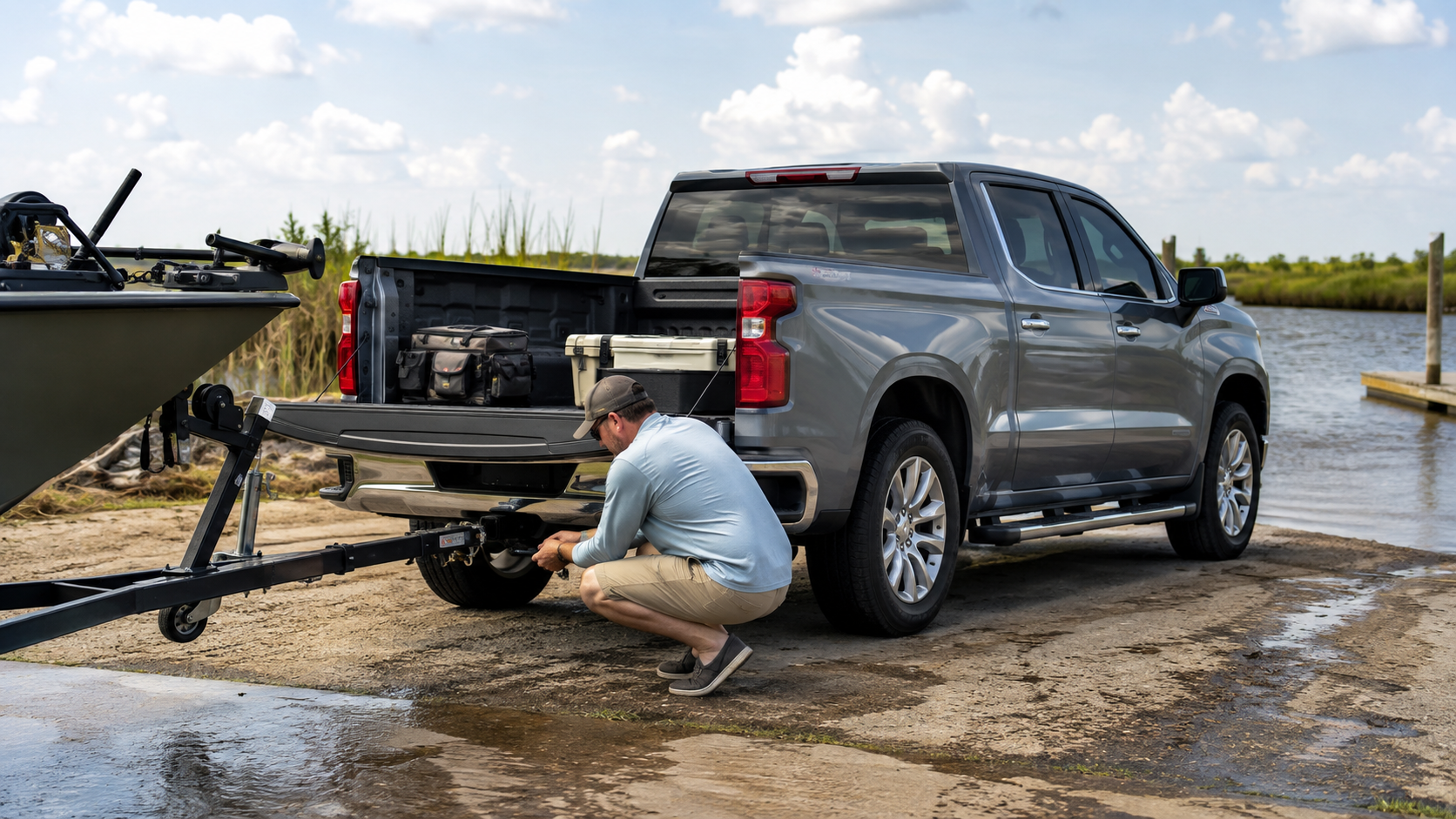
Best Silverado accessories for Louisiana work and play should fit how you use your truck. In addition, bed protection and towing hardware serve very different jobs. Therefore, the right setup starts with cargo, trailer type, and Chevrolet fitment. A Silverado used for jobsite tools may need different bed protection than one hauling weekend gear. Likewise, a fishing boat and utility trailer may call for different towing hardware. Knowing how each part works makes accessory planning much easier. Choose Silverado Bed Protection Around Your Cargo A truck bed liner protects painted metal from scratches, dents, abrasion, and direct cargo contact. However, each liner style handles those jobs differently. For this reason, the first question is simple: what will spend the most time in your Silverado bed? The answer should guide the material, coverage, and installation method you choose. Among the best Silverado accessories, bed protection earns attention because it takes direct contact from every load. A spray in liner bonds to prepared bed surfaces and follows the shape of the box. Because it stays fixed in place, there is no separate shell moving against the metal. Its textured surface can also reduce cargo sliding. Therefore, this style can suit trucks carrying tools, building material, coolers, or outdoor gear. By contrast, a molded liner uses a fitted barrier between cargo and the painted bed. It shields the floor, sidewalls, and wheel housings from direct impact. In addition, owners can remove many molded designs when they need access beneath the liner. Chevrolet offers Silverado liners matched to specific bed sizes, so verify box length before ordering. A bed mat takes a simpler approach. It covers the bed floor instead of surrounding the full box. That makes it useful for owners focused on floor grip, cushioning, and easier removal. However, exposed sidewalls still need care when cargo rests against them. Compare Spray In Liners, Molded Liners, and Bed Mats Which bed liner fits how you use your Silverado? A spray in liner creates bonded coverage, a molded liner adds a fitted shell, and a mat protects the floor. Each approach changes how cargo contacts the bed. In addition, the choice also changes cleaning and removal. Spray in material stays attached to the bed. Owners can lift out molded liners and mats when their construction permits. Therefore, owners who haul soil, mulch, wet equipment, or hunting gear should consider cleanup before choosing a style. Furthermore, surface grip deserves equal attention. Smooth cargo can slide during braking or cornering if the bed surface offers little friction. A textured liner or rubber mat can reduce that movement. Still, tiedowns remain the main way to secure cargo. Bed protection should never replace proper restraints. Before choosing a liner, consider these points: Choose full bed coverage when cargo regularly contacts the floor, sidewalls, or wheel housings. Choose floor focused protection when most loads stay low and sidewall contact is limited. Confirm the exact Silverado box length before ordering any fitted liner or mat. Beyond that, Louisiana truck owners may carry very different loads through the year. Work tools, fishing equipment, lawn gear, and camping supplies place different demands on the bed. Therefore, the best Silverado accessories should reflect the loads you expect to carry most. Pair Bed Protection With Other Silverado Accessories Bed protection is only one part of a complete cargo setup. The best Silverado accessories should also work together without blocking mounts or tiedowns. Tonneau covers, storage boxes, dividers, racks, lights, and tiedowns may share the same mounting areas. For this reason, accessory order deserves attention before installation begins. A liner can change access around factory holes, rails, or tiedown points. A storage box may also occupy space needed by a divider or cargo bar. Furthermore, some covers attach near the upper bed rails. Planning those pieces together reduces the chance of removing one accessory to install another. With that in mind, start by identifying the equipment you expect to keep on the truck. Then compare mounting locations and required clearance. Chevrolet accessory listings use model year and box configuration to narrow fitment. Therefore, confirm those details before ordering any fitted part. Owners who haul loose cargo should also think about restraint points. A liner may protect the bed surface, but tiedowns control movement. Cargo bars, dividers, and nets can organize lighter items. Heavier loads need restraints with ratings that match the load. In addition, tailgate clearance should remain part of the plan when storage equipment sits near the rear of the box. Build the Correct Silverado Towing Setup A factory receiver is only one part of a towing connection. For towing, the best Silverado accessories must match every connection point and stated rating. What towing accessories do you need before connecting a trailer? You need hardware that matches the truck, trailer coupler, trailer weight, and electrical connection. The receiver provides the mounting point at the rear of the Silverado. A ball mount slides into that receiver and positions the hitch ball. The trailer coupler then locks over the matching ball. Because coupler and ball sizes must match, check ball diameter directly on the trailer. Furthermore, ball mount height matters too. The trailer should sit close to level when connected on flat ground. Therefore, choose a mount with the correct rise or drop when needed. An incorrect height can place the trailer at an unwanted angle and change how load rests across the axles. Trailer wiring carries lighting signals between the truck and trailer. Compatible electric trailer brakes also require a brake control connection. In addition, safety chains provide a secondary connection if the primary coupling separates. Each piece has its own job, so one component cannot substitute for another. Check weight ratings across the whole connection. The truck, receiver, ball mount, hitch ball, coupler, and trailer each carry stated limits. Furthermore, passengers, cargo, and installed equipment count toward truck weight limits. The lowest applicable rating sets the ceiling for that part of the setup. Match Towing Hardware to Work and Recreation A utility trailer, fishing boat, camper, and equipment trailer do not always connect the same way. The best Silverado accessories for towing start with the trailer you plan to connect. Trailer weight, coupler height, braking equipment, and tongue load can change the hardware needed. Therefore, owners should build the towing setup around the trailer they plan to pull. A lighter utility trailer may use a conventional receiver, ball mount, and matching hitch ball. In addition, a larger camper may add electric trailer brakes and weight distribution equipment. Heavier trailer designs may use a different connection style altogether. Check Chevrolet trailering information for the specific Silverado configuration before towing. Weight distribution equipment uses spring bars to move part of the tongue load across the truck and trailer axles. That changes how load reaches the connected axles. However, select it only after reviewing trailer specifications and Chevrolet guidance. Before the first haul, verify these items: Confirm the Silverado model, configuration, installed trailering equipment, and stated weight ratings. Match the hitch ball diameter and rating to the trailer coupler and expected loaded trailer weight. Check trailer lights, brake equipment, safety chains, connection height, and cargo securement before departure. Louisiana work and recreation can put one Silverado into several roles. You may tow an equipment trailer on weekdays, then switch to a boat or camper for the weekend. In addition, bed cargo may change with each trip. Planning accessories around those jobs keeps the truck organized and the trailer connection properly matched. A local fitment review can narrow the best Silverado accessories before installation begins. Ross Downing Chevrolet in Hammond can assist with Chevrolet accessory fitment and installation planning for your Silverado.

Dealerships Near Me That Work With Bad Credit Guide

Dealerships near me that work with bad credit searches usually begin with uncertainty. Shoppers may wonder whether an application deserves review. Therefore, the process should start with facts, documents, and a realistic price range. Ross Downing Chevrolet can collect an application and send it to available lending partners. However, the lender makes the financing decision. Each lender reviews the requested loan, the applicant’s records, and the selected car. No dealership can promise approval, a certain rate, or a specific down payment. Still, preparation can make the conversation clearer. A complete application gives lenders the information needed for a full review. How Does Buying a Car With Bad Credit Work? The dealership gathers the application, while a lender reviews the requested loan and repayment risk. That review covers more than one credit score. First, the finance team collects identity, residence, employment, income, and credit information. The selected car also enters the request. Therefore, vehicle price and loan size matter from the beginning. Next, the dealership may send the application to one or more lending partners. Each lender applies its own standards. As a result, responses can differ across lenders. more A lender may approve the request, decline it, or request changed terms. Those changes may involve the loan amount, down payment, term, or selected car. In addition, the lender may request more documents before issuing a final response. Preapproval can provide an early look at possible financing terms. However, it is not the final contract. The lender may still verify income, identity, residence, and vehicle details. Dealerships near me that work with bad credit should explain each response clearly. Ask who issued the offer and which terms still need verification. Then review every number before choosing a car. What Lenders Review Beyond Credit Score Credit score gives lenders one snapshot of reported credit history. However, it does not show the entire application. Income records show how much money enters the household. Lenders may request recent pay stubs, bank records, or tax documents. Therefore, applicants should bring current documents that match the application. Existing debts also matter. Credit cards, personal loans, student loans, and other required payments reduce available monthly income. Consequently, lenders compare current obligations with the proposed car payment. Employment history may show income stability. Residence history may also support identity and contact verification. In addition, lenders may review prior auto loans and payment records. The selected car enters the review as collateral. Its price, age, mileage, and market value can shape the lender’s response. Therefore, two cars may create different financing outcomes for the same applicant. Applicants should prepare these items before meeting with the finance team: Bring a valid driver’s license, proof of residence, and recent income records. Bring insurance information, employer details, and any requested bank records. Bring trade documents, lender payoff details, and every key for the current car. Complete records do not guarantee approval. Still, they reduce missing information and repeated follow up. That makes the review easier to understand. How Does a Down Payment Change an Auto Loan? A down payment reduces the amount borrowed and changes the lender’s loan request. It may come from cash, trade equity, or both. For instance, a lower loan amount may create a lower monthly payment. It may also reduce the total interest paid across the term. However, the exact result rests on the rate and repayment length. No single down payment works for every applicant. Each lender reviews the full request. Therefore, no money down financing should never be assumed. Vehicle choice also changes the request. A lower priced car requires less financing than a higher priced one. As a result, choosing a different model may create another lender response. Trade equity can also reduce the amount financed. The dealership first appraises the current car. Then the dealership reviews the lender payoff against that offer. When the offer exceeds the payoff, the difference creates positive equity. That amount may support the next transaction. By contrast, a payoff above the offer creates a remaining balance. A remaining balance may enter the new loan when lender rules permit. However, that addition raises the amount financed. Therefore, shoppers should review the trade value and payoff separately. Dealerships near me that work with bad credit should explain these figures before paperwork begins. Ask for the purchase price, trade offer, payoff, down payment, and amount financed. What to Compare Before Accepting Financing A monthly payment shows only one part of the loan. Therefore, shoppers should review every major figure together. The annual percentage rate shows borrowing cost through a yearly percentage. The loan term shows how many months repayment will last. In addition, the amount financed shows the principal after selected credits and charges. A longer term may lower the monthly payment. However, it can raise total interest and extend repayment. Consequently, the smallest payment may not create the lowest total cost. Before accepting financing, review these figures: Confirm the vehicle price, taxes, fees, down payment, and amount financed. Compare the annual percentage rate, term length, monthly payment, and total of payments. Review optional products separately and confirm whether each one enters the loan. Ask whether any quoted term requires automatic payment, a certain down payment, or another requirement. Also ask whether the rate can change before signing. Read the retail installment contract before accepting the loan. The contract should match the discussed price and financing terms. Still, ask questions when any number looks unfamiliar. A clear comparison should use the same car price and down payment. Otherwise, two offers may appear closer than they are. Therefore, keep written copies for side by side review. How to Prepare for a Financing Conversation Preparation begins before the credit application. Review credit reports and note any entries that look incorrect. Then gather the documents a lender may request. Set a monthly budget that includes more than the payment. Insurance, fuel, maintenance, registration, and repairs also require money. Therefore, the chosen payment should leave room for those costs. A cosigner may enter the application when both people agree. However, the cosigner accepts full legal responsibility for the debt. Missed payments may appear on both credit files. An auto loan may add payment history when the lender reports it. Still, no loan guarantees a higher credit score. On time payments matter, along with every other reported account. Ross Downing Chevrolet offers online finance and preapproval forms. Applicants can submit information before visiting the dealership. However, final terms still require lender review and verification. Dealerships near me that work with bad credit should provide a clear next step without promising an outcome. Bring current documents, choose a realistic price range, and review the complete loan structure. That approach supports a direct and informed financing conversation.

2026 Chevy Colorado Trail Boss for Sale Near Me Guide

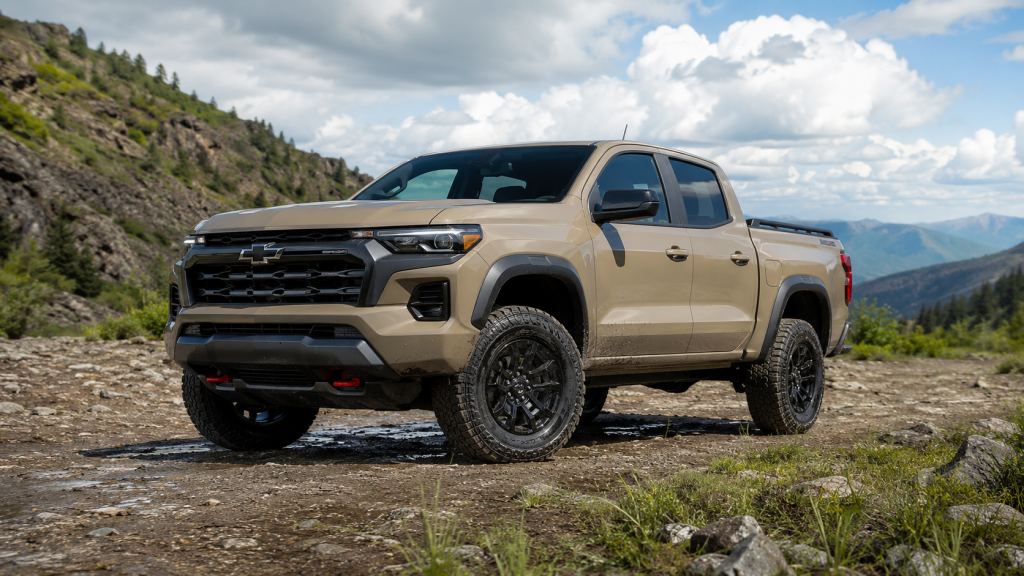
2026 Chevy Colorado Trail Boss for sale near me searches usually begin with one core question. What makes this trim stand apart? The answer comes from its factory lift, four wheel drive, all terrain tires, and trail focused hardware. Therefore, the Trail Boss offers more than a tougher look. Every 2026 Colorado uses the same TurboMax engine output. The Trail Boss difference comes from chassis height, traction hardware, and drive controls. As a result, shoppers can focus on the trim parts they will use. What Makes the 2026 Colorado Trail Boss Different? Trail Boss adds a factory lift, all terrain tires, four wheel drive, and trail focused control hardware. In addition, the truck includes a two speed transfer case and four selectable drive modes. The TurboMax engine produces 310 horsepower and 430 pound feet of torque. Therefore, Trail Boss does not gain extra power over WT, LT, Z71, or ZR2. Its value comes from how the truck sends and manages that power. Standard four wheel drive sends engine force to both axles when selected. In addition, the two speed transfer case adds a low range setting. Low range multiplies wheel torque at slower speeds. more Moreover, the two inch factory lift raises key parts farther from the ground. Therefore, the truck gains more room over ruts, rocks, and uneven dirt. Still, wheelbase and line choice remain important during trail travel. Trail Boss also uses 18 inch wheels with 32 inch all terrain tires. Their tread blocks and wider channels can grip gravel, dirt, mud, and grass. However, those tires may create more road sound than all season tires. How the Trail Boss Off Road Hardware Works The lift changes clearance beneath the truck. It also raises the step in height. Therefore, drivers should test entry, exit, and loading access before choosing the trim. Furthermore, all terrain tires use a tread pattern made for mixed surfaces. Larger tread blocks press into loose ground. Wider channels also move dirt and mud away from the contact area. However, tire choice still carries road tradeoffs. Steering response, sound, ride feel, and replacement price can change. For this reason, a highway test should follow the trail hardware review. The two speed transfer case gives the driver high range and low range choices. High range supports faster travel on loose surfaces. Low range supports slower climbs, deep ruts, and careful obstacle travel. Four selectable drive modes change throttle response, traction settings, and braking support. Off Road Mode suits loose dirt and gravel. Terrain Mode supports slow travel across steep or rough ground. The off road display can show selected truck data during trail travel. With selected equipment, drivers can review pitch, roll, steering angle, and tire information. Therefore, the display adds useful feedback before a difficult section. A transfer case shield adds coverage below a key driveline part. However, it does not cover every area under the truck. Drivers should inspect the planned route and avoid sharp impacts. How Does Trail Boss Differ From WT and LT? Trail Boss keeps the same engine output but adds a trail focused chassis and traction package. WT and LT place greater focus on work, commuting, and road travel. WT starts with the core Colorado truck layout. It can suit jobsite tasks, fleet work, towing, and daily transport. LT adds more cabin and convenience equipment for regular road use. By contrast, Trail Boss adds standard four wheel drive, the two inch lift, and all terrain tires. It also adds the two speed transfer case and four drive modes. Therefore, the trim change centers on traction and clearance. Does Trail Boss have more towing strength than LT? Not from engine output alone. Colorado towing reaches up to 7,700 pounds when properly equipped. The exact rating depends on the truck configuration and trailering equipment. In addition, payload must cover passengers, cargo, and tongue weight. Shoppers should review the door label and trailering information for each truck. Trail Boss may fit drivers who divide time between pavement and unpaved routes. LT may fit drivers who spend most miles on roads. Therefore, the intended route matters more than exterior styling. Trail Boss Versus Z71 and ZR2 Chevrolet Trail Boss, Z71, and ZR2 all use the TurboMax engine. However, their chassis, tires, suspension parts, and cabin equipment create three distinct choices. Trail Boss focuses on core trail hardware at a lower entry price. It brings the factory lift, all terrain tires, four wheel drive, and low range gearing. Z71 also uses 32 inch all terrain tires and four drive modes. In addition, it adds more lighting, cabin details, and road focused equipment. Therefore, Z71 may suit drivers who want trail tools with more cabin content. ZR2 moves farther toward demanding trail work. It adds a three inch lift, 33 inch mud terrain tires, and Multimatic DSSV dampers. It also adds more underbody protection and another drive mode. Those dampers control wheel movement across sharp impacts and repeated rough sections. The larger tires also add grip and clearance. However, they can bring added road sound and higher replacement costs. Before choosing, compare these points: Choose Trail Boss for core trail hardware without moving to the highest trim price. Choose Z71 for mixed road travel with added lighting and cabin equipment. Choose ZR2 for rougher trails, larger obstacles, and specialized suspension hardware. No trim wins every route. Therefore, shoppers should match the hardware with the roads, trails, and loads they expect. Who Should Choose a Colorado Trail Boss? The Trail Boss fits drivers who want factory trail hardware without moving to ZR2. It also fits people who need one truck for commuting, property work, towing, and weekend dirt roads. Before purchase, test the truck on city streets and a highway. Listen for tire sound and note steering response. In addition, check step in height and parking visibility. Review the exact truck’s trailering equipment before planning a trailer. Confirm the hitch, wiring, brake controller, payload label, and stated tow rating. Therefore, the chosen truck can match the trailer from the start. A 2026 Chevy Colorado Trail Boss for sale near me may include added packages and accessories. Compare the window sticker with the trim’s standard hardware. Then, confirm which items change price or function. Ross Downing Chevrolet can show available Trail Boss trucks by color, package, and equipment. Bring details about your routes, trailer, passengers, and cargo. That information gives the trim review a clear purpose. The Trail Boss earns its place through lift, tires, four wheel drive, and low range gearing. Therefore, it suits drivers who will use those parts beyond the showroom. A careful test drive can confirm whether that hardware fits daily roads and weekend trails.

Chevy Trade In Value and What Shapes Your Appraisal

Chevy trade in value starts with more than a year, make, and mileage entry. A final appraisal also uses inspection findings, history, local demand, and expected resale preparation. Therefore, an online estimate gives you a useful starting point. The inspected offer gives you a vehicle specific figure. This process works best when each step stays clear. First, the appraiser confirms the exact vehicle. Next, the review covers its physical state, records, and current market position. Then, the dealership presents a written offer based on those findings. How Is Chevy Trade In Value Calculated? A trade value combines vehicle details, inspection findings, history, market data, and expected resale preparation. Each input answers a different pricing question. The VIN confirms the model, trim, engine, factory equipment, and build details. Therefore, it prevents comparisons with a lower or higher trim. Mileage then places the vehicle beside similar examples from the same age range. Next, the appraiser reviews current local data. That review may include recent sales, wholesale activity, available inventory, and regional demand. As a result, two similar vehicles may receive different figures in different places. more An online tool cannot inspect paint, tires, glass, seats, warning lights, or mechanical concerns. Therefore, its estimate rests on the details entered by the owner. A dealership appraisal adds direct inspection and verified records. Chevy trade in value also reflects expected resale preparation. The dealership may need to replace tires, repair glass, address warning lights, or complete maintenance. Those costs enter the final figure before the vehicle reaches another shopper. What Happens During a Trade Appraisal? The appraisal begins with identification and mileage confirmation. The appraiser then checks the exterior, cabin, tires, wheels, controls, and visible mechanical signs. In addition, a short drive may reveal steering, braking, noise, or warning concerns. The exterior review covers paint, panels, glass, lamps, trim, wheels, and tire tread. Small marks may require little work. Larger damage may require body repair, paint work, or replacement parts. Inside, the review covers seats, carpets, trim, odors, controls, screens, keys, and missing equipment. Therefore, complete accessories and a clean cabin make the inspection easier to document. The appraiser may also review title history, accident records, prior owners, and service entries. Those records add context around past repairs and maintenance. Still, the physical inspection remains central. The full trade appraisal process can take longer when records require review. It may also take longer when warning lights or mechanical concerns need added testing. Therefore, ask what stage the appraisal has reached before expecting a final figure. Bring the following items for a smoother review: Bring the title or lender details, registration, photo identification, and every available key. Bring service records, repair receipts, and documents for major parts installed during your ownership. Bring the current mileage and any online estimate you want to discuss during the review. Which Factors Change a Trade Appraisal? Mileage, physical state, history, equipment, demand, and repair needs shape the offer. No single input controls the entire calculation. Mileage matters because it reflects how far the vehicle has traveled. However, age and maintenance records add context. A well maintained higher mileage vehicle may show stronger care than a neglected lower mileage example. Exterior and cabin findings also shape resale preparation. Deep scratches, cracked glass, worn tires, stains, odors, and missing trim may require work. Therefore, the appraisal includes expected repair and cleaning costs. Mechanical findings can carry greater weight. Warning lights, leaks, brake wear, worn tires, or unusual noises may require testing or repairs. In addition, incomplete maintenance can raise future resale preparation costs. Factory equipment may support demand for certain trims. Features such as four wheel drive, towing equipment, larger screens, or advanced safety technology can change local interest. Aftermarket modifications may narrow the future audience. Should you repair every issue before trading? Not always. A large repair may cost more than the added appraisal amount. Therefore, request the appraisal before spending money on major work. Chevy trade in value also changes with local demand. A truck may draw more interest in one region than another. Season, inventory levels, and recent sales can also shift the offer. How Loans and Payoff Amounts Enter the Process A loan balance does not change the vehicle’s market appraisal. The dealership first calculates the vehicle value. Then, the current lender payoff enters the purchase paperwork. When the offer exceeds the payoff, the difference creates positive equity. That amount may support the next purchase or appear within the transaction structure. Therefore, owners should review both figures separately. When the payoff exceeds the offer, the difference creates a remaining balance. The dealership can explain available ways to handle that amount. However, the appraisal itself stays tied to the vehicle. Ask the lender for a current payoff figure before the visit. A monthly statement may not show the exact payoff. Interest, timing, and lender fees can change the final amount. Review these three numbers separately: The appraisal shows what the dealership offers for the vehicle. The lender payoff shows what remains due on the current loan. The difference shows positive equity or the remaining balance. This separation keeps Chevy trade in value clear. It also prevents confusion between vehicle value and loan status. How to Prepare for a Clear Trade Review Preparation starts with accurate details and complete records. Clean the cabin, remove personal items, and gather every key. In addition, confirm the mileage and lender information before arrival. A basic wash and interior cleaning can make the inspection easier. However, expensive cosmetic work may not return the same amount through the offer. Ask for an appraisal before approving large repairs. Use online valuation tools as reference points. Enter the exact trim, mileage, equipment, and physical state. Then, compare trade estimates with trade offers, not retail listing prices. A retail listing includes dealership preparation, operating costs, market risk, and resale margin. Therefore, it will not match the acquisition figure offered during a trade. When reviewing a written offer, ask which inspection findings shaped the number. Also, ask how current market data and resale preparation entered the review. Clear answers make the figure easier to compare. Ross Downing Chevrolet provides an online trade tool and an in person appraisal process. Bring your records, keys, lender details, and current estimate. Then, review the vehicle value and loan payoff as separate parts of the transaction. Chevy trade in value becomes easier to understand when each step stays visible. Accurate details, direct inspection, and clear documentation give you a sound basis for the next conversation.

Ross Downing Corvette 2026 E Ray Features Explained

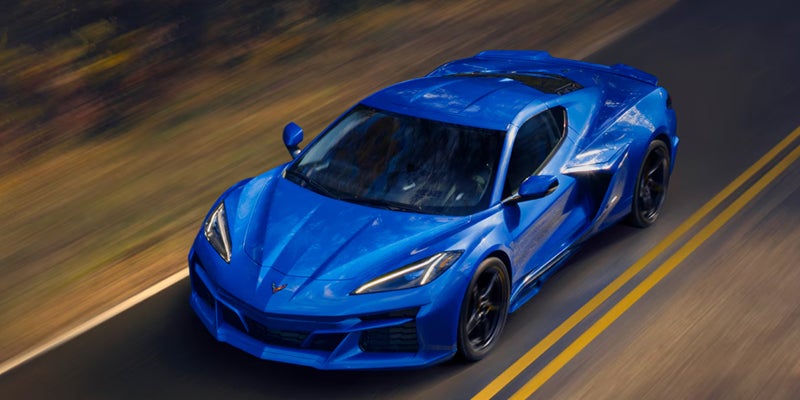
Ross Downing Corvette shoppers may ask what makes the 2026 E Ray different from Stingray and Z06. Therefore, the answer starts with its split propulsion layout. Furthermore, a 6.2 liter LT2 V8 drives the rear axle. In addition, a separate electric drive unit powers the front axle. Together, those sources produce 655 horsepower. Therefore, the E Ray becomes the first Corvette with electrified all wheel drive. It also keeps the familiar sound and response of a V8 behind the cabin. However, the E Ray does not require plug in charging. Instead, the battery gathers energy during braking and selected driving events. That energy supports the front motor during launches and other moments requiring added traction. What Makes the 2026 Corvette E Ray Different? The E Ray pairs a rear mounted V8 with an electric motor at the front axle. That layout separates it from every other Corvette trim. Furthermore, the LT2 engine produces 495 horsepower. In addition, the electric drive unit adds 160 horsepower through the front wheels. Because each axle receives power from a different source, no front driveshaft links the engine to the front wheels. This design changes how the car leaves a stop. Stingray sends its launch force through the rear tires. By contrast, E Ray can place force through all four tires at once. more Moreover, that front torque arrives quickly. Therefore, the car can apply more of its combined output during hard acceleration. The added front traction also supports steadier launches on cool or damp pavement. Does the E Ray work like a fuel saving hybrid? No. Chevrolet uses electrification here to support acceleration and traction. The battery and motor serve the car’s road mission, not a long electric commute. Still, the E Ray includes Stealth Mode. This mode can move the car using electric power below 15 mph. It suits short driveway, garage, or neighborhood movements when lower sound matters. How Corvette All Wheel Drive Works Corvette all wheel drive in the E Ray uses two separate propulsion sources. The V8 powers the rear axle. The electric unit powers the front axle. Furthermore, the battery sits within the car and does not need a charging cable. Instead, it stores energy recovered during deceleration and braking. As a result, the car can send that stored energy to the front motor. When does the front motor work? It can support launches, corner exits, and other moments when front traction adds control. Therefore, the E Ray can divide force across four contact patches. A traditional all wheel drive layout may route engine power through a transfer case and driveshaft. The E Ray takes another path. Its front wheels receive electric power without a mechanical link to the V8. Beyond that, this arrangement changes packaging. Chevrolet can add front axle drive without running a long front driveshaft from the rear engine. As a result, the E Ray keeps the mid engine Corvette architecture. Drivers should still remember that all wheel drive does not remove tire limits. Tire type, tread depth, and surface temperature still shape grip. Therefore, proper tires remain central during colder months. The driver displays also show key information across three screens. These screens present drive data, media, and selected controls. During a test drive, check screen placement and menu access from the seated position. How the E Ray Compares With Stingray Stingray uses rear wheel drive, while E Ray adds electric front axle power. That single difference changes traction, output, weight, and price. Furthermore, the Stingray LT2 V8 produces 490 horsepower in standard form. The E Ray uses a related LT2 tune with 495 horsepower. It then adds the 160 horsepower front drive unit. Therefore, E Ray reaches 655 combined horsepower. Stingray keeps the simpler rear drive layout. Each choice appeals to a different Corvette shopper. Stingray may suit drivers who want the lowest Corvette entry price. It also keeps a lighter mechanical package. In addition, its rear drive layout carries the classic mid engine Corvette formula. E Ray suits drivers who want stronger launch traction. It also suits people who expect more road time during cooler or wetter months. The front motor gives those drivers another source of grip. Is the E Ray simply an all wheel drive Stingray? No. It adds a battery, front drive unit, wider body, and unique control logic. Those parts change more than the power figure. In addition, price should enter the review. The 2026 E Ray starts above the Stingray. Therefore, shoppers should confirm that added traction and electric torque match their plans. How the E Ray Compares With Z06 The E Ray and Z06 reach similar output through very different engineering paths. E Ray combines V8 power with an electric front axle. Z06 relies on a high revving LT6 V8 and rear wheel drive. Furthermore, the Z06 LT6 produces 670 horsepower. Its engine uses a flat plane crankshaft and reaches higher engine speeds. That design gives the Z06 a sharper track focused character. By contrast, E Ray uses immediate electric torque at the front axle. Its strength appears during launches and road acceleration. Therefore, it can deliver force across all four tires. Is the E Ray stronger than Z06? The answer changes by task. Z06 places greater focus on track response, braking, cooling, and sustained high speed work. E Ray places greater focus on traction and rapid street acceleration. Moreover, the two cars sound different. Z06 delivers a higher pitched exhaust note as the LT6 climbs through its rev range. E Ray keeps the deeper LT2 sound with electric support underneath. A shopper should test each car for the intended setting. Track days may point toward Z06. Year round road use may point toward E Ray. Price and options also deserve close review. A well equipped E Ray can move near Z06 pricing. Therefore, compare the exact build, body style, and included equipment. Who Should Choose the 2026 Corvette E Ray? The E Ray fits drivers who want V8 sound, electric front torque, and all wheel drive traction. It also fits shoppers seeking strong road acceleration without choosing the Z06 route. Before choosing, review these points: Choose E Ray when front axle traction matters during launches, cool mornings, or damp roads. Choose Stingray when lower entry price and a simpler rear drive layout carry more weight. Choose Z06 when track use, high engine speed, and sharper circuit response lead the decision. In addition, body style matters. The E Ray comes as a coupe or convertible. In addition, LZ levels change seating, audio, cameras, and cabin equipment. Ross Downing Corvette inventory may include several combinations. Therefore, compare the exact build instead of relying only on the trim name. Check the body style, LZ level, wheels, brakes, and listed options. The 2026 E Ray stands apart because its hybrid layout serves traction first. It keeps V8 power at the rear. Then it adds electric force at the front. That structure gives the E Ray a distinct place within the Corvette range. It is not a Stingray substitute or a Z06 copy. It is the Corvette for drivers who want electrified all wheel drive and rapid road acceleration.

Truck Ownership Cost: What Heavy Duty Chevy Owners Face

Truck ownership cost is not a single number. It is five categories working together across the life of the vehicle. Buyers who focus only on the monthly payment often discover the other four categories after they sign. The Silverado 2500 HD is a durable, capable platform. Understanding the full cost structure before you purchase makes the decision easier to stand behind for years. The Five Cost Categories That Define Truck Ownership Every truck ownership budget breaks into five distinct categories. Depreciation is the first and largest. Financing interest is the second. Fuel is the third. Insurance is the fourth. Maintenance and repairs make up the fifth. These five categories together define what a truck actually costs over time. Each one carries a different weight depending on how the truck is used and how long the owner keeps it. Buyers who evaluate only the financing payment measure one of five categories. The other four can collectively exceed the financing cost over a five-year period. Consider how these categories interact for a Silverado 2500 HD owner: more Depreciation accounts for roughly 40 to 50 percent of total five-year ownership cost on most pickup trucks. It is the single largest expense, arriving before fuel or maintenance enters the equation. Fuel and insurance together represent a significant annual recurring cost. Their combined weight in the budget often rivals or exceeds total maintenance spending over five years. Maintenance costs for the Silverado 2500 HD run approximately $4,788 over five years according to segment data. That figure sits below the heavy-duty class average by more than $3,600. Starting with this five-category framework gives the purchase a financial foundation that a monthly payment figure alone cannot provide. How Depreciation Works for a Heavy-Duty Truck Depreciation is the difference between what you pay for the truck and what it is worth when you sell or trade it. Every vehicle depreciates. However, heavy-duty trucks follow a curve that differs from half-tons and passenger vehicles in one important way. Work-use demand in the used market supports residual value more consistently. Truck ownership across most segments lose approximately 20 percent of their value in the first year. By year five, cumulative loss reaches 40 to 50 percent of the original purchase price. For a Silverado 2500 HD purchased at $65,000, that puts five-year depreciation between $26,000 and $32,500. Trim level, mileage, condition, and regional demand all influence where the number lands. The used heavy-duty truck market carries persistent demand from contractors, agricultural operators, and tradespeople. They need a proven work platform at a lower price than new. That demand supports residual values for well-maintained examples. A Silverado 2500 HD with documented service history and the Duramax diesel tends to hold stronger resale value than a comparable gas configuration. Diesel-powered heavy-duty trucks draw a specific buyer pool. That pool accepts a premium for the drivetrain, which supports the truck's value on resale. How Trim Level Affects Depreciation Trim level also influences the depreciation curve. Mid-range trims such as the LT and LTZ tend to hold value well. They balance capability features with daily use amenities at a price point that serves a broad resale audience. High-trim configurations like the High Country carry higher initial prices. The absolute dollar depreciation is larger even when the percentage is similar. Buyers who plan to sell or trade within five to seven years should factor trim-level depreciation into the configuration decision at purchase, not after. Fuel Costs: Gas vs Diesel Over Time Fuel is the most variable ownership cost category. It responds directly to how the truck is used, how far it travels, and how often it pulls weight. The gas 6.6-liter V8 returns approximately 13 to 16 mpg combined. The Duramax diesel returns better numbers overall. Its advantage grows when the truck operates under towing or hauling load. The diesel's fuel efficiency advantage shows up most clearly on long towing routes. A gas-powered Silverado 2500 HD towing a 16,000-pound trailer works the engine considerably harder than the Duramax under the same load. That harder work produces higher fuel consumption per mile. Drivers who tow long distances frequently accumulate a fuel cost gap between the two engines. That gap grows meaningfully over time. At current fuel prices, the diesel fuel cost advantage can offset its higher purchase price premium within three to five years. That breakeven applies to drivers who tow more than 10,000 miles annually under load. Drivers who use the truck primarily for commuting and light hauling will see less separation between the two engines. For those drivers, the gas V8 is the more cost-efficient configuration when total ownership cost guides the decision. What Towing Does to Maintenance Costs Does towing regularly change what the truck needs and when? The answer is yes, and the standard service schedule does not fully account for it. Standard oil change intervals, transmission fluid service windows, and brake inspection schedules calibrate for average use. A truck that spends significant time under load operates outside those average assumptions. Brake systems absorb the most direct impact from regular towing. A loaded trailer adds mass to the stopping equation. Brake pads and rotors wear faster on a truck that regularly stops a 15,000-pound combined load. Transmission fluid degrades faster under sustained high-load operation. Heat drives fluid breakdown. Towing generates more heat in the transmission than standard driving does. Cooling system components operate at higher sustained temperatures throughout a towing route as well. Building a Towing-Aware Maintenance Schedule Drivers who tow frequently should treat service intervals as load-adjusted rather than mileage-only. Transmission fluid on a diesel-powered Silverado 2500 HD with heavy towing use warrants inspection closer to 30,000 miles rather than the standard 45,000-mile window. Brake pads and rotors should receive inspection at each oil change. Tire rotation matters more for a truck under frequent load. Uneven wear accelerates when suspension components carry consistent stress. These adjustments are not costly individually. Catching wear early prevents the larger repair costs that come from deferring service on components already running at higher stress levels. Insurance, Resale, and the Numbers That Offset Costs Insurance for the Silverado 2500 HD averages approximately $2,629 per year. That figure varies based on driver profile, location, coverage level, and configuration. The Duramax diesel carries a higher replacement cost than the gas equivalent. Insurers price that difference into the annual premium. Buyers choosing the diesel should budget an additional $200 to $400 per year compared to the gas V8 in the same trim. Several factors work in the insured driver's favor with a heavy-duty truck. The Silverado 2500 HD carries a strong safety record and solid reliability data. Both influence insurer risk assessments positively. Drivers with clean records and multiple policies at the same carrier often receive discounts that reduce the base premium. Commercial use designation is available to contractors and business owners who use the truck for work. That designation may qualify for specific commercial vehicle policy structures depending on the insurer and usage documentation. Resale value is the ownership cost factor that most buyers undervalue at purchase. A truck that retains strong resale value costs less to own in effective terms. Strong residual value reduces net depreciation, which is the largest single cost category. A well-maintained Silverado 2500 HD with documented service history commands a competitive price in the used heavy-duty market. Diesel configuration strengthens that position further. Buyers who maintain the truck and hold it for five to seven years recover a meaningful portion of their original investment on sale or trade. That recovery brings the true total ownership cost into a more manageable range than the purchase price alone suggests.

Dealership Pricing Transparency: What Buyers Should Know

Dealership pricing transparency is not a favor a dealer extends to you. It is a process you can understand before you arrive, and understanding it removes most of the anxiety that makes truck buying feel stressful. The price you see on a window sticker, an advertisement, or a website is not the number you will pay at the signing table. Knowing what sits between those two figures, and why each line item exists, puts you in a much stronger position throughout the entire purchase. How Truck Pricing Is Actually Structured The sticker price on a new truck reflects the manufacturer's suggested retail price. It covers the base vehicle, the selected trim level, and any factory-installed options. It does not include taxes, government fees, or dealer charges. The number you actually pay is called the out-the-door price, and it is the only figure that reflects your true total cost. more Several categories of charges build from the sticker price to the out-the-door total. Government-mandated fees include sales tax, title fees, and registration. These are fixed by your state and county. The dealer does not set them and cannot waive them. A documentation fee covers the dealer's cost to process the paperwork for the transaction. This fee is dealer-set, varies by state, and commonly falls in the range of $100 to $500. Beyond that, some dealers add nitrogen tire inflation, paint sealant, fabric protection, or other products to the vehicle before sale. These are not factory equipment. They are dealer add-ons, and their presence on the window sticker does not make them mandatory. Reading the Purchase Order The purchase order is the document that lists every charge in the transaction. Shoppers should request this document before signing anything and read each line individually. Government fees are non-negotiable. The doc fee is generally non-negotiable at most dealerships but should be disclosed clearly. Dealer add-ons are optional and may be removed or priced separately if the shopper requests it. The total at the bottom of that document is the out-the-door price. That is the number worth focusing on from the start of the conversation. What the FTC Now Requires Dealers to Show You In 2026, the Federal Trade Commission formalized rules requiring dealers to display the true total price of a vehicle. The rule requires that displayed prices exclude only government fees such as taxes and registration. All other charges, including dealer fees and add-ons, must be reflected in the advertised price or disclosed clearly before the transaction proceeds. This rule matters because it gives shoppers a legal baseline. A price advertised online or on a lot must now represent what the buyer actually pays before government fees. Dealers who advertise a price and then add undisclosed charges at the signing table are operating outside compliance. Shoppers who know this standard can hold the conversation to it. If the price presented at the signing table differs meaningfully from the price that brought you in, you have standing to ask why and to request a line-by-line explanation before proceeding. Consider what this rule changes for the shopper in practice: Dealers must present the full vehicle price, including all dealer-controlled charges, in any advertised figure rather than building those costs in at the end of the transaction. Shoppers can compare prices across dealerships with greater confidence that the numbers reflect actual total cost rather than a base figure with variable additions appended later. Any charge that appears at signing but was not disclosed in the advertised or quoted price is a valid item for the shopper to question, decline if it is an add-on, or request documentation for if it is claimed to be mandatory. Understanding this rule does not make the buying process adversarial. It makes it clearer for both parties. What Happens in the Finance Office The finance office is where the transaction closes. It is also where many buyers feel the most pressure, largely because the products presented there are unfamiliar and the pace of the conversation is fast. Knowing what to expect before you sit down removes most of that friction. The finance manager will present the financing terms for your purchase. If you are financing through the dealer, the rate offered reflects what lenders have approved based on your credit profile. Dealers may add a small markup to the lender's base rate as part of their compensation structure. Arriving with a pre-approval from your own bank or credit union gives you a reference rate. You can then evaluate whether the dealer's financing offer is competitive or whether your outside approval is the better option. Products the Finance Office Presents Beyond financing, the finance office presents several optional products. An extended service contract covers mechanical repairs after the factory warranty expires. Gap insurance covers the difference between what you owe on the loan and what the vehicle is worth if it is totaled before the loan is paid off. Tire and wheel protection covers damage from road hazards. Paint and interior protection packages cover cosmetic damage. None of these products are required to complete the purchase. Each one has a cost, a coverage scope, and a term length. Shoppers who want time to evaluate any product can ask for the documentation to review before deciding. A finance office that discourages that request is worth noting. What Is Negotiable and What Is Not Not every line item on a purchase order carries the same flexibility. Understanding the categories gives shoppers a clear sense of where a conversation is productive and where it is not. Government fees are fixed. Sales tax, title fees, and registration are set by state and local authorities. No dealer negotiation changes them, and any dealer who suggests otherwise is not being accurate. The documentation fee is dealer-set and is generally non-negotiable at a given dealership. However, it should be disclosed early and consistently. Shoppers can ask for the doc fee amount before entering serious price negotiations so it does not appear as a surprise at signing. The vehicle price itself is where negotiation is most applicable. Factors that influence the negotiation include current manufacturer incentives, regional inventory levels, and how long the specific vehicle has been on the lot. Dealer add-ons are also negotiable. A product added to the vehicle by the dealer before sale can often be removed from the transaction or priced separately. Shoppers should ask whether any add-ons on the window sticker were factory-installed or dealer-installed before accepting them as part of the deal. How to Walk In Prepared Preparation is the most effective tool a truck buyer carries into a dealership. A shopper who arrives with a financing baseline, a trade-in estimate, and a clear list of questions controls the pace of the conversation from the start. Securing a pre-approval from a bank or credit union before visiting accomplishes two things. It establishes a financing rate the dealer's offer needs to compete with or beat. It also shortens the finance office conversation because the buyer already understands the rate range they qualify for. Most banks and credit unions issue pre-approvals with no impact on the final decision to purchase. If you are trading in a vehicle, arriving with an independent valuation matters. Tools like Kelley Blue Book's Instant Cash Offer provide a data-backed estimate that reflects current market conditions. That figure gives you a reference point for evaluating the dealer's trade-in offer rather than accepting it without context. A dealer who offers significantly below the independent estimate should be asked to explain the gap. Condition, mileage, and regional demand all influence trade-in value, and a transparent dealer will walk through those factors with you directly. Arriving with questions written down also changes the dynamic. Shoppers who ask about the out-the-door price, the doc fee amount, and the specific add-ons on the vehicle before discussing monthly payments keep the conversation anchored to the total cost rather than the payment structure. Monthly payment framing can obscure the actual price of the vehicle by extending the loan term. Keeping the focus on the total purchase price, and then addressing financing separately, produces a clearer outcome.

Who Needs a Heavy Duty Truck Like the Silverado 2500 HD

The question of who needs a heavy duty truck is a load-and-use decision, not a preference decision. The Silverado 2500 HD is not the right truck for every driver. However, for drivers whose work, hauling schedules, or trailer weights push past the half-ton ceiling, it is the truck that handles those demands by design. Knowing where that line sits, and whether your actual use crosses it, is the most useful place to start. The Load Threshold That Defines the Need The Silverado 1500 is a capable truck. It tows up to approximately 13,300 pounds, carries a payload of up to 2,200 pounds, and handles the demands of most recreational and light work scenarios without issue. The 2500 HD becomes the right choice when loads consistently push against or above those numbers. A useful way to frame this: the 1500 is engineered to operate within its rated ceiling across its service life. A truck that regularly runs at 90 to 100 percent of its towing or payload rating is not operating with meaningful headroom. Transmissions, cooling systems, and braking hardware all carry thermal and mechanical stress ratings. Sustained near-limit operation accelerates wear on those systems faster than the same truck used at 60 to 70 percent of its capacity. more The 2500 HD shifts that entire equation. Its towing ceiling reaches 22,420 pounds with the Duramax diesel and the right hitch configuration. Its highest payload rating reaches approximately 3,979 pounds. A driver towing 14,000 pounds with a 2500 HD is operating at roughly 62 percent of the truck's rated ceiling. That same load on a 1500 exceeds the truck's rated limit entirely. Why Headroom Matters Operating with capacity headroom is not about using capability for its own sake. It is about keeping the truck's drivetrain, transmission, and cooling systems in their intended stress range. The Duramax diesel paired with the Allison 10-speed transmission is built around sustained commercial load cycles. The gas 6.6-liter V8 on the 2500 HD carries the same frame and suspension advantage even without the diesel's torque output. Both configurations give drivers room to work without pushing the truck to its limits on every trip. Work Scenarios That Push Past the Half-Ton Ceiling Certain professions and job site demands routinely produce loads that exceed what a half-ton truck handles within spec. Contractors hauling gravel, sand, or construction materials in the bed move weight that compounds quickly. A cubic yard of wet concrete weighs approximately 4,000 pounds. A loaded equipment trailer carrying a skid steer or compact excavator commonly reaches 14,000 to 18,000 pounds. Landscapers running mulch, soil, or stone deliveries regularly load their beds near or above what the 1500 is rated to carry. Furthermore, plumbers, electricians, and HVAC technicians who outfit their trucks with service bodies, tool storage systems, and material loads often find that the combined weight of equipment and supplies approaches the 1500's payload ceiling before they add a single piece of job site cargo. The 2500 HD gives those drivers the payload range to run a fully outfitted work setup without trimming their load to stay within spec. Consider the work categories where the 2500 HD earns its place: Contractors and site operators hauling heavy equipment on trailers rated between 14,000 and 20,000 pounds need the 2500 HD's towing ceiling and factory trailer brake controller to stay within safe and legal operating parameters. Trade professionals running heavy service body upfits, tool storage, and material loads need the payload rating headroom the 2500 HD provides over a loaded half-ton configuration. Agricultural operators moving livestock trailers, feed deliveries, or farm equipment between locations regularly carry weights that exceed the 1500's rated limits across both towing and payload categories. These are not edge cases. They are the core use scenarios the 2500 HD addresses by design. Fifth-Wheel and Gooseneck Towing as a Distinct Category Fifth-wheel and gooseneck trailers introduce a load dynamic that standard bumper-pull towing does not. Both hitch types transfer a portion of the trailer's total weight directly onto the truck's bed. That transferred weight is called pin weight on a fifth-wheel and tongue weight on a gooseneck. It counts against the truck's payload rating, not its towing rating. A large fifth-wheel recreational trailer weighing 18,000 pounds total commonly carries a pin weight of 3,600 to 4,500 pounds. That pin weight sits entirely on the truck's bed and counts against its payload capacity. The 1500's payload ceiling does not accommodate that load. The 2500 HD's payload rating, combined with its reinforced bed floor mounting points from the factory fifth-wheel prep package, handles that pin weight within spec and keeps the trailer connection integrated into the truck's frame load path. Gooseneck hitch setups follow the same logic. Horse trailer operators, livestock haulers, and equipment transporters who use gooseneck connections carry tongue weights that regularly reach 2,500 to 3,500 pounds. Beyond that, consider the full trailer weights involved: A two-horse slant trailer with horses loaded commonly weighs 8,000 to 10,000 pounds total, which sits within the 1500's towing range but carries a tongue weight that may challenge its payload ceiling in a fully loaded configuration. A four-horse or six-horse trailer with tack, feed, and horses loaded reaches 14,000 to 20,000 pounds, which moves entirely outside the 1500's rated range and into territory where the 2500 HD is the appropriate platform. Equipment trailers carrying two pieces of compact machinery, landscaping equipment, or commercial vehicles routinely reach 16,000 to 22,000 pounds, which requires the full towing ceiling the 2500 HD provides. Shoppers in these categories should evaluate both their total trailer weight and their expected pin or tongue weight before selecting a truck configuration. Recreational Towing and When Size Starts to Matter Recreational towing is where the decision becomes less obvious. Many buyers considering the 2500 HD for camping, boating, or travel trailer use genuinely wonder whether their loads justify the step up. The answer depends on what they are towing and how often. A large fifth-wheel recreational vehicle in the 38 to 42-foot range commonly weighs between 15,000 and 20,000 pounds loaded. That range exceeds the 1500's ceiling and places the load squarely in the 2500 HD's operating range. A mid-size travel trailer in the 8,000 to 10,000-pound range sits within what a well-configured 1500 handles. The distinction is not about the type of trip. It is about the weight on the hitch. Boat towing follows a similar pattern. A center console or cabin cruiser on a heavy trailer can reach 10,000 to 14,000 pounds. A 1500 handles the lower end of that range within spec. However, a driver who regularly loads near 13,000 pounds is operating with minimal headroom on a truck that is not built for sustained near-limit use. The 2500 HD absorbs that load with room to spare and does so without stressing the drivetrain on every trip to the water. What Ownership Looks Like When the Truck Is Not Working A heavy-duty truck is not a specialty vehicle that drivers park until they need to tow. For most owners, the 2500 HD is the primary vehicle. It handles school runs, grocery trips, and highway commutes alongside the job site and trailer work. Understanding what that daily use feels like matters before committing to the purchase. The rear suspension on the 2500 HD is stiffer than a half-ton. Drivers notice this most on rough pavement, gravel roads, and speed bumps when the bed is empty. The truck is not punishing to drive daily, but it does not absorb road imperfections the way a 1500 does. Drivers who have never owned a heavy-duty pickup should spend time behind the wheel in real driving conditions, not just a parking lot loop, before deciding. Fuel economy runs in the range of 13 to 16 mpg combined on the gas 6.6-liter V8. The Duramax diesel returns better numbers, and its advantage grows considerably when the truck is under load. Drivers who cover long commutes between towing jobs may find the diesel's fuel efficiency advantage narrows the operating cost gap over time. The 1500 returns 16 to 23 mpg combined depending on configuration, so the fuel economy gap is real and worth calculating against actual mileage patterns. The cab on the Silverado 2500 HD is well-insulated and comfortable across all major trim levels. Road noise at highway speed is well-managed. The available technology suite, including the large center display, available digital rearview mirror, and trailer camera system, makes the truck genuinely easier to manage day to day. Drivers who need a heavy-duty platform do not give up meaningful comfort to get the capability they require.

Silverado 1500 vs 2500: What Changes in Real Use

The silverado 1500 vs 2500 comparison is not a question of quality. Both trucks carry Chevrolet's standard for reliability and engineering precision. The real question is whether the job you are asking the truck to do fits within the 1500's engineering ceiling, or whether your demands push past it. Understanding where that line sits, and why it exists, gives you the clarity to make an informed decision before you step onto a lot. What the Class Difference Actually Means Half-ton and three-quarter-ton are legacy terms. They no longer describe literal weight. Instead, they describe engineering classification, and that classification defines the entire mechanical foundation of each truck. The Silverado 1500 is a half-ton truck. Its frame, suspension, axles, and drivetrain are built for a specific load and towing ceiling. The Silverado 2500 HD is a three-quarter-ton truck. Every structural component underneath it handles greater stress across more demanding load cycles. more These classifications carry real mechanical consequences. The 2500 HD runs a heavier-gauge, fully boxed steel frame throughout its entire length. The 1500 uses a mixed design that transitions between boxed and C-channel sections. Under sustained towing load, frame rigidity controls how much twist and flex the structure absorbs. A stiffer frame transfers load more predictably to the hitch. That is why the 2500 HD's towing ceiling sits nearly double that of the 1500. The 1500 is rated to approximately 13,300 pounds. The 2500 HD reaches up to 22,420 pounds when equipped with the diesel engine and a fifth-wheel hitch setup. Axle Specification The rear axle specification also changes completely between the two trucks. The 2500 HD carries a Dana 60 rear axle. The 1500 uses a lighter-duty axle matched to its rated load range. The Dana 60 is a larger, heavier unit built for sustained torque delivery and higher gross axle weight ratings. Shoppers who plan to tow frequently, or near the top of their rated capacity, need to recognize that axle spec is part of what makes that rating sustainable over time. How Frame and Suspension Architecture Separates These Trucks The suspension design between these two trucks is fundamentally different. That difference shows up in two situations: under load, and when the truck runs empty. The 1500 uses an independent front suspension and a coil-spring rear setup. This architecture prioritizes ride quality and handling response. It works well for daily commuting, light hauling, and towing within its rated range. The 2500 HD uses a solid front axle with coil springs and a multi-leaf rear spring pack. That rear leaf spring setup carries far more weight in the bed without squatting or losing stability. Furthermore, the leaf spring arrangement on the 2500 HD keeps the truck at a more level stance under heavy payload. When a half-ton truck loads to or near its payload limit, the rear suspension compresses significantly. That compression affects steering geometry, braking distance, and trailer tongue weight management. The 2500 HD's stiffer rear pack resists that compression by design. Shoppers who haul heavy materials in the bed regularly, not just on a hitch, need to factor this into the comparison. Brake Hardware Scaling The front Dana 60 axle on the 2500 HD also supports a larger brake package. Heavier-duty rotors and calipers pair with it at the factory. Stopping a loaded truck is a physics problem, not just a horsepower problem. More mass requires more brake surface area to control deceleration safely. The 1500's brake hardware correctly matches its rated load range. However, it does not handle the stopping demands of a 20,000-pound combined load. That is why the 2500 HD's entire brake system scales up accordingly. Towing vs Payload: Two Different Measurements These two numbers are frequently treated as interchangeable. They are not. Towing capacity and payload capacity measure two completely different loads, and confusing them is one of the most common mistakes in the truck-buying process. Towing capacity is the maximum weight the truck can pull behind it on a trailer. The truck's frame strength, hitch rating, engine torque output, transmission capability, and cooling system design all govern this number. The Silverado 2500 HD's towing ceiling reflects all of those systems working together at their rated limits. Payload capacity is the maximum weight the truck can carry inside itself. That includes cargo in the bed, passengers, gear, and any tongue weight the trailer places on the hitch ball. Gross Vehicle Weight Rating governs payload. Exceeding payload capacity stresses the suspension, frame, and tires beyond their design limits. It also removes certain warranty coverage and creates legal liability in commercial applications. Consider what this means for a shopper comparing the two trucks: The Silverado 1500 carries a payload rating in the range of 1,500 to 2,200 pounds depending on configuration, which covers most recreational and light work scenarios comfortably. The Silverado 2500 HD reaches a payload rating of approximately 3,979 pounds in its highest-rated configuration, supporting contractors, landscapers, and anyone moving bulk materials on a regular schedule. Tongue weight from a heavy trailer counts against payload, so shoppers towing near the 1500's towing ceiling may also approach their payload limit through tongue weight alone. Evaluating both numbers together, rather than separately, produces a configuration that works safely and within spec. Engine Options and Why Torque Drives the Difference The Silverado 2500 HD offers two engine choices. The standard engine is a 6.6-liter gas V8 producing 401 horsepower and 464 lb-ft of torque. The available engine is a 6.6-liter Duramax turbo-diesel V8 producing 470 horsepower and 975 lb-ft of torque. That torque figure is the number that matters most when the truck is pulling weight. Horsepower describes how fast an engine does work. Torque describes the rotational force available to move weight. When a trailer is heavy, the drivetrain needs torque to break inertia, maintain speed on grades, and control deceleration through engine braking. The Duramax produces more than twice the torque of a typical gas engine in this class. Drivers feel that gap the moment the truck encounters a long uphill grade with 18,000 pounds behind it. The Allison Transmission Connection Chevrolet pairs the Duramax exclusively with the Allison 10-speed automatic transmission. The Allison is not a standard passenger-vehicle transmission adapted for heavy use. Engineers built it specifically around sustained commercial load cycles. Its torque capacity rating exceeds what most standard automatic transmissions in light-duty trucks handle. Shoppers who tow frequently and at high weights should treat the diesel and Allison pairing as a system, not simply as an engine upgrade. The gas V8 is not a compromise for shoppers whose loads fall well within the 2500 HD's range. For occasional heavy towing, construction site use, or fifth-wheel setups that stay below 14,000 pounds, the gas engine delivers a capable and lower-cost configuration. The diesel becomes the clear choice when the load is heavy, the route is long, and the towing frequency is high. What the 2500 HD Adds Beyond the Numbers Several features come standard on the Silverado 2500 HD that the 1500 does not include. These additions reflect the engineering requirements of heavier towing, not trim-level upgrades. The integrated trailer brake controller ships as standard equipment on the 2500 HD. This controller communicates with electric trailer brakes and applies them proportionally during deceleration. Most states require a trailer brake controller for any trailer weighing more than 3,000 pounds. Beyond legal compliance, the system coordinates trailer brake engagement with the truck's own braking. Without that coordination, a heavy trailer pushes the truck forward during hard stops, which increases stopping distance and reduces driver control. The 1500 offers this feature as an add-on in certain trims, but the 2500 HD includes it by default because loads at this weight class require it. Additionally, the 2500 HD is available with a factory-installed gooseneck hitch prep package and fifth-wheel prep package. These packages include reinforced bed floor mounting points and wiring provisions. Shoppers who plan to tow horse trailers, equipment trailers, or large fifth-wheel recreational vehicles need these mounting points rated correctly from the factory. Factory prep means the hitch mounting integrates into the frame's load path by design. Consider the additional features that separate the 2500 HD's towing setup from the 1500: The factory trailer brake controller on the 2500 HD responds proportionally to deceleration rate, so light stops produce light trailer brake application and hard stops produce firmer engagement automatically. The available Duramax engine includes an exhaust brake system that uses intake restriction to slow the truck during downhill descent without applying the friction brakes, which reduces brake heat and extends pad life on long grades. The 2500 HD's cooling system is sized for sustained load, with a larger radiator and transmission cooler than the 1500 carries, which matters on long towing routes in high ambient temperatures. These additions are not convenience upgrades. They are engineering responses to the load demands this truck is rated to handle. How the 2500 HD Rides When You Are Not Hauling What does it actually mean to drive a Silverado 2500 HD on an ordinary day, without a trailer attached and without weight in the bed? This is a question worth answering directly, because the ride character of a heavy-duty truck genuinely differs from a half-ton. The multi-leaf rear suspension on the 2500 HD tunes for load. When the bed runs empty, that stiffness is fully present. The rear end feels firmer than a 1500 over road imperfections, speed bumps, and uneven pavement. This is not a flaw. It is the mechanical trade-off for a suspension system that does not compress under 3,900 pounds of payload. Shoppers who have never driven a heavy-duty truck should take an extended test drive over varied roads before deciding. However, the front suspension on the 2500 HD delivers a more composed ride than many shoppers expect. The solid front axle with coil springs absorbs road input well at highway speed. Steering is accurate and direct. The cab structure on the Silverado 2500 HD provides strong insulation, and noise levels at highway speed compete with the 1500 across most trim comparisons. Fuel economy is the other consideration that shoppers should weigh honestly. The gas 2500 HD carries an EPA rating in the range of 13 to 16 mpg combined depending on configuration. The Duramax diesel improves on that range and delivers better fuel efficiency under towing load, because the diesel engine does not work as hard proportionally when pulling heavy weight. The 1500 achieves 16 to 23 mpg combined depending on engine and drivetrain choice. Shoppers who do not need the 2500 HD's load capacity should weigh this gap carefully. For those who do need the capacity, the fuel economy trade-off is the cost of the engineering required to produce it, and the diesel configuration narrows that gap considerably when the truck spends most of its miles under load.

Contact Us

Fill out this form below and we'll contact you shortly
*Required Fields