




Chevy maintenance schedule planning for brake service starts with inspection results, mileage, and changes you notice while stopping. In addition, brake wear does not follow one fixed replacement number for every Chevrolet. Pad thickness, rotor state, pedal feel, noise, and warning lights all provide useful service clues. Therefore, routine checks matter even when the vehicle still stops normally. A brake inspection gives you a clearer view of wear before a small concern turns into a larger repair.
When Should Chevy Brakes Be Inspected?
Brake inspection timing depends on wear, mileage, and the way the vehicle is used. Chevrolet does not publish one universal brake replacement interval for every model. Instead, inspection findings show whether pads, rotors, fluid, or related parts need attention. Therefore, scheduled maintenance visits are a good time to check brake components.
Mileage still works as a planning reminder. However, it should not replace a physical inspection. Still, two Chevrolets with similar mileage can show very different pad thickness. Stop and go traffic, frequent towing, hills, and repeated hard stops can increase brake wear.
For this reason, ask about pad thickness and rotor state during routine service. A technician can also check hoses, lines, calipers, and fluid. That gives you a clearer view than mileage alone. In addition, your owner information can provide model specific service guidance.
What Squealing and Grinding Can Mean
Brake noise can point to contact between worn friction parts and the rotor surface. Some Chevrolet brake pads use metal wear indicators that touch the rotor as pad material becomes thin. That contact can create chirping, squealing, or whistling. Therefore, repeated noise during normal stops deserves an inspection.
Grinding needs faster attention. It can indicate severe pad wear or contact that should not continue. In addition, damaged hardware or rotor concerns can create harsh sounds. The exact cause requires inspection, but the sound should not be ignored.
Before scheduling service, note when the noise occurs:
- Listen for noise during light stops, firm stops, or both.
- Notice whether the sound comes from one wheel area or several.
- Pay attention to grinding, squealing, chirping, or metal scraping sounds.
Therefore, these details give the technician a clearer starting point. They also separate a brief surface noise from a repeated braking concern.
What Brake Pedal Changes Can Tell You
Pedal feel can reveal changes that are not visible from outside the vehicle. A pulsing pedal during ordinary stops may point toward rotor or hardware concerns. However, pedal pulsation during ABS operation can be normal. The timing of the sensation matters.
A low or sinking pedal deserves attention as well. Hydraulic pressure moves through brake fluid, hoses, lines, and calipers. A change in pedal travel can point toward a fluid or hydraulic concern. Therefore, unusual softness or extra travel should be checked.
Pulling during braking can also signal uneven braking force. In addition, longer stopping distance can point toward worn friction parts or another brake concern. If the vehicle no longer stops the way it usually does, schedule an inspection promptly.
How the Brake Pad Life Monitor Works
Some Chevrolet vehicles use a Brake Pad Life Monitor. The display estimates remaining pad life through sensor data and vehicle information. Therefore, the percentage gives owners another service planning tool.
However, the monitor does not inspect every brake component. It does not physically check rotor wear, fluid leaks, hose damage, or caliper movement. For this reason, the display should work alongside regular brake inspections.
If the percentage drops low, review the message with a Chevrolet service technician. In addition, pay attention to noise, pedal changes, and warning lights even when the display shows remaining pad life. A physical inspection can identify concerns outside the monitor's scope.
What Happens During Chevy Brake Service?
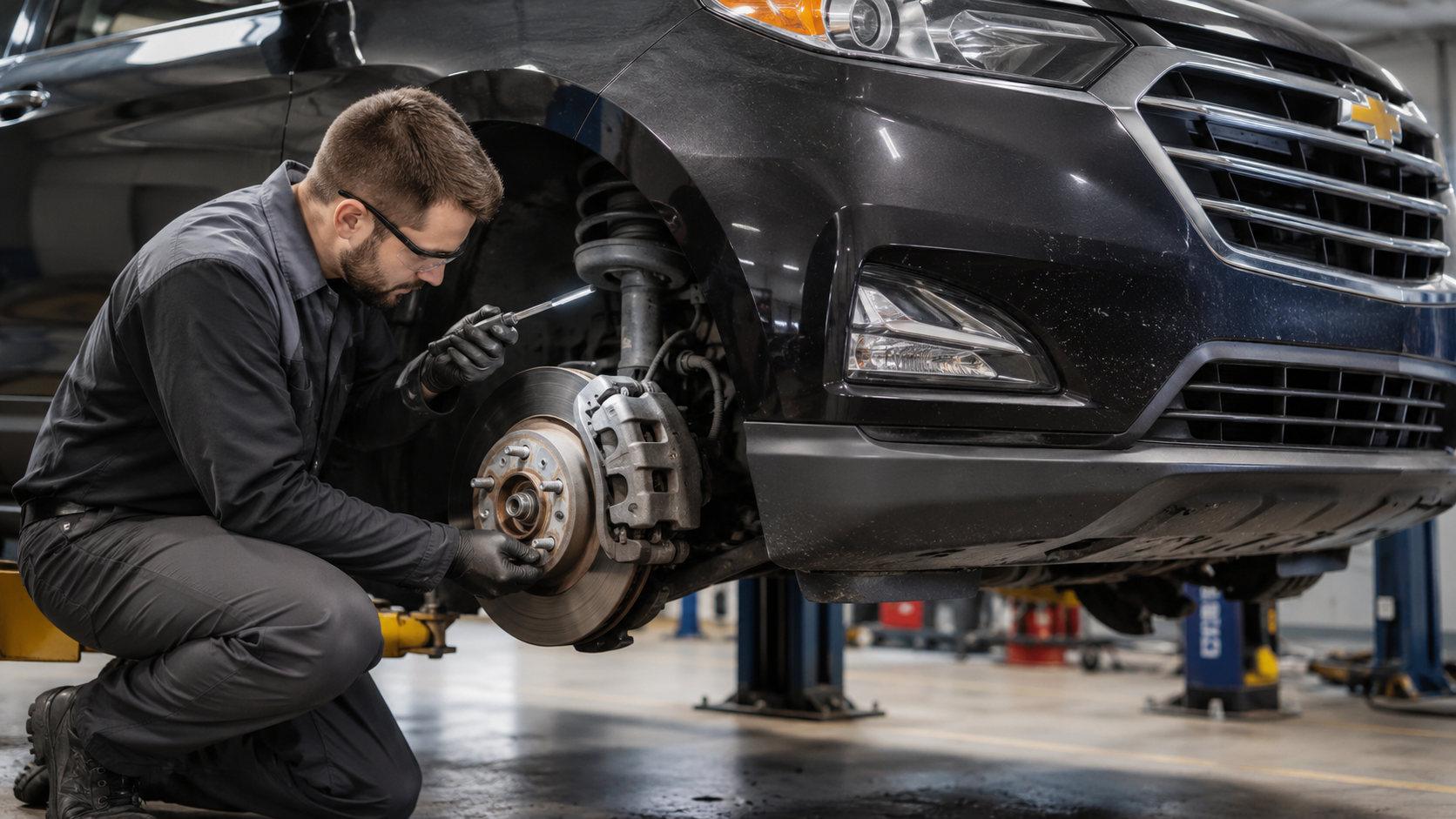
A brake inspection checks friction parts, hydraulic parts, and related hardware. The technician starts by examining components that create and control braking force. That includes pads, rotors, calipers, hoses, lines, and brake fluid.
During the inspection, the technician may:
- Measure brake pad thickness and inspect the friction material.
- Examine rotors for wear, scoring, cracking, or surface damage.
- Check calipers, hoses, lines, and nearby parts for leaks or damage.
Still, the inspection does not automatically mean every brake part needs replacement. Instead, the findings show which components still have usable life. They also identify parts that need service now. Therefore, you can review the inspection results before approving repairs.
When Brake Symptoms Need Faster Attention
Some brake concerns should move ahead of routine maintenance planning. A persistent brake warning light deserves prompt attention. Chevrolet notes that the light can point to a brake concern or low brake fluid. Therefore, do not wait for the next scheduled visit if the light stays on.
Grinding, reduced stopping force, a very low pedal, or a sinking pedal also deserve faster service. In addition, sudden changes in braking should be treated differently from gradual wear. If stopping feels unsafe, move the vehicle to a safe place and arrange service.
A clear description of the symptom gives the service team useful information. Note when it started, when it occurs, and whether the problem changes with speed. Ross Downing Chevrolet in Hammond can inspect the brake components and explain what the findings mean. That makes the next service decision easier to understand.