





Choosing between the Chevy Colorado, Silverado 1500, and Silverado 2500 is not about picking the biggest number on a spec sheet. Most shoppers are trying to figure out which truck actually fits their daily routine, towing needs, and long-term use. If you are comparing these trucks, you are really asking how their capability systems translate into real-world performance and whether you are choosing the right level of truck for how you drive.
Understanding the Chevy Truck Lineup by Capability Class
When shoppers ask which Chevy truck is best for their needs, they are asking how different truck classes are built to handle different types of work. Each Chevy truck is engineered around a specific capability range that includes frame strength, suspension design, braking systems, and drivetrain configuration.
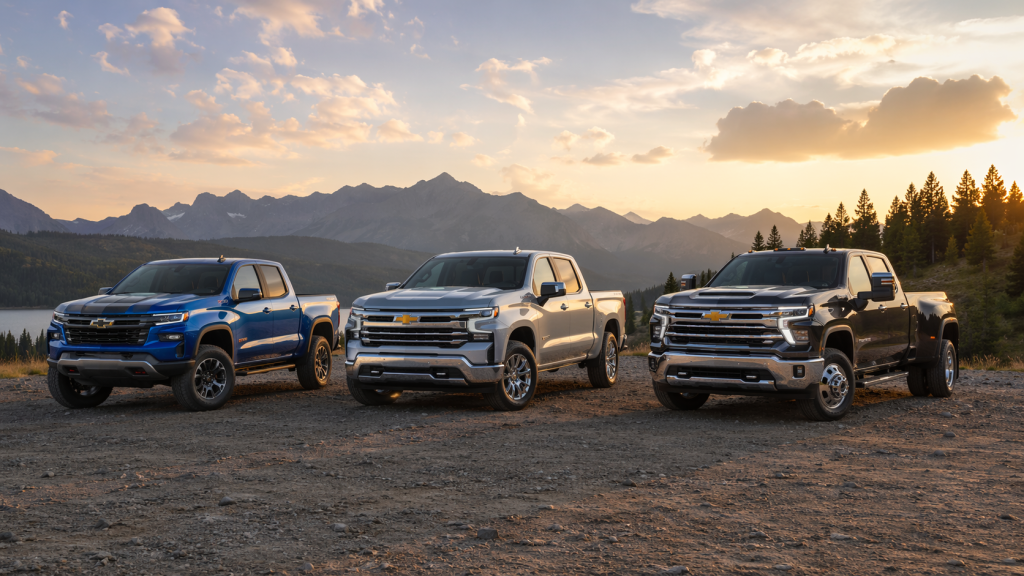
The Chevy Colorado is a midsize truck designed for efficiency, maneuverability, and moderate towing. The Silverado 1500 is a full-size light-duty truck that balances everyday usability with higher towing and payload capacity. The Silverado 2500 is a heavy-duty truck engineered for sustained high-load towing and hauling.
The key difference is not just size. It is how each truck is built to manage weight, stress, and control over time. Moving up in class means:
- Stronger frame construction to handle higher loads
- Heavier-duty suspension to support payload and trailer weight
- More robust braking systems to manage stopping force
- Powertrains designed for sustained torque under load
For buyers, this means the decision should be based on how much demand you place on the truck, not just how much it can handle in a single test scenario.
Colorado vs Silverado 1500 for Daily Driving and Light Work
When comparing the Chevy Colorado and Silverado 1500, the real question is how truck size and capability affect daily usability. The Colorado is smaller and lighter, which improves maneuverability, parking, and fuel efficiency. The Silverado 1500 is larger, with more power and higher capacity, but requires more space and comes with increased operating costs.
The difference between these trucks is how they manage everyday driving versus occasional workload demands. The Colorado is optimized for mixed use where commuting, light hauling, and occasional towing are the priority. The Silverado 1500 is designed to handle consistent work demands while still being usable for daily driving.
| Capability Area | Chevy Colorado | Silverado 1500 |
|---|---|---|
| Truck Class | Midsize | Full-size light-duty |
| Maneuverability | Easier in tight spaces, urban driving | Requires more space for parking and turning |
| Daily Comfort | Lighter ride, easier to manage | More stable at highway speeds |
| Towing Behavior | Best for moderate loads and shorter distances | Handles heavier loads with more stability |
| Payload Handling | Limited by smaller frame and suspension | Higher capacity for tools, passengers, and cargo |
| Ownership Tradeoff | Efficiency and flexibility | Capability and versatility |
In real-world use, the Chevy Colorado works well if your towing needs stay within moderate limits and your daily driving environment includes tight spaces or frequent stops. The Silverado 1500 becomes the better choice when you regularly carry heavier loads or need consistent towing stability.
Silverado 1500 vs Silverado 2500 for Towing and Heavy Loads
When deciding between the Silverado 1500 and Silverado 2500, the key question is whether your towing demands require a heavy-duty system. The Silverado 1500 is capable of strong towing performance, but the Silverado 2500 is built for sustained heavy loads where durability and control are critical.
The difference comes down to how each truck manages stress under load. The Silverado 2500 uses a reinforced frame, upgraded suspension components, and a heavier-duty braking system designed for repeated high-weight towing.
| Capability Area | Silverado 1500 | Silverado 2500 |
|---|---|---|
| Truck Class | Light-duty | Heavy-duty |
| Frame Strength | Designed for mixed use | Reinforced for high-load stress |
| Suspension Design | Balanced for comfort and capability | Tuned for heavy payload and trailer weight |
| Towing Stability | Strong for typical trailers and boats | Built for large campers, equipment, and long hauls |
| Braking System | Standard load management | Enhanced stopping power for heavy trailers |
| Daily Driving Impact | More comfortable and efficient | Stiffer ride, larger size to manage |
| Upgrade Threshold | Occasional heavy towing | Frequent or maximum-capacity towing |
For buyers, this means the Silverado 2500 is not automatically the better choice. It becomes necessary when towing demands are frequent, heavy, and sustained. Otherwise, the Silverado 1500 provides a more balanced experience.
How Towing, Payload, and Size Change Real-World Performance
Towing capacity and payload are often viewed as separate numbers, but they function as part of the same system. Towing capacity measures how much weight the truck can pull, while payload measures how much weight the truck can carry, including passengers and trailer tongue weight.
The interaction between these systems determines how the truck performs in real conditions. As payload increases, available towing capacity effectively decreases because more stress is placed on the truck’s frame and suspension.
This is where truck size becomes critical. Larger trucks like the Silverado 1500 and Silverado 2500 are built with stronger frames and suspension systems that allow them to manage higher combined loads. Smaller trucks like the Colorado reach their limits sooner because of their lighter construction.
In real-world driving, this affects:
- Stability when towing at highway speeds
- Braking performance under load
- Suspension response when carrying weight
- Driver confidence during long trips
For shoppers, understanding this relationship prevents overloading the truck or choosing a model that cannot support your needs over time.
Choosing the Right Chevy Truck for Your Actual Lifestyle
The question of which Chevy truck to buy comes down to how your daily driving and workload intersect. There is no single best truck. There is only the truck that fits your specific use case.
If your driving is primarily commuting with occasional light towing, the Chevy Colorado offers the right balance of efficiency and capability. If you need a truck that can handle both daily driving and regular towing or hauling, the Silverado 1500 provides that flexibility. If your work requires frequent heavy towing or large equipment transport, the Silverado 2500 becomes the necessary upgrade.
The key is to match capability to demand:
- Choose based on consistent use, not occasional extremes
- Factor in passengers, cargo, and towing together
- Consider how often you operate near maximum capacity
The Chevy truck lineup is designed to give you options, but the best decision comes from understanding how each truck performs in the real world. When you match the truck to your actual needs, you get better performance, lower long-term cost, and a more confident driving experience.


