





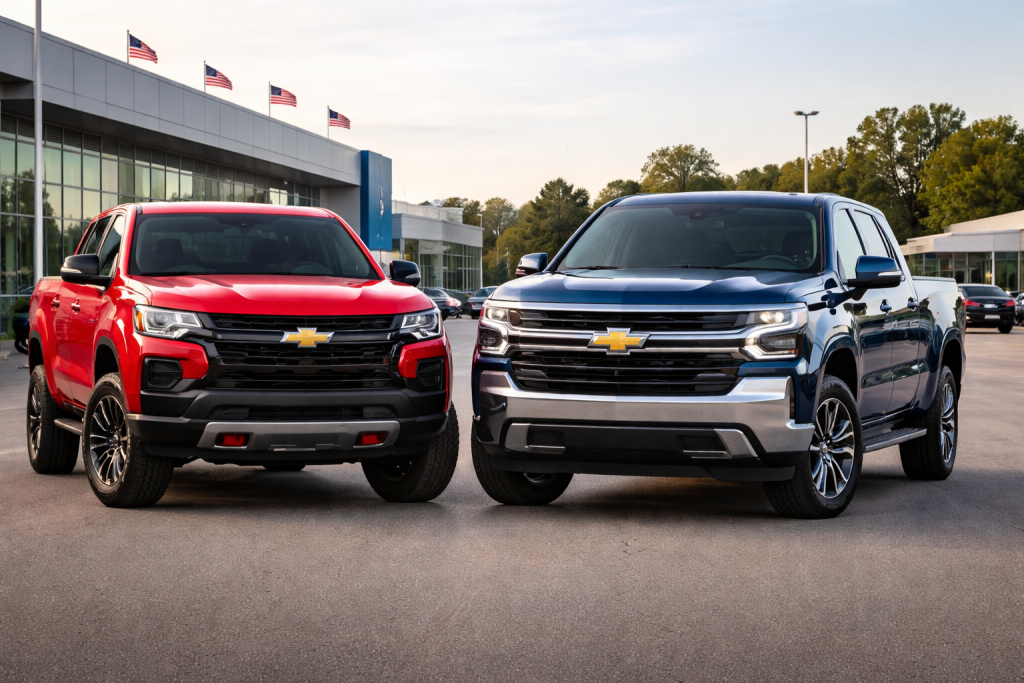
Truck shoppers comparing the Chevrolet Colorado and Chevrolet Silverado 1500 are usually trying to answer a practical question: which truck can actually handle their workload. Towing numbers are often the starting point, but those numbers do not explain how capability is generated, how it performs in real conditions, or which truck is better suited for specific tasks. Understanding how towing works, how each truck is engineered, and how real world conditions affect performance allows buyers to make a decision based on use rather than assumptions.
How Towing Capacity Is Generated in Chevrolet Trucks
Many shoppers researching towing capacity ask how these numbers are calculated and what actually allows a truck to pull heavier loads. Towing capacity is determined by a combination of engine torque, transmission gearing, drivetrain design, and structural strength.
Torque is the primary force responsible for moving weight. The Chevrolet Colorado turbocharged engine produces torque at lower engine speeds, which helps initiate movement when pulling a trailer. The Chevrolet Silverado 1500 engine lineup includes options with higher overall torque output, allowing it to handle heavier loads more consistently.
Transmission gearing multiplies that torque. Lower gears increase pulling force when starting from a stop, while higher gears maintain efficiency at highway speeds. The Silverado 1500 transmission is designed to manage heavier loads across a wider range of conditions, while the Colorado transmission balances towing ability with everyday drivability.
Drivetrain systems also influence towing performance. Four wheel drive systems improve traction when launching a trailer on loose or uneven surfaces, while rear wheel drive configurations are often sufficient for lighter towing on paved roads.
The interaction of these systems determines how much weight a truck can safely tow and how it behaves under load.
Payload vs Towing Capacity Explained
Buyers frequently ask what the difference is between payload and towing capacity because both appear in truck specifications.
What is payload capacity
Payload capacity is the maximum amount of weight a truck can carry in its bed and cabin, including passengers and cargo.
What is towing capacity
Towing capacity is the maximum weight a truck can pull behind it using a trailer.
The Chevrolet Colorado payload capacity supports lighter loads such as tools, equipment, or recreational gear placed in the bed. The Chevrolet Silverado 1500 payload capacity is higher due to its larger frame and suspension design, allowing it to carry heavier materials or more equipment.
These two measurements affect different types of work. Payload is critical for jobs that involve carrying weight directly in the truck, while towing capacity matters for pulling trailers such as boats, campers, or work equipment.
Understanding the distinction helps buyers choose a truck that aligns with how weight will actually be handled.
Chevrolet Colorado Towing Capability and Real World Use
Many drivers ask whether a midsize truck like the Chevrolet Colorado is strong enough for towing. The Colorado is designed to handle moderate workloads while maintaining efficiency and maneuverability.
The Chevrolet Colorado towing capacity is supported by its turbocharged engine, which delivers strong low end torque for pulling smaller trailers. This makes it well suited for:
- small campers and travel trailers
- utility trailers with landscaping or light construction equipment
- boats and recreational vehicles
In real driving conditions, the Colorado performs best when towing within moderate weight ranges. Its smaller size makes it easier to maneuver in urban environments and tighter job sites, which can be a significant advantage for daily use.
For drivers who split their time between commuting and occasional towing, the Colorado provides a balanced approach to capability and efficiency.
Chevrolet Silverado 1500 Towing Capability and Real World Use
Buyers often assume the Chevrolet Silverado 1500 is the better option for towing, and in many cases that is correct when workloads increase.
The Chevrolet Silverado 1500 towing capacity is supported by multiple engine options and a larger frame designed for heavier loads. Higher torque output allows the Silverado to pull larger trailers more consistently, especially over long distances or varying terrain.
The Silverado 1500 is well suited for:
- larger campers and travel trailers
- heavy equipment trailers
- frequent towing over long distances
In real world conditions, the Silverado provides more stability when towing heavier loads. Its longer wheelbase and stronger suspension system help maintain control, especially at highway speeds or when dealing with wind and elevation changes.
For drivers whose workload regularly involves heavier towing, the Silverado offers the capability needed to handle those demands with greater confidence.
How Towing Conditions Affect Real Performance
Many shoppers question whether advertised towing capacity reflects real world performance. Maximum towing numbers are achieved under controlled conditions, but actual performance varies based on several factors.
Weight distribution plays a critical role. Improperly balanced trailers can reduce stability and increase strain on the truck. Terrain also affects towing performance. Hills, uneven surfaces, and stop and go traffic require more power and can impact fuel consumption.
Additional systems help manage these conditions. Trailer sway control detects unwanted trailer movement and applies braking adjustments to maintain stability. Integrated braking systems help distribute stopping force between the truck and trailer, improving control during deceleration.
Drivers should consider:
- the type of terrain they will encounter regularly
- how often they will tow near maximum capacity
- whether stability and control systems are needed for their use case
These factors determine how a truck performs beyond its listed specifications.
How to Choose the Right Truck Based on Workload
Shoppers often ask which truck they should buy, but the more effective approach is to evaluate how the truck will be used.
The Chevrolet Colorado is best suited for drivers who need a versatile truck for daily driving with occasional towing. Its size and efficiency make it practical for commuting while still providing enough capability for moderate workloads.
The Chevrolet Silverado 1500 is designed for drivers who regularly tow heavier loads or require greater payload capacity. Its larger platform supports more demanding tasks and provides increased stability under load.
Key evaluation factors include:
- how often towing will occur and the typical weight of the load
- whether the truck will be used primarily for work or daily driving
- how important maneuverability and fuel efficiency are compared to maximum capability
Aligning these factors with the truck’s design ensures the choice supports both immediate needs and long term use.
Choosing Based on Real Work Demands
When comparing the Chevrolet Colorado and Silverado 1500, most shoppers are trying to understand which truck actually fits how they plan to use it day to day, not just which one has higher numbers on paper.
The Chevrolet Colorado is designed for drivers who need capability in a more manageable size. Its midsize platform makes it easier to navigate tight job sites, urban areas, and daily commuting routes while still delivering strong towing performance for trailers, small equipment, or recreational use. For many drivers, the Colorado strikes a balance between capability and practicality without feeling oversized in everyday driving.
The Chevrolet Silverado 1500, on the other hand, is built for higher demand workloads. Its full-size frame, increased towing capacity, and broader engine range make it better suited for heavier trailers, larger job requirements, and situations where consistent power delivery matters. The Silverado is not just about higher maximum capability, it is about maintaining stability and confidence when loads increase.
Shoppers comparing these trucks should focus on how often they plan to tow, how heavy those loads typically are, and where the truck will be driven most often. Key considerations include:
• whether towing is occasional or part of regular use
• how trailer weight compares to each truck’s capability range
• how often the truck will be used in tight or urban environments
• whether long-term flexibility for heavier workloads is needed
For drivers who prioritize efficiency, maneuverability, and balanced capability, the Chevrolet Colorado is often the better fit. For those who need maximum towing performance, greater stability under load, and room to grow into heavier demands, the Chevrolet Silverado 1500 provides the capability to support that workload.


