





Ross Downing Corvette shoppers may ask what makes the 2026 E Ray different from Stingray and Z06. Therefore, the answer starts with its split propulsion layout. Furthermore, a 6.2 liter LT2 V8 drives the rear axle. In addition, a separate electric drive unit powers the front axle.
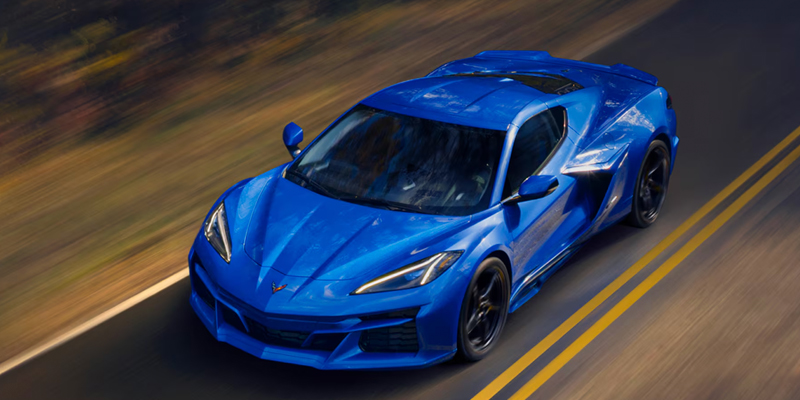
Together, those sources produce 655 horsepower. Therefore, the E Ray becomes the first Corvette with electrified all wheel drive. It also keeps the familiar sound and response of a V8 behind the cabin.
However, the E Ray does not require plug in charging. Instead, the battery gathers energy during braking and selected driving events. That energy supports the front motor during launches and other moments requiring added traction.
What Makes the 2026 Corvette E Ray Different?
The E Ray pairs a rear mounted V8 with an electric motor at the front axle. That layout separates it from every other Corvette trim.
Furthermore, the LT2 engine produces 495 horsepower. In addition, the electric drive unit adds 160 horsepower through the front wheels. Because each axle receives power from a different source, no front driveshaft links the engine to the front wheels.
This design changes how the car leaves a stop. Stingray sends its launch force through the rear tires. By contrast, E Ray can place force through all four tires at once.
Moreover, that front torque arrives quickly. Therefore, the car can apply more of its combined output during hard acceleration. The added front traction also supports steadier launches on cool or damp pavement.
Does the E Ray work like a fuel saving hybrid? No. Chevrolet uses electrification here to support acceleration and traction. The battery and motor serve the car’s road mission, not a long electric commute.
Still, the E Ray includes Stealth Mode. This mode can move the car using electric power below 15 mph. It suits short driveway, garage, or neighborhood movements when lower sound matters.
How Corvette All Wheel Drive Works
Corvette all wheel drive in the E Ray uses two separate propulsion sources. The V8 powers the rear axle. The electric unit powers the front axle.
Furthermore, the battery sits within the car and does not need a charging cable. Instead, it stores energy recovered during deceleration and braking. As a result, the car can send that stored energy to the front motor.
When does the front motor work? It can support launches, corner exits, and other moments when front traction adds control. Therefore, the E Ray can divide force across four contact patches.
A traditional all wheel drive layout may route engine power through a transfer case and driveshaft. The E Ray takes another path. Its front wheels receive electric power without a mechanical link to the V8.
Beyond that, this arrangement changes packaging. Chevrolet can add front axle drive without running a long front driveshaft from the rear engine. As a result, the E Ray keeps the mid engine Corvette architecture.
Drivers should still remember that all wheel drive does not remove tire limits. Tire type, tread depth, and surface temperature still shape grip. Therefore, proper tires remain central during colder months.
The driver displays also show key information across three screens. These screens present drive data, media, and selected controls. During a test drive, check screen placement and menu access from the seated position.
How the E Ray Compares With Stingray
Stingray uses rear wheel drive, while E Ray adds electric front axle power. That single difference changes traction, output, weight, and price.
Furthermore, the Stingray LT2 V8 produces 490 horsepower in standard form. The E Ray uses a related LT2 tune with 495 horsepower. It then adds the 160 horsepower front drive unit.
Therefore, E Ray reaches 655 combined horsepower. Stingray keeps the simpler rear drive layout. Each choice appeals to a different Corvette shopper.
Stingray may suit drivers who want the lowest Corvette entry price. It also keeps a lighter mechanical package. In addition, its rear drive layout carries the classic mid engine Corvette formula.
E Ray suits drivers who want stronger launch traction. It also suits people who expect more road time during cooler or wetter months. The front motor gives those drivers another source of grip.
Is the E Ray simply an all wheel drive Stingray? No. It adds a battery, front drive unit, wider body, and unique control logic. Those parts change more than the power figure.
In addition, price should enter the review. The 2026 E Ray starts above the Stingray. Therefore, shoppers should confirm that added traction and electric torque match their plans.
How the E Ray Compares With Z06
The E Ray and Z06 reach similar output through very different engineering paths. E Ray combines V8 power with an electric front axle. Z06 relies on a high revving LT6 V8 and rear wheel drive.
Furthermore, the Z06 LT6 produces 670 horsepower. Its engine uses a flat plane crankshaft and reaches higher engine speeds. That design gives the Z06 a sharper track focused character.
By contrast, E Ray uses immediate electric torque at the front axle. Its strength appears during launches and road acceleration. Therefore, it can deliver force across all four tires.
Is the E Ray stronger than Z06? The answer changes by task. Z06 places greater focus on track response, braking, cooling, and sustained high speed work. E Ray places greater focus on traction and rapid street acceleration.
Moreover, the two cars sound different. Z06 delivers a higher pitched exhaust note as the LT6 climbs through its rev range. E Ray keeps the deeper LT2 sound with electric support underneath.
A shopper should test each car for the intended setting. Track days may point toward Z06. Year round road use may point toward E Ray.
Price and options also deserve close review. A well equipped E Ray can move near Z06 pricing. Therefore, compare the exact build, body style, and included equipment.
Who Should Choose the 2026 Corvette E Ray?
The E Ray fits drivers who want V8 sound, electric front torque, and all wheel drive traction. It also fits shoppers seeking strong road acceleration without choosing the Z06 route.
Before choosing, review these points:
- Choose E Ray when front axle traction matters during launches, cool mornings, or damp roads.
- Choose Stingray when lower entry price and a simpler rear drive layout carry more weight.
- Choose Z06 when track use, high engine speed, and sharper circuit response lead the decision.
In addition, body style matters. The E Ray comes as a coupe or convertible. In addition, LZ levels change seating, audio, cameras, and cabin equipment.
Ross Downing Corvette inventory may include several combinations. Therefore, compare the exact build instead of relying only on the trim name. Check the body style, LZ level, wheels, brakes, and listed options.
The 2026 E Ray stands apart because its hybrid layout serves traction first. It keeps V8 power at the rear. Then it adds electric force at the front.
That structure gives the E Ray a distinct place within the Corvette range. It is not a Stingray substitute or a Z06 copy. It is the Corvette for drivers who want electrified all wheel drive and rapid road acceleration.


