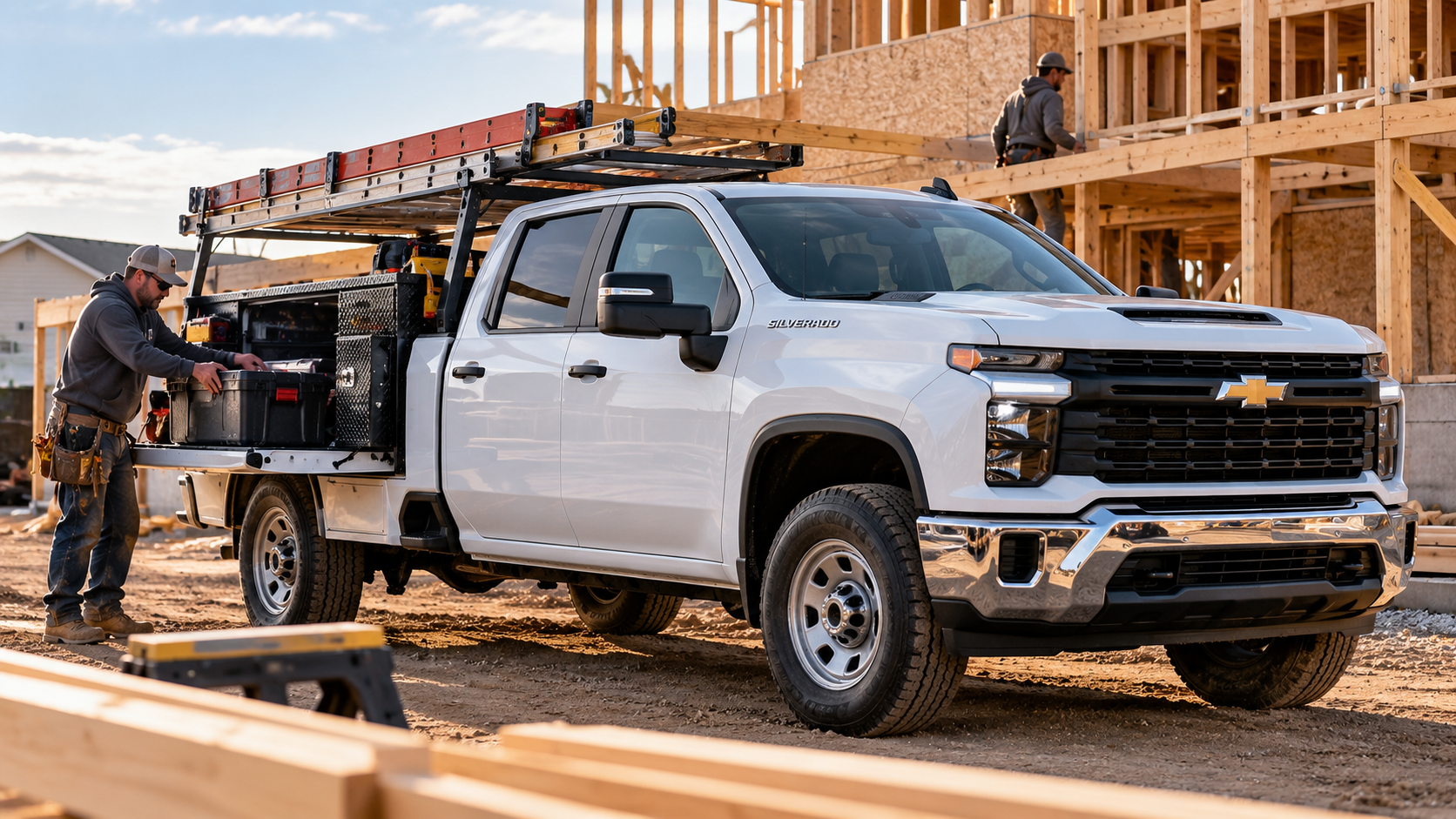





Chevy commercial fleet incentives can be part of a Silverado purchase, but truck selection should come first. A small business needs a truck that matches its daily jobs. Therefore, start with towing, payload, cab space, bed needs, and planned equipment. Then review Chevrolet commercial programs that may apply to the purchase. Financing and tax questions belong in that same discussion. Start With the Work Your Silverado Needs to Do A Silverado for small business use should match the work assigned to it. Therefore, begin with the jobs the truck will handle each week. Those duties can point toward Silverado 1500, Silverado HD, or a specialized commercial configuration. Silverado 1500 can serve businesses with lighter towing and hauling needs. It can also work for service calls, estimates, deliveries, and daily jobsite travel. However, heavier trailers or equipment may call for Silverado HD. Your first review should cover several details: Estimate the heaviest trailer the truck will pull and the equipment it will carry. Decide how much passenger space the crew needs during a normal workday. List the tools, racks, storage boxes, or other equipment that must travel with the truck. Additionally, think about annual mileage. A truck that travels between jobs all day may need different priorities than one staying near one site. Ross Downing Chevrolet lists both Silverado 1500 and Silverado HD models in its new Chevrolet inventory. Comparing both classes can make the size decision easier before you discuss incentives. Match the Trim and Configuration to the Job The trim name should follow the job. Therefore, a business should decide what the truck must carry before choosing cabin equipment or appearance features. The Silverado WT is the starting work focused trim. Ross Downing Chevrolet currently lists WT configurations within its Silverado HD inventory. However, another trim may fit a business that spends more hours traveling between customers. Cab configuration also deserves attention. A crew that travels together may need a Crew Cab. By contrast, a truck assigned to one person may not need as much rear seating. Bed length can shape daily use too. Longer materials, tool storage, or larger equipment may call for more bed space. Still, parking space and route type should remain part of the decision. Upfits should be discussed before the purchase is finalized. Common additions can include: Bed protection, steps, tie downs, and tool storage for daily jobsite use. Racks or storage equipment for businesses carrying long tools or materials. Specialized bodies or equipment for trades that need a dedicated commercial setup. The Ross Downing Chevrolet Silverado HD inventory provides a closer look at current heavy duty configurations. That can help a business compare WT with other available trims. How Commercial Incentive Programs Differ Chevrolet commercial offers do not all follow the same rules. Therefore, business owners should identify the program before comparing dollar amounts. Chevrolet Business Choice is one program to review. Eligible customers may receive an allowance toward qualifying GM Accessories or an eligible upfit. However, eligible vehicles, amounts, and offer dates can change. A fleet allowance follows different rules. GM Fleet requires qualified fleet status for its National Fleet Purchase Program. A Fleet Account Number is part of that qualification process. That distinction matters for a small company purchasing one or two trucks. Business ownership alone does not confirm fleet eligibility. Therefore, ask which program applies before adding an allowance to the purchase calculation. Retail Chevrolet offers can also appear on a truck at the same time. However, each offer has its own eligibility rules. Some programs may not combine with others. Before counting an incentive, confirm: Whether your business meets the current program requirements. Whether the exact Silverado configuration qualifies for the offer. Whether the offer can be combined with other current Chevrolet programs. Current offers should always be verified at the time of purchase. Therefore, treat any advertised amount as time sensitive until the dealership confirms eligibility. Build Financing and Tax Questions Into the Purchase Truck selection and financing should be reviewed together. A small business may care more about monthly cash flow than the lowest possible payment alone. Therefore, consider how long the business plans to keep the truck. Also review expected mileage and replacement timing. Those details can shape the preferred loan term and down payment. The Ross Downing Chevrolet finance department provides financing resources and an online credit application. Current rates and programs can change, so direct confirmation remains important. Tax treatment deserves a separate review with a qualified tax professional. Chevrolet currently publishes guidance for qualifying business vehicle deductions. However, vehicle weight and configuration can affect which rules apply. A Silverado 1500 configuration may not receive the same tax treatment as another Silverado. Therefore, do not assume every truck qualifies for the same deduction. Before finalizing the purchase, gather these details for your tax professional: Exact model and configuration, including bed length and gross vehicle weight rating. Expected percentage of business use during the tax year. Purchase timing and the date the truck will enter business service. Tax law can change, and each business has its own circumstances. Therefore, dealership staff should not replace professional tax advice. Prepare for a Small Business Truck Conversation The most useful commercial truck discussion starts with specific information. Therefore, bring details about the work before asking which Silverado to purchase. Know your towing needs, typical cargo, annual mileage, number of passengers, and planned equipment. Also identify whether the truck will stay with one employee or rotate through a team. Furthermore, explain whether the vehicle will support construction, service calls, deliveries, agriculture, or another trade. That context makes it easier to narrow the configuration. You should also bring questions about current Chevrolet programs. Ask whether Business Choice applies to the truck you are considering. Then ask whether your company qualifies for fleet status or another current offer. Finally, compare the full acquisition cost. Include the truck, added equipment, financing, insurance, and planned maintenance. Then review any eligible commercial program separately. A small business Silverado purchase works best when the truck and the financial structure support the same job. Start with what the truck must carry and tow. Then compare current Chevrolet offers against verified eligibility. You can contact Ross Downing Chevrolet to discuss current Silverado inventory and commercial purchase questions.