





Silverado 2500 vs 3500 Difference
Explore New Silverado HD Inventory
Call Our Heavy Duty Chevrolet Truck Team
Schedule a Silverado HD Comparison Drive
| Sales | ||
| Day | Open | Closed |
| Monday | 8:30AM | 7:30PM |
| Tuesday | 8:30AM | 7:30PM |
| Wednesday | 8:30AM | 7:30PM |
| Thursday | 8:30AM | 7:30PM |
| Friday | 8:30AM | 7:30PM |
| Saturday | 9:00AM | 5:30PM |
| Sunday | Closed | Closed |
Choose Between Silverado 2500 HD and 3500 HD for the Trailer and Work Ahead
The Silverado 2500 vs 3500 difference matters most when the trailer, pin weight, bed load, or next piece of equipment pushes you to question whether 2500 HD still clears the job. Around Hammond, the answer starts with the exact loaded setup, then moves into truck class, rear wheel configuration, hitch type, cab, and bed.
Both trucks sit in the Silverado HD family and share major powertrain paths, yet that does not make them interchangeable. The 2500 HD can cover substantial trailer and work demands. The 3500 HD opens a higher upper range and adds rear wheel choices that may fit heavier truck carried loads. The strongest choice is the one that clears the full setup without buying around a number you may never use.
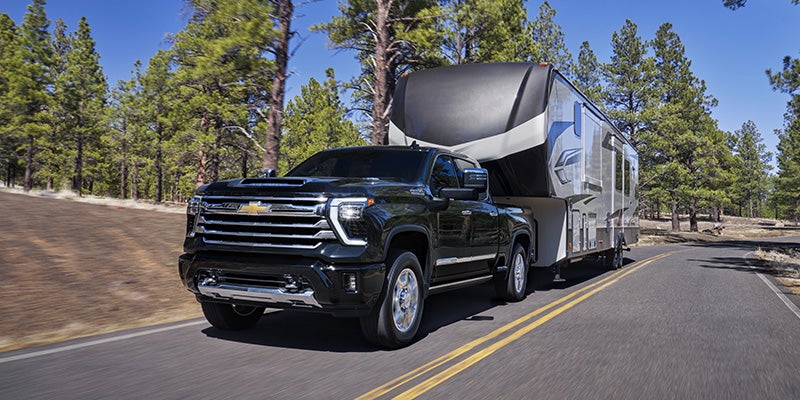
Start With the Loaded Setup
Before comparing badges, write down the trailer and truck load as they will be used. Start with expected loaded trailer weight. Dry weight can rise once tools, water, supplies, equipment, vehicles, livestock, fuel, or camping gear are added. Then identify whether the trailer uses a conventional receiver, fifth wheel, or gooseneck connection.
Next, count what rides in the truck. Passengers, bed cargo, hitch hardware, toolboxes, accessories, and trailer tongue or pin weight all belong in the review. A fifth wheel owner can have a very different truck carried load than someone pulling a conventional equipment trailer at a similar total trailer weight.
A useful comparison starts with:
- Expected loaded trailer weight
- Hitch type
- Estimated tongue or pin weight
- Passenger count
- Cab cargo
- Bed cargo
- Fixed equipment
- Likely next trailer
Those inputs reveal whether the exact 2500 HD already clears the job or whether 3500 HD deserves a closer look.
A truck used for equipment around Hammond may carry crew members, tools, and a trailer on the same trip. A camper setup may combine family members, luggage, bed cargo, hitch hardware, and pin weight. Looking at trailer weight alone leaves too much of the truck decision unanswered.
When Silverado 2500 HD Is Enough
The 2500 HD should remain the focus when the exact truck clears the loaded trailer, truck carried weight, hitch setup, and future plans. Moving to a higher class should solve a clear problem. If no problem exists, the higher badge does not create a stronger purchase by itself.
The 2026 Silverado 2500 HD reaches a maximum Crew Cab tow figure of up to 22,070 pounds when properly equipped. That upper figure shows how far a qualifying 2500 HD can reach, but the exact truck still needs to match the trailer connection and full load.
Stay focused on 2500 HD when:
- The loaded trailer fits the exact truck rating
- Tongue or pin weight fits the truck side of the calculation
- Passengers and bed cargo leave room within the truck rating
- The planned hitch setup matches the applicable tow data
- The likely next trailer remains within the selected setup
The 2500 HD can be the sound stopping point for substantial work trailers, campers, boats, equipment trailers, and other heavy loads when the numbers fit. A shopper should not move into 3500 HD merely because the higher model carries a larger upper figure.
The decision tension appears when the load begins pressing close to the selected truck's limits or when the next trailer is already known to be heavier. That is the point to open a 3500 HD comparison instead of forcing the 2500 HD to fit a job it was not selected to carry.
When Silverado 3500 HD Deserves a Closer Look
The Silverado 3500 HD belongs in deeper research when the loaded setup moves beyond the chosen 2500 HD or when the truck must support much more weight while towing. Chevrolet lists up to 36,000 pounds of maximum available diesel towing for a qualifying Silverado HD setup, with the 3500 HD reaching the top end of the line.
That upper range is only part of the reason to compare it. A shopper may reach 3500 HD research through heavy fifth wheel pin weight, substantial gooseneck load, frequent bed cargo, fixed work equipment, or interest in dual rear wheels.
Look closer at 3500 HD when:
- The selected 2500 HD no longer clears the loaded trailer
- Pin weight narrows the truck side of the calculation
- Heavy bed cargo travels with the trailer
- A larger trailer is already planned
- Single rear wheel 3500 HD ratings better match the setup
- Dual rear wheels belong in the load plan
The step from 2500 HD to 3500 HD should answer a specific need. A contractor carrying equipment in the bed while pulling a heavy trailer may reach that point sooner than an owner whose truck is empty apart from passengers and a lighter hitch setup.
The 3500 HD also deserves attention when the current trailer fits today but the next trailer is already selected. Use its likely loaded numbers instead of vague future growth. A concrete trailer plan gives the comparison a factual base.
Payload and Pin Weight Can Change the Answer
Tow rating gets most of the attention, yet truck carried weight can settle the 2500 HD versus 3500 HD question before the trailer reaches a broad maximum.
Payload includes the weight carried by the truck. Passengers count. Tools count. Bed cargo counts. Hitch hardware counts. Added accessories count. Trailer tongue or pin weight also enters the truck side of the calculation.
Consider a fifth wheel setup. The total trailer weight may fit a broad tow figure, but a portion of that trailer load is placed into the truck through the hitch. Add several adults, a bed mounted hitch, luggage, tools, and other cargo, and the truck is supporting several sources of weight at once.
Build the truck side of the review with:
- Passengers
- Cab cargo
- Bed cargo
- Hitch hardware
- Toolbox or fixed equipment
- Tongue or pin weight
- Added accessories
Then compare the total with the exact vehicle.
This is a major point where 3500 HD research can begin. The shopper may not need a much heavier trailer. The issue may be the amount of weight the truck must support while towing it.
It can also confirm that 2500 HD remains enough. If the exact truck clears the loaded trailer and carried weight with room for the planned setup, there is no reason to move higher only because a 3500 HD exists.
Shared Engines Do Not Make the Trucks Interchangeable
The 2026 Silverado HD family offers a 6.6L gas V8 and an available 6.6L Duramax Turbo Diesel V8. Seeing the same engine choices across the HD line can make the 2500 HD and 3500 HD look closer than they are.
Engine choice and truck class are two separate decisions.
A Duramax 2500 HD does not inherit the rating of a Duramax 3500 HD. A gas 3500 HD should not be judged by the figures of a gas 2500 HD. The exact truck setup still controls the applicable numbers.
Choose the engine by asking what the truck will pull, how frequently it will tow, how much work happens without a trailer, and whether a heavier trailer is planned. Choose the truck class by checking the loaded trailer, truck carried weight, hitch setup, and exact vehicle ratings.
A shopper may find that a Duramax 2500 HD clears the job. Another may need a 3500 HD because pin weight or bed load changes the truck side of the equation. A third may prefer a gas setup because the load fits and the truck spends more miles without a heavy trailer.
Treat powertrain and class as connected choices, not the same choice.
Single Rear Wheel or Dual Rear Wheel
The 3500 HD comparison should not jump straight from 2500 HD to a dually. A single rear wheel 3500 HD may belong in the middle of the research.
Single rear wheel setups keep one tire on each side of the rear axle. Dual rear wheel setups add a second tire on each side, creating a wider rear footprint. That wider setup enters the conversation when upper load demands, substantial pin weight, or a qualifying maximum tow configuration calls for it.
The tradeoff is size. A dual rear wheel truck is wider at the rear. Parking spaces, drive through lanes, narrow jobsite access, gates, and other tight areas deserve attention.
A useful sequence is:
- Check whether the exact 2500 HD clears the loaded setup.
- If it does not, compare a single rear wheel 3500 HD.
- Move into dual rear wheel research when the load and selected configuration call for it.
That sequence prevents the shopper from treating every 3500 HD as the same truck. It also keeps the rear wheel decision tied to weight and route needs instead of appearance.
For a truck that will spend substantial time in tighter Hammond parking areas without a trailer, rear width may carry more weight in the choice. For a truck supporting a large fifth wheel or heavy work trailer, the load may point in another direction.
Match Conventional, Fifth Wheel, and Gooseneck Ratings
The trailer connection changes which rating belongs in the comparison.
A conventional trailer connects near the rear of the truck through a receiver hitch. Fifth wheel and gooseneck trailers place the connection in the bed area. Those setups change where trailer load enters the truck and which rating data should be reviewed.
A conventional equipment trailer owner should compare the conventional figures for the exact 2500 HD and 3500 HD setups. A fifth wheel owner needs the applicable fifth wheel figure and a separate pin weight check. A gooseneck owner needs the gooseneck figure, truck carried load review, and bed space check.
Do not take the highest number attached to either model and apply it across every trailer.
The hitch decision can also change the class choice. A 2500 HD may clear one conventional trailer setup while a fifth wheel with substantial pin weight pushes the truck side of the calculation higher. Another owner may find that the exact 2500 HD still clears both the trailer and carried load.
Match the trailer connection first. Then compare the exact trucks.
Compare Cab, Bed, and Truck Footprint
The 2500 HD and 3500 HD badges do not tell you the whole size story. Cab, bed, and rear wheel setup shape the truck you will park and maneuver.
A Crew Cab with a Long Bed creates a different footprint from a Regular Cab or another cab and bed pairing. A dual rear wheel 3500 HD adds rear width that a single rear wheel truck does not carry.
Start with the people and equipment. Choose cab space around regular passengers. Choose bed length around cargo, toolboxes, hitch hardware, and work needs. Then compare overall size and rear width.
This matters for garages, narrow gates, jobsite access, store parking, and the routes the truck will travel without a trailer.
Do not assume every 3500 HD is dramatically larger in every direction than every 2500 HD. Compare the exact configurations side by side.
Plan for the Next Trailer With Real Numbers
A future trailer should enter the truck choice only when the plan is concrete enough to measure.
If a larger camper, equipment trailer, boat, or livestock trailer is already being considered, gather its likely loaded weight, hitch type, and tongue or pin weight. Add the people and cargo expected in the truck.
Then run the same 2500 HD versus 3500 HD comparison with those numbers.
The tradeoff is buying around today versus replacing the truck after the trailer changes. Moving higher now may fit the next trailer, but it also changes the truck being purchased today. Staying with 2500 HD may fit current work cleanly, yet a known heavier trailer could restart the search sooner.
Avoid buying around "maybe someday." Use a likely trailer with usable figures. Concrete data keeps future planning from turning into guesswork.
Narrow the Exact Silverado HD Near Hammond
The final comparison should leave you with a smaller set of trucks.
If the exact 2500 HD clears the loaded trailer, truck carried weight, hitch setup, and future plan, keep the search there. If those numbers push higher, compare 3500 HD. If rear wheel setup becomes part of the load question, review single rear wheel and dual rear wheel trucks separately.
Ross Downing Chevrolet in Hammond gives local truck shoppers a place to compare Silverado HD configurations and inspect the exact vehicle behind each listing. Bring the trailer's expected loaded weight, hitch type, tongue or pin weight, passenger count, bed cargo, and future trailer information.
Those facts make it easier to verify whether the truck in front of you fits the work ahead.
Which body type is better suited for towing?
The stronger body setup is the one that fits passenger count, bed needs, trailer connection, and the exact truck rating. Crew Cab space may suit a team or family, while Regular Cab can pair a simpler seating layout with a work focused truck setup. Review the exact cab, bed, drivetrain, hitch type, and loaded trailer before choosing.
How do Silverado trim levels change towing and technology features?
Trim choice can change available camera views, cabin equipment, trailering tools, exterior hardware, and other features, but the truck setup still controls the applicable tow rating. Compare engine, cab, bed, drivetrain, rear wheel setup, and trailering equipment first. Then choose the trim that adds the technology and cabin features you plan to use.
Which towing factors should I compare before choosing a heavy duty truck?
Compare expected loaded trailer weight, hitch type, tongue or pin weight, passenger load, bed cargo, fixed equipment, drivetrain, rear wheel setup, and the exact vehicle rating. Future trailer plans also belong in the review when a heavier trailer is already being considered. Those figures give you a stronger basis for comparing 2500 HD and 3500 HD.
Is the Chevrolet Silverado good for daily driving?
A Silverado can fit routine driving when its cab, bed, rear wheel setup, parking footprint, and route needs suit the owner. A 2500 HD or 3500 HD may spend part of the week without a trailer, so compare visibility, turning space, rear width, seating, and parking access along with towing and payload figures.
(Note: Pricing details are not included here. For financing and vehicle purchase information, please contact our dealership.)