




Choosing an SUV starts with the passengers and gear you need to carry. The Chevrolet SUV lineup spans compact five-seat crossovers, three-row family vehicles, and electric options. Some offer extra cargo room without adding another seating row. Others accommodate larger groups or heavier trailers. Compare cabin layouts, exterior dimensions, and powertrains before deciding which model deserves a closer look.
Chevrolet Trax and Trailblazer Small SUVs
The Trax and Trailblazer both seat five, but their shapes and drivetrain choices differ. By contrast, the Trax has a longer, lower body, while the Trailblazer stands taller despite its shorter length. Therefore, model order alone does not establish which Chevrolet SUV takes up less parking space. Check the published dimensions for the exact model year.
The 2026 Trax offers front-wheel drive and up to 54 cubic feet of cargo volume with rear seats folded. Its lower roofline creates a distinct loading opening and driving position. By contrast, the 2026 Trailblazer offers available all-wheel drive and up to 54.4 cubic feet of maximum cargo room. Available all-wheel drive sends power to additional wheels when its controls call for extra traction.
Additionally, both models have a second row that folds for longer cargo. However, the maximum figures do not describe storage available while carrying five people. An upright rear seat leaves a smaller area for groceries, sports bags, or a stroller.
During an in-person comparison, focus on these measurements:
- Rear seating: Check legroom and access with your usual passengers in place.
- Cargo opening: Measure the height and width needed for larger bags or equipment.
- Parking clearance: Compare overall length and roof height with your garage or regular parking space.
The Trax deserves attention when front-wheel drive suits your plans and you prefer its lower body. By contrast, the Trailblazer adds an available all-wheel-drive choice. Try both seating positions before choosing between them.
Chevrolet Equinox and Blazer Two-Row SUVs
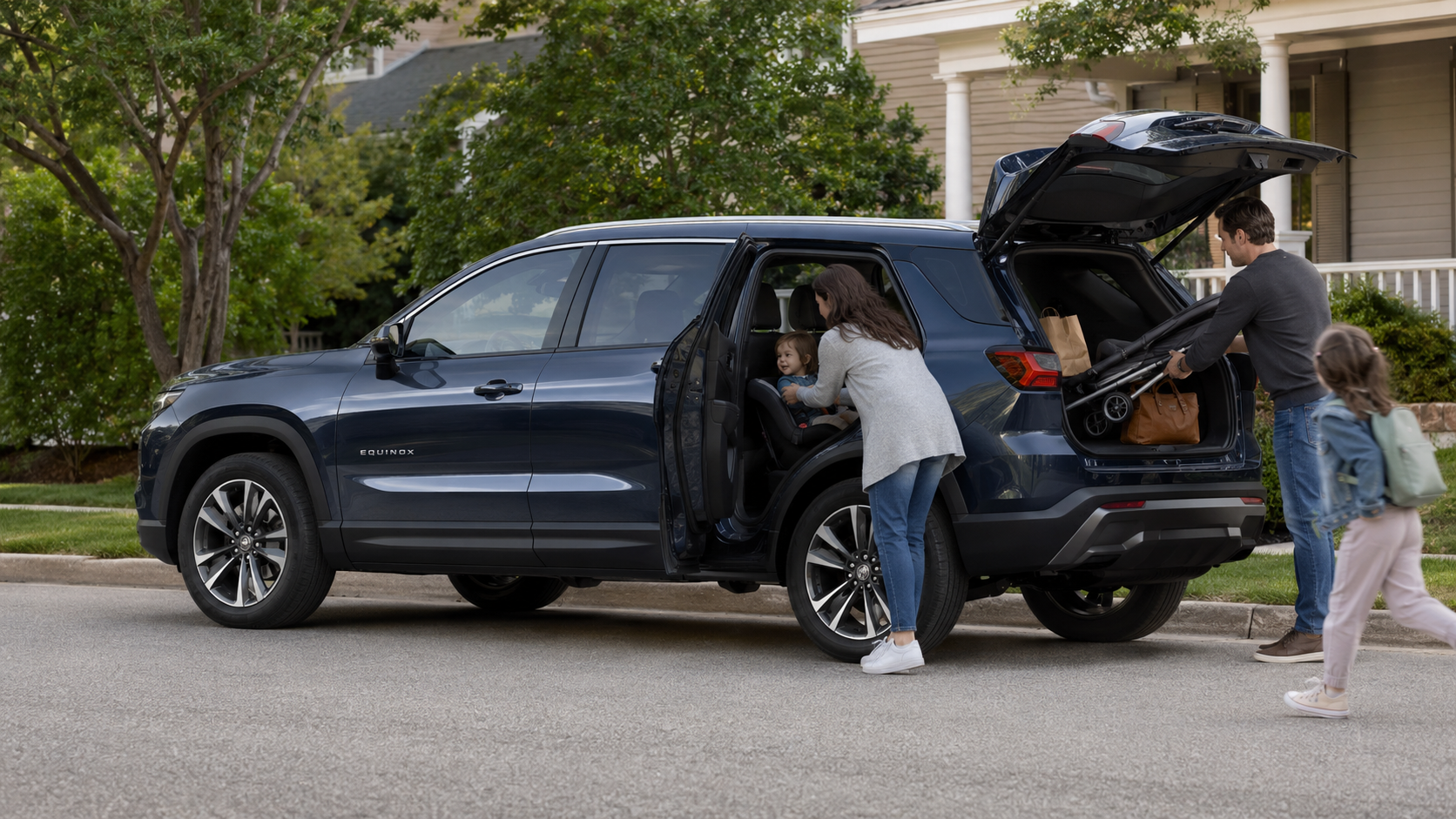
The Equinox and gasoline-powered Blazer keep five-passenger seating while offering more maximum cargo room than Chevrolet's smaller crossovers. The Equinox provides up to 63.5 cubic feet behind the front seats with its rear row folded. The Blazer offers up to 64.2 cubic feet in the same general cargo arrangement. These figures come from Chevrolet's current model listings and should be checked against the selected model year.
Furthermore, moving to a larger two-row SUV changes more than the cargo figure. Seat width, cargo opening shape, and overall vehicle dimensions also deserve inspection. Therefore, compare the space behind an upright second row before relying on maximum measurements. That is the storage area you will use while carrying rear passengers.
The Equinox offers a five-passenger layout with available all-wheel drive on eligible configurations. The Blazer introduces a different exterior shape and powertrain choices. However, neither replaces a three-row vehicle when you need seating for six or more people.
The distinction between the Trax and Equinox warrants a closer comparison when your priorities involve rear seating and cargo. Ross Downing Chevrolet's Equinox vs Trax comparison explores that narrower decision. For this lineup overview, the main question is whether more two-row space meets your needs before considering another seating row.
Chevrolet Traverse and Three-Row Seating
The Traverse adds a third row for households carrying more than five people. Chevrolet lists seating for up to eight in current versions, based on the second-row arrangement. A bench supplies an additional seating position, while captain's chairs create a passage toward the back. Therefore, choosing the second row changes both passenger capacity and access.
Chevrolet reports up to 98 cubic feet of cargo volume with the rear rows folded. However, that maximum does not describe luggage room during a full passenger trip. The space behind an occupied third row becomes the more useful measurement for school travel or vacations.
Additionally, the Traverse uses a turbocharged four-cylinder engine and a crossover structure. Its layout differs from the truck-based Tahoe and Suburban, which offer higher maximum trailer ratings. Still, a three-row design may answer the seating question without moving to a larger full-size SUV.
Before choosing a Traverse, sit in all three rows and check the movement of the second-row seats. Then measure the luggage area with every required seat upright. Also inspect parking visibility and the space needed to open the rear liftgate. Those checks connect its published passenger count with the way your household travels.
Chevrolet Tahoe and Suburban Full-Size SUVs
The Tahoe and Suburban provide three-row seating with truck-based construction. Both offer configurations for up to nine passengers on eligible models. Their engines and trailer equipment also differ from Chevrolet's smaller crossovers. However, the Suburban adds body length and more cargo room behind the third row.
For the 2026 models, Chevrolet lists up to 122.7 cubic feet of maximum cargo room in the Tahoe. The Suburban raises that figure to 144.5 cubic feet. These are measurements with seating folded, not luggage space for nine passengers. Therefore, check the cargo area with all needed seats upright.
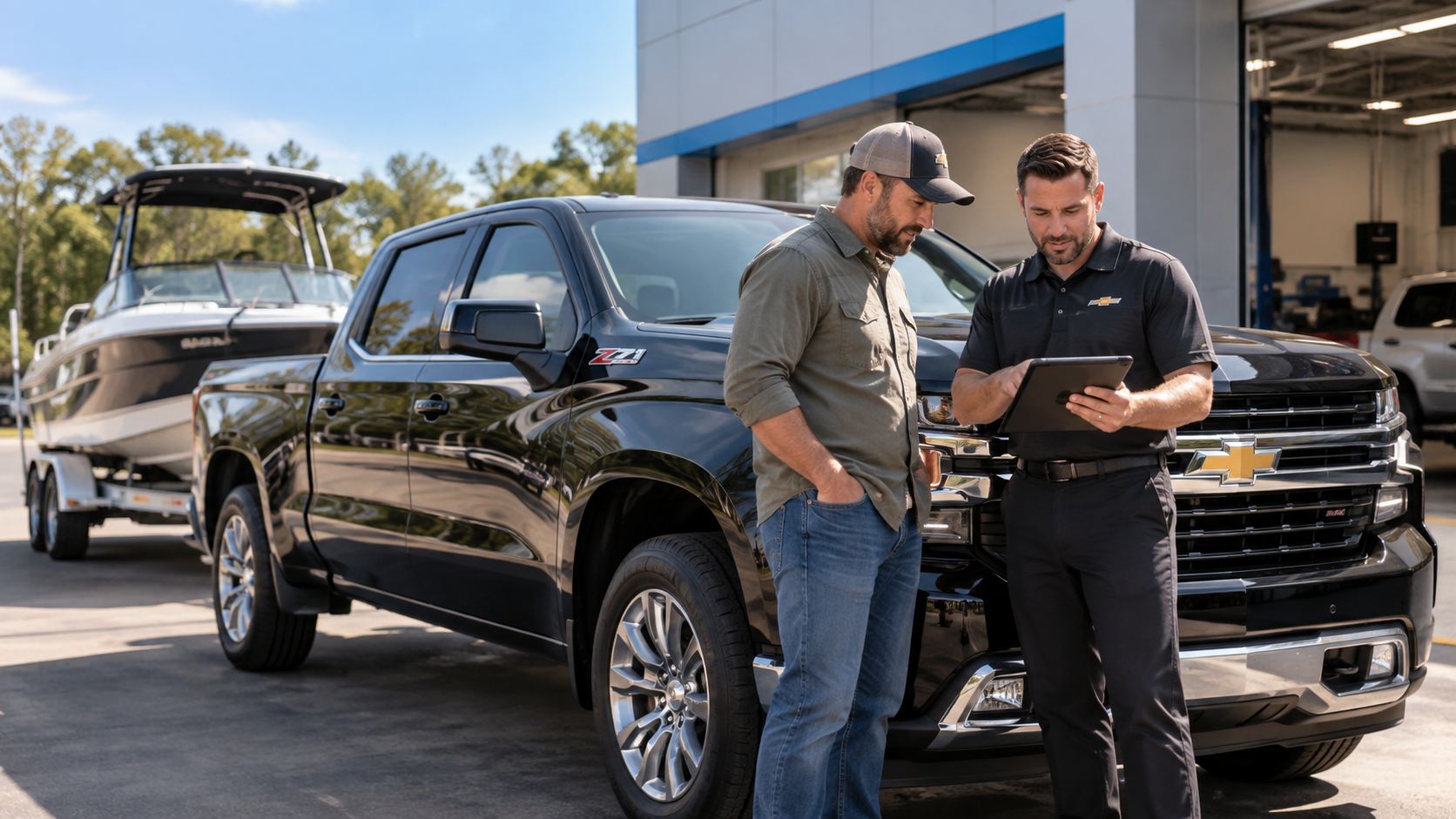
In addition, both SUVs offer gasoline V8 engines and an available Duramax diesel. The Tahoe can tow up to 8,400 pounds when properly equipped. Trailer ratings change with drivetrain, equipment, and vehicle configuration. Consequently, verify the actual SUV's towing and payload limits before choosing a trailer.
The Tahoe's shorter body may suit households that need full-size towing and seating without the Suburban's additional length. The Suburban deserves closer attention when luggage must travel behind an occupied third row. For the related crossover decision, see the dealership's Traverse vs Tahoe comparison. It examines seating, cargo, and towing differences in greater detail.
Chevrolet Equinox EV and Blazer EV
The Equinox EV and Blazer EV add battery-powered choices to Chevrolet's five-passenger SUV range. They are distinct vehicles from the gasoline Equinox and Blazer, not simply engine substitutions. Electric motors turn stored battery energy into wheel movement. Therefore, charging access becomes part of selecting a vehicle.
Chevrolet's current national listings give the Equinox EV up to 57.2 cubic feet of cargo room. The Blazer EV offers up to 59.1 cubic feet. Their published range figures vary by model year, battery, and drivetrain. As a result, compare the official rating for the exact version you are considering.
Home charging can make overnight replenishment part of a normal parking routine. Public charging requires checking station compatibility, connector access, and charging speed. Furthermore, travel distance and charging stops deserve attention before a longer trip. Weather, speed, and accessory use can also change the distance available from a charge.
Still, both electric models maintain two seating rows. Check rear-seat room, charging-port placement, and cargo space with passengers aboard. A test drive should also include the accelerator response and regenerative braking settings. Those details make the electric choices easier to compare with gasoline SUVs.
Choosing the Right Chevrolet SUV Size
Start by counting passengers on the busiest trips you make. Five seats may cover your routine, while a third row creates room for additional family members. Next, identify the gear that must fit without folding occupied seats. However, a maximum cargo figure alone cannot answer that question.
Then assess parking and travel demands. A longer SUV needs more room in your driveway and crowded lots. Trailer plans introduce another check, because the chosen vehicle must meet its own loaded towing and payload ratings. Electric models add charging access and planned travel distance to the decision.
Use this short checklist to narrow your options:
- Passenger arrangement: Count occupied seats and check entry to the rear row.
- Cargo with passengers: Measure luggage space while keeping required seats upright.
- Driving and towing: Match exterior size and vehicle-specific ratings with your routine.
- Fuel or charging: Consider gasoline, diesel, or electric travel before selecting a model.
Once you identify a likely fit, explore new Chevrolet inventory at Ross Downing Chevrolet in Hammond. If the Tahoe meets your seating or towing requirements, review the dealership's Tahoe inventory as well. Compare individual configurations, then arrange time to inspect the cabin and cargo area.
The right Chevrolet SUV should carry your people and belongings while fitting the places you drive. Begin with seating and cargo, then examine dimensions, towing, and powertrain choices. That approach gives you a clearer path from a broad lineup to a specific vehicle.