





Chevy Trailblazer vs Trax
| Sales | ||
| Day | Open | Closed |
| Monday | 8:30AM | 7:30PM |
| Tuesday | 8:30AM | 7:30PM |
| Wednesday | 8:30AM | 7:30PM |
| Thursday | 8:30AM | 7:30PM |
| Friday | 8:30AM | 7:30PM |
| Saturday | 9:00AM | 5:30PM |
| Sunday | Closed | Closed |
| Service | ||
| Day | Open | Closed |
| Monday | 7:30AM | 6:00PM |
| Tuesday | 7:30AM | 6:00PM |
| Wednesday | 7:30AM | 6:00PM |
| Thursday | 7:30AM | 6:00PM |
| Friday | 7:30AM | 6:00PM |
| Saturday | Closed | Closed |
| Sunday | Closed | Closed |
| Parts | ||
| Day | Open | Closed |
| Monday | 7:30AM | 5:30PM |
| Tuesday | 7:30AM | 5:30PM |
| Wednesday | 7:30AM | 5:30PM |
| Thursday | 7:30AM | 5:30PM |
| Friday | 7:30AM | 5:30PM |
| Saturday | Closed | Closed |
| Sunday | Closed | Closed |
Chevy Trailblazer or Trax for Your Commute, Budget, and Weekend Plans
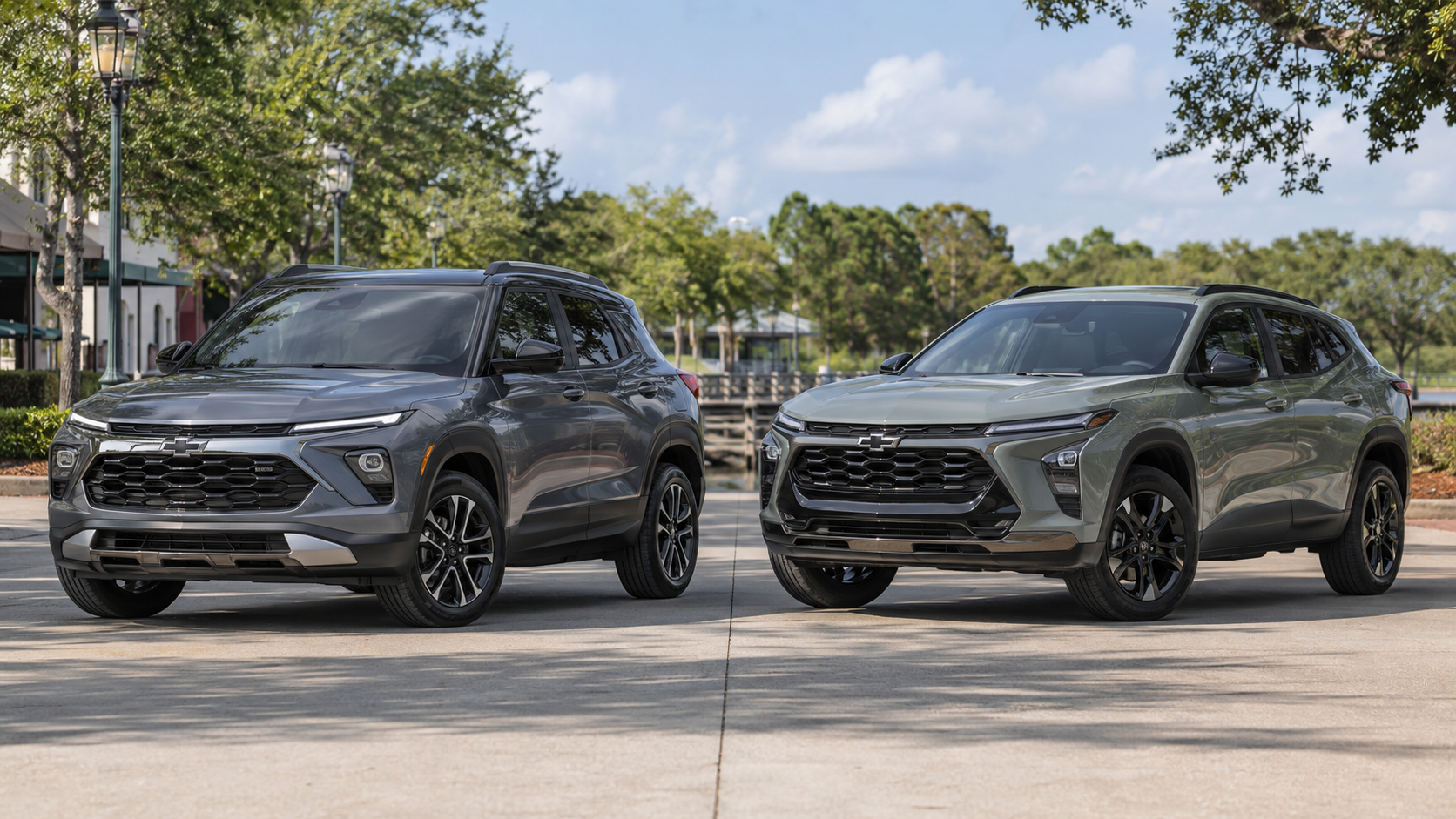
Comparing the Chevy Trailblazer and Trax gets easier once you stop asking which SUV is simply bigger and start looking at what each one gives you for your budget and routine. These two Chevrolet SUVs sit close together in the lineup, seat five, and cover similar daily transportation needs, yet they reach that goal through different combinations of price, drivetrain, size, and equipment.
The Trax gives shoppers a lower entry point and a front wheel drive layout. Trailblazer moves into a different part of the decision by offering available all wheel drive and another engine choice. Exterior dimensions do not tell the whole story either. A shopper expecting Trailblazer to be the larger vehicle based solely on its position in the Chevrolet lineup can be surprised once the two are parked together.
Start with the part of your routine that carries the most weight. If keeping vehicle cost lower is first on the list, begin with Trax. If available AWD is a requirement, move Trailblazer to the front. If passenger room, cargo, technology, or trim features will settle the decision, compare those items side by side rather than choosing from model name alone.
Compare Price by the Features You Plan to Buy
Trax begins from the lower side of this Chevrolet comparison, which gives it an immediate draw for shoppers watching the purchase budget closely. That does not mean the base price should settle the decision.
Start by listing the equipment you expect to have before comparing trims. Useful checkpoints include:
- Touchscreen size and instrument display
- Heated seats and remote start
- Driver assistance technology
- Wheel and exterior styling
- Seat material and cabin finishes
- Convenience equipment you plan to use each week
Trax offers several ways to move upward from a simple entry model into trims with stronger visual treatments and more cabin equipment. Trailblazer follows its own trim path, including choices aimed at sportier styling or a more rugged appearance.
A shopper drawn to a higher Trax trim may find that the price gap to a Trailblazer worth considering becomes smaller. At that point, available AWD or a different engine can enter the conversation.
Set your target equipment first. Then compare prices between SUVs that meet the same list rather than comparing the two least expensive versions and assuming that difference will remain unchanged.
Do Not Use Exterior Size Alone to Pick Between Them
The names can make the Trailblazer sound like the obvious step upward in physical size, but these SUVs are closer than that assumption suggests. Current comparison research even places the Trax slightly longer overall.
That is a good reason to separate exterior measurements from usable cabin space. During an in person comparison, check:
- Rear seat legroom with the front seat in your normal position
- Door openings when loading children, bags, or larger items
- Seat height and how easily passengers enter the cabin
- Driver visibility when parking or moving through tight streets
- Overall length and width against your garage or parking space
A few inches in one exterior measurement do not tell you whether a child seat fits more comfortably or whether an adult passenger prefers one rear seat.
Sit in both rows during a dealership visit. Move the front seat into your normal driving position, then check the space behind it. Open every door. Look at how high you step into the cabin. Check visibility from the driver's seat and how easily you can judge the corners of the SUV.
The same approach works if you spend most of your time in Hammond traffic, parking lots, or residential streets. Measurements narrow the field. Sitting in both vehicles tells you which proportions work better for you.
AWD Creates the Clearest Mechanical Split
Trax uses front wheel drive. Trailblazer gives shoppers the option to add all wheel drive.
For some buyers, that distinction settles the comparison quickly. Available AWD deserves closer consideration when your routine includes:
- Gravel access roads
- Rural property
- Wet grass or unpaved parking areas
- Campsites
- Boat launches
- Frequent travel away from maintained pavement
If you spend nearly all of your time on paved roads and have no specific reason for AWD, Trax keeps the drivetrain decision simple. Front wheel drive can cover commuting, errands, school runs, highway trips, and the routine driving most small SUV owners ask from their vehicle.
The decision should still start with where you drive rather than the presence of an AWD badge. Buying Trailblazer only because AWD is available carries little weight if you know you plan to select front wheel drive anyway. In that case, price, interior fit, trim equipment, and styling return to the center of the comparison.
If AWD is nonnegotiable, though, the decision becomes much shorter. Trailblazer is the Chevrolet option between these two that keeps it available.
Engine Choice Changes the Trailblazer Side of the Decision
Trax keeps the powertrain decision straightforward with its turbocharged 1.2 liter three cylinder engine.
Trailblazer gives shoppers another layer to consider through available engine choices. That means someone comparing these SUVs should look past model level horsepower figures and make sure they know which Trailblazer engine is in the vehicle they are evaluating.
Think about where most of your driving happens. Stop and go traffic places different demands on a small SUV than frequent interstate travel. Carrying passengers and cargo changes how acceleration feels compared with driving alone. Even the route you take during a test drive can hide or reveal differences between two powertrains.
Drive both models on a route that resembles your routine. Include a normal merge, a stop followed by acceleration, and a section where the transmission has time to settle at cruising speed. You are trying to learn whether the vehicle responds naturally to the way you drive rather than chasing the largest number on a specification sheet.
Cargo Space Needs Context Before You Compare the Numbers
Cargo specifications are useful, but the shape of the area can matter as much as the final cubic foot figure.
Both SUVs give you a folding second row, which means the cargo area changes considerably once passenger seating is no longer needed. Before choosing between them, think about what normally goes behind the second row while the seats stay upright.
Groceries, strollers, sports equipment, pet carriers, luggage, work bags, and home improvement purchases all use cargo space differently. A wide object raises different concerns than a tall one. A long item can require folding only part of the rear seat.
Bring measurements for any item that routinely travels with you. If a stroller or large crate needs to fit without folding the rear seats, verify it in that configuration. If you frequently carry longer items, check how flat the load area becomes and whether the front passenger area needs to stay open.
Cargo numbers give you a starting point. Your most common load gives you the answer.
Choose the Model That Fits the Majority of Your Week
The Trax makes a strong case when purchase budget, five passenger seating, straightforward front wheel drive, and a roomy small SUV format sit high on your list. It keeps the decision centered on trim and equipment without asking you to choose an AWD setup.
Trailblazer moves ahead when available AWD carries real weight or when its engine choices, proportions, trim structure, or cabin layout suit your routine more closely.
Neither decision needs to come from a single specification.
Think through where you drive Monday through Friday, who normally rides with you, what stays in the cargo area, and which features you use every time you get behind the wheel. Then consider the less frequent trips. Weekend travel and occasional cargo should shape the choice, but they should not outweigh the needs you face most days unless those trips require equipment the other SUV cannot provide.
At Ross Downing Chevrolet in Hammond, compare Trax and Trailblazer from the driver's seat rather than relying only on measurements. Set the seats, inspect the cargo area, review the trim equipment, and drive both on similar roads. The SUV that makes the most sense should become clearer once the comparison reflects your own week.
How does the 2026 Chevrolet Trax compare to similar small SUVs?
The Trax places a strong focus on price, passenger room, easy daily driving, and available cabin technology. It uses front wheel drive across the lineup, so shoppers who require AWD will need to compare another model such as Trailblazer. When comparing Trax with other small SUVs, look at the trim equipment included at the price you plan to spend rather than evaluating base models alone.
Is the Chevy Trax a good fit for city driving?
Trax can work well for city driving because its small SUV format is easier to place in parking areas than a larger Chevrolet SUV while still providing seating for five and a useful rear cargo area. During a test drive, check turning space, rear visibility, parking camera views, seat position, and how easily you can judge the vehicle's corners.
How good is the interior design of the Chevy Trax?
Trax uses a driver focused dashboard layout with touchscreen technology and trim dependent upgrades throughout the cabin. The more useful evaluation is how easy the controls are to reach and read from your normal seating position. Compare seat material, screen layout, storage, rear seat room, and the trim specific equipment you plan to use.
Why is the Chevrolet Trax considered a good value?
Trax combines a comparatively low entry price with five passenger seating, turbocharged power, modern safety technology, and a usable cargo area. Its value becomes clearer when the trim you want includes the equipment on your priority list without requiring you to move into a higher priced SUV. Compare the complete vehicle and its included features rather than price alone.
(Note: Specific pricing is not listed here. For financing and car buying details, please reach out to our dealership.)