



Blog / Hammond Chevrolet Dealer

The Insider’s Guide to Finding Your Perfect Pre-Owned Chevrolet

At Tom Bush Chevrolet in Hammond, LA, we understand that purchasing a pre-owned vehicle is a significant decision. Whether you’re in the market for a reliable family SUV, a rugged pickup truck, or an efficient commuter car, we’re here to guide you through the process of finding the ideal used Chevrolet that fits your needs and budget.

Understanding Pre-Owned and Certified Pre-Owned Vehicles

When shopping for a used Chevrolet, you’ll encounter two main categories: pre-owned and Certified Pre-Owned (CPO). While both offer excellent value, there are key differences to consider.

Pre-Owned Vehicles

Pre-owned Chevrolets are vehicles that have been previously owned and driven. These cars offer a wide range of options, from recent models with low mileage to older vehicles at more budget-friendly prices. At Tom Bush Chevrolet, we thoroughly inspect all our pre-owned vehicles to ensure they meet our high standards of quality and reliability.

Certified Pre-Owned (CPO) Vehicles

Chevrolet’s Certified Pre-Owned program takes used car quality to the next level. To qualify as CPO, a vehicle must:

  • Be within 6 model years old
  • Have fewer than 75,000 miles on the odometer
  • Pass a rigorous 172-point inspection

CPO Chevrolets come with additional benefits, including:

  • A 6-year/100,000-mile powertrain limited warranty
  • A 12-month/12,000-mile bumper-to-bumper limited warranty
  • 24/7 roadside assistance
  • A free vehicle history report

To verify if a Chevrolet is certified pre-owned, check for the CPO designation in the vehicle listing or ask one of our knowledgeable sales representatives.

Navigating the Used Car Market

While there are numerous online platforms for purchasing used vehicles, we believe that working with a local dealership like Tom Bush Chevrolet offers distinct advantages:

  1. Personalized Service: Our team takes the time to understand your needs and preferences, helping you find the perfect match.
  2. Transparent History: We provide detailed vehicle history reports for all our pre-owned Chevrolets.
  3. Quality Assurance: Every vehicle on our lot undergoes a thorough inspection before being offered for sale.
  4. Financing Options: We work with multiple lenders to secure competitive rates and terms tailored to your financial situation.
  5. After-Sale Support: Our relationship doesn’t end when you drive off the lot. We’re here for all your service and maintenance needs.

The Online Car Buying Experience

We’ve embraced the digital age to make your car-buying journey as convenient as possible. Our online showroom allows you to browse our extensive inventory of pre-owned Chevrolets from the comfort of your home. Here’s how to make the most of our online tools:

  • Virtual Inventory: Explore our selection of used Chevrolets with detailed photos, specifications, and features.
  • Payment Calculator: Estimate your monthly payments based on vehicle price, down payment, and loan terms.
  • Value Your Trade: Get an instant estimate of your current vehicle’s trade-in value.
  • Online Pre-Approval: Apply for financing and get pre-approved without affecting your credit score.
  • Schedule a Test Drive: Once you’ve found a vehicle you like, book a test drive online at your convenience.

Essential Steps for Buying a Used Chevrolet

Research and Budgeting

Before starting your search, determine your budget and research the Chevrolet models that interest you. Consider factors such as fuel efficiency, maintenance costs, and insurance rates. Our team can provide insights into the total cost of ownership for different Chevrolet models.

Finding and Evaluating Your Ideal Chevrolet

When you’ve identified a potential match, take these steps:

  1. Review the vehicle history report
  2. Inspect the exterior and interior for signs of wear
  3. Test drive the vehicle on various road conditions
  4. Have the vehicle inspected by a trusted mechanic

Our sales team is here to facilitate this process and answer any questions you may have about the vehicles in our inventory.

Negotiation and Paperwork

Once you’ve found your perfect pre-owned Chevrolet, we’ll work with you to finalize the deal. We pride ourselves on transparent pricing and straightforward negotiations. Our finance team will guide you through the paperwork, explaining terms and conditions clearly.

Important Considerations When Buying a Used Chevrolet

“As-Is” Sales and Warranties

Some used vehicles are sold “as-is,” meaning they don’t come with a warranty. However, many of our pre-owned Chevrolets come with remaining factory warranty coverage or the option to purchase an extended warranty for added peace of mind.

Financing Your Pre-Owned Chevrolet

We offer a range of financing options to suit various credit situations. Our relationships with multiple lenders allow us to secure competitive rates and terms. We’ll work with you to find a financing solution that fits your budget and financial goals.

Insurance for Your Used Chevrolet

Don’t forget to factor in insurance costs when budgeting for your pre-owned Chevrolet. We can provide estimates on insurance rates for different models to help you make an informed decision.

Why Choose a Pre-Owned Chevrolet?

Chevrolet has built a reputation for producing reliable, long-lasting vehicles. Many Chevrolet models are known to run strong well past the 200,000-mile mark with proper maintenance. The Silverado, Tahoe, and Suburban are particularly renowned for their durability and longevity.

When considering mileage on a used Chevrolet, it’s important to look at the overall condition of the vehicle rather than focusing solely on the odometer reading. A well-maintained Chevrolet with higher mileage can often be a better choice than a neglected vehicle with lower mileage.

Chevrolet’s commitment to quality is evident across its lineup. From the efficient Malibu to the versatile Equinox and the powerful Silverado, there’s a Chevrolet model to suit every need and lifestyle. Recent years have seen significant improvements in technology, safety features, and fuel efficiency across the Chevrolet range.

Serving Hammond and Beyond

At Tom Bush Chevrolet, we’re proud to serve car buyers in Hammond, Denham Springs, Baton Rouge, and the surrounding areas. Our extensive inventory of pre-owned Chevrolets ensures that you’ll find the perfect vehicle, whether you’re looking for a family-friendly SUV, a work-ready pickup truck, or an efficient commuter car.

We invite you to visit our dealership in Hammond, LA, to experience our commitment to customer satisfaction firsthand. Our knowledgeable staff is ready to answer your questions, guide you through our inventory, and help you drive home in the pre-owned Chevrolet of your dreams.

Remember, when you choose a pre-owned Chevrolet from Tom Bush Chevrolet, you’re not just buying a car – you’re joining a community of satisfied Chevrolet owners who trust in the quality, reliability, and value of their vehicles.
Posted in:

Related Posts

Chevy Equinox Features for a Family of Four in Louisiana

Chevy Equinox Features for a Family of Four in Louisiana

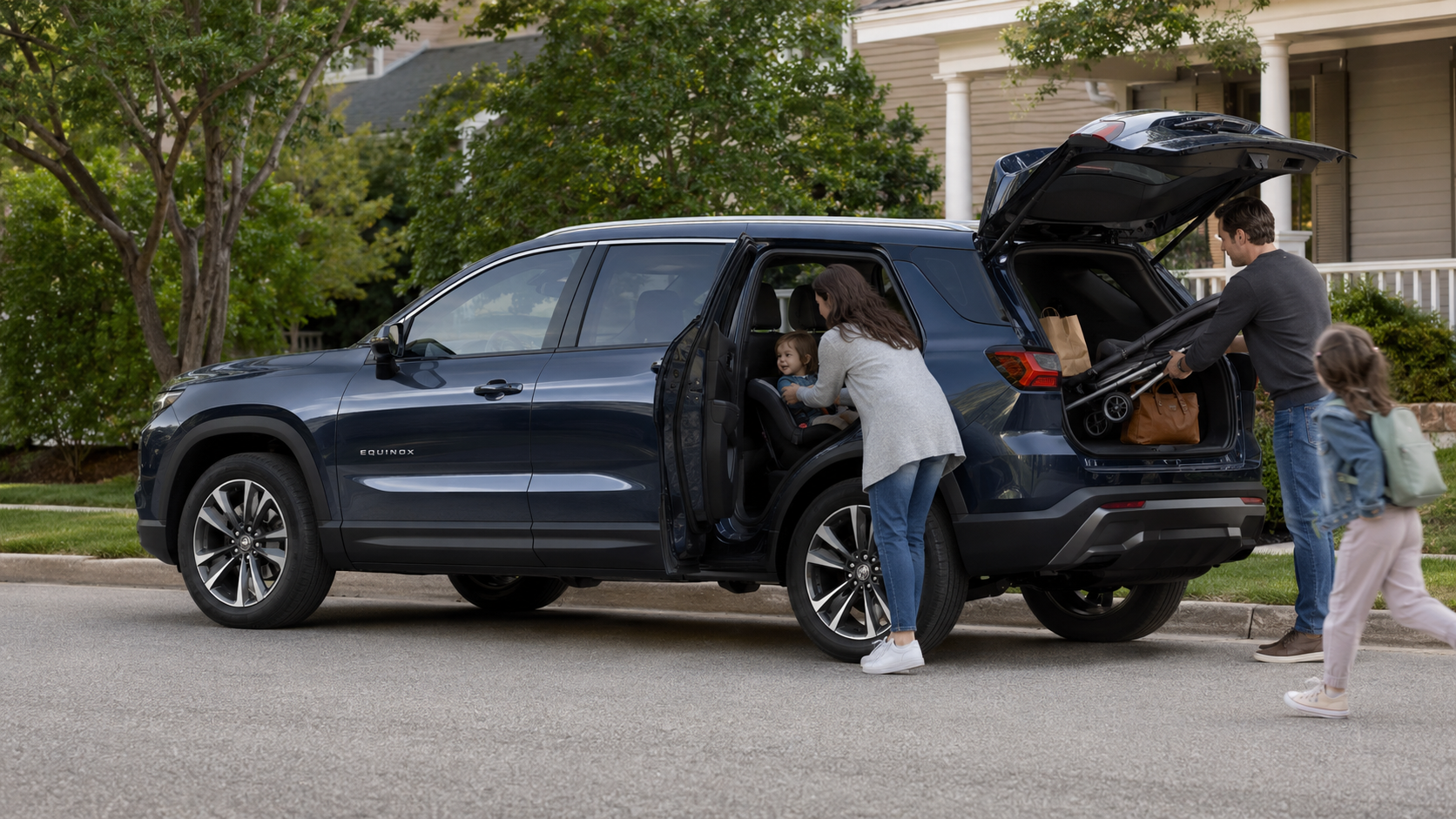
Chevy Equinox features can support a family of four when rear seat room, car seat access, and cargo space matter. In addition, family fit depends on how those areas work together during normal errands and longer trips. Two children may need car seats, backpacks, snacks, and room to grow. Therefore, rear seating must work with cargo space instead of competing with it. The Equinox gives families a five passenger cabin with useful second row room and flexible storage. Is the Chevy Equinox Big Enough for a Family of Four? Family fit means four people can sit comfortably while the cabin still carries the gear they need. The Equinox provides 39.9 inches of rear legroom and 39.2 inches of rear headroom. Therefore, children have room to sit behind adults without forcing the front seats unusually far forward. That space also gives older children more room as they grow. Rear legroom matters because child restraints use some of the same front to back space. A rear facing seat can extend toward the front seat. By contrast, boosters and forward facing seats use the bench differently. For this reason, families should test their own restraints before deciding whether the space works. In addition, the Equinox seats five people. A family of four can place two children across the second row while both front seats remain available. That layout leaves the center rear position open for small items or occasional use. Still, restraint width can change how much usable room remains between the two seats. Can Two Car Seats Fit in the Chevy Equinox? The Equinox second row provides two lower anchor positions for compatible child restraints. It also provides three top tether anchors for forward facing seats. Therefore, two child seats can use dedicated lower anchor locations without sharing one anchor point. Cars.com found room for two child restraints in its 2025 Equinox test. In addition, the lower anchors earned strong marks for access. That matters because easier access can reduce awkward reaching during installation. However, families should still follow the child restraint maker and vehicle instructions for each seat. Different restraint types change how the second row feels. Rear facing seats need more front to back clearance. Forward facing seats need a top tether connection. Boosters depend more on belt access and seat contour. Therefore, your current restraint type should guide the test fit. Before making a decision, check these points: Install both child restraints in the positions you expect to use every day. Confirm the front seats stay comfortable after the restraints are secured. Check buckle access, door opening space, and room around each child seat. Cargo Space With All Four Seats Occupied The Equinox provides about 29.8 cubic feet behind the second row. That means the cargo area remains usable while four people keep their seats. Therefore, families can load groceries, a stroller, backpacks, or sports equipment without folding the rear bench. Why does seats up cargo space matter? Families usually carry people and gear at the same time. Maximum cargo figures can look impressive, but they assume rear seating is no longer needed. In addition, daily errands rarely allow parents to fold the entire second row. The cargo floor also includes hidden storage beneath it. That area can hold smaller items away from larger bags. Items such as reusable bags, emergency supplies, cleaning supplies, or charging cables can stay separated. Furthermore, an available AutoSense power liftgate can make loading easier when both hands are full. Still, cargo shape matters as much as volume. A folded stroller may take more floor length than grocery bags. Likewise, sports equipment may stack differently than luggage. Therefore, families should bring the largest item they carry regularly when they test the cargo area. Folding the Rear Seat for Larger Loads A 60/40 split rear bench lets one section fold while the other remains upright. That gives families a way to carry longer items without giving up the entire second row. Therefore, one child can remain seated while part of the bench opens into the cargo area. With the rear seating folded, the Equinox provides up to 63.5 cubic feet of cargo room. That extra space can support larger household items or trip gear. However, the split design may matter more during routine family use than the maximum figure. A parent might fold the smaller section for a long box while keeping two seating positions available. Another family may fold the larger section while one child rides in back. In addition, the hidden floor compartment remains useful for smaller items that should stay separate. This arrangement gives the cabin more ways to handle changing loads. Instead of choosing between all passenger space or all cargo space, families can mix the two. Therefore, the split bench becomes useful when weekend errands look different from weekday routines. Know Where the Family Fit Has Limits The Equinox works well for two child restraints, but three across may not fit every restraint combination. Cars.com did not find room for three car seats across its test vehicle. Therefore, households expecting three child restraints should test carefully before choosing the Equinox. Why does this limit matter for a family of four? It may not matter today, but future seating plans can change. A growing household may later need another restraint, an adult passenger, or more rear seat width. For this reason, families should think beyond the current school year or current restraint stage. In addition, a five passenger rating does not mean every seating combination will feel equally roomy. Child restraints differ in width, shell shape, and belt path. Two narrow boosters may leave more center space than two wide convertible seats. Therefore, the most useful test is the one using your own family gear. A larger three row SUV may make more sense when you need extra seating positions or wider rear seat options. The Equinox remains a strong fit for many four person households because its cabin and cargo area work together well. Put the Space Together for Your Family The Chevy Equinox features that matter most for a family of four are easy to evaluate in person. Rear seat room, car seat placement, cargo space, and split folding all shape the final decision. Therefore, bring the items that define your normal week when you test the SUV. A useful family fit check includes: Bring both child restraints and install them in the second row. Load the stroller, sports bag, or largest item you carry regularly. Sit in every occupied seat and check entry, buckle access, and cargo reach. That test shows whether the Equinox fits your household without relying only on measurements. Ross Downing Chevrolet in Hammond offers in person reviews of seating, cargo room, and family fit. The right choice should support the people and gear you carry most.

Silverado 1500 vs F150 Comparison for Louisiana Drivers

Silverado 1500 vs F150 Comparison for Louisiana Drivers

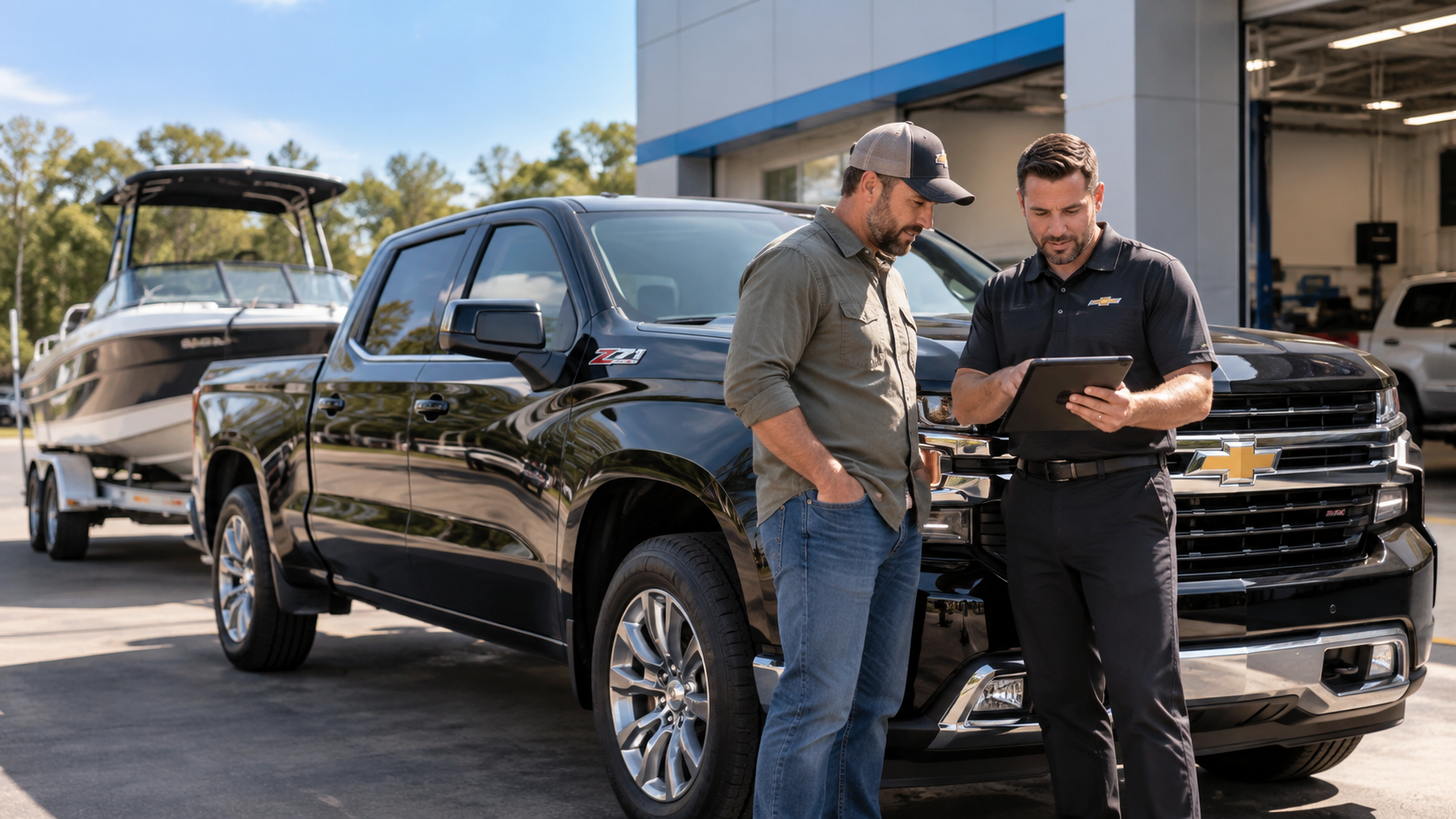
Silverado 1500 vs F150 comparisons make more sense when you match each truck to the jobs you expect. In addition, Louisiana truck owners may tow boats, utility trailers, campers, or equipment across the same week. Therefore, headline ratings alone do not tell the whole story. Furthermore, engine choice, cab layout, bed length, drivetrain, and trailering equipment all change what each truck can handle. The strongest comparison starts with the exact setup you plan to buy. Does the F150 Tow More Than the Silverado 1500? Maximum towing is a setup specific rating, not a number that applies to every truck. Still, Ford lists a higher maximum figure for the F150. Chevrolet lists a slightly lower maximum for the Silverado 1500. However, that small gap only applies to trucks equipped to reach those published limits. With that in mind, ask one question first. Will the truck on the lot match the setup behind the maximum number? The answer requires checking engine, cab, bed, drivetrain, axle equipment, and trailering packages. Therefore, two trucks wearing the same badge can carry very different tow ratings. Moreover, the Silverado 1500 can reach 13,300 pounds in an approved setup. Ford lists up to 13,500 pounds for the F150 with specific equipment. That 200 pound difference sounds simple, yet it does not settle the comparison by itself. Instead, compare the exact trucks you are considering against the trailer you plan to pull. Towing and Payload Measure Different Loads In addition, towing measures the trailer weight the truck can pull. Payload measures weight carried by the truck itself. That includes passengers, cargo, installed equipment, and trailer tongue weight. Therefore, both numbers deserve attention before you connect a trailer. Should towing or payload matter more for your setup? You need both, because a trailer can stay within one limit while pushing another too far. Tongue weight transfers part of the trailer load onto the truck. In addition, people and cargo inside the cab or bed also count toward payload. Consequently, setup checks matter more than a single maximum figure. A crew cab with passengers, tools, and towing gear may have less remaining payload than an empty truck. Likewise, a heavier trailer can add more tongue weight to the rear axle. For this reason, compare the truck's door label and trailering information with the loaded trailer you expect to use. Compare Diesel, Turbo Gas, V8, and Hybrid Choices Furthermore, engine choice changes how the Silverado 1500 vs F150 comparison feels under load. Chevrolet offers TurboMax, two V8 choices, and the 3.0L Duramax diesel. Ford offers turbocharged V6 choices, a V8, and the PowerBoost full hybrid. Each layout reaches torque through a different mechanical path. For this reason, the Duramax uses diesel combustion and turbocharging to produce strong low speed torque. That can suit owners who spend substantial time towing or covering longer highway distances. By contrast, Ford's EcoBoost engines use turbochargers with gasoline power to build strong torque from smaller displacement. Ford also offers PowerBoost hybrid assistance. Its electric motor works with the gasoline engine and can supply onboard electrical power. Chevrolet does not offer a full hybrid Silverado 1500 in the current lineup. Therefore, shoppers who specifically want hybrid propulsion will find that choice on the Ford side. Before choosing an engine, compare these points: Check torque output where you expect to use it, not only peak horsepower. Match engine selection to trailer weight, annual mileage, and fuel preference. Review drivetrain and trailering package requirements for the exact rating you need. Which Truck Gives You More Bed Space? Furthermore, cargo volume measures the usable three dimensional space inside the bed. Bed length only measures one part of that area. Chevrolet publishes 62.9 cubic feet for its short bed and 71.7 for its standard bed. Its long bed reaches 89.1 cubic feet. Why does that matter for tools, coolers, and outdoor gear? Wider and deeper bed dimensions can create more usable space even when floor lengths look similar. Therefore, bed volume deserves attention beside the length printed on a specification sheet. Moreover, Chevrolet's comparison data gives the Silverado larger published cargo volume across corresponding bed categories. That can matter for owners carrying bulky equipment or several storage bins. Still, usable space should match the items you carry most. A longer bed may suit lumber or equipment. By contrast, a shorter box can be easier to place in tighter parking areas. In addition, bed access and cargo organization should be part of the comparison. Tie downs, bed steps, tailgate features, covers, and storage accessories can change how useful the space feels. Compare those details on the exact trim and box length you plan to use. Compare Trailering Technology by Task In addition, trailering technology works best when you match each feature to a specific towing task. Some tools assist while hitching. Others support trailer monitoring, reversing, or highway travel. Therefore, a longer feature list does not automatically make one truck the stronger fit. Which towing technology would you use most? Start with the part of towing that gives you the most work. Ford offers tools such as Pro Trailer Hitch Assist and Pro Trailer Backup Assist on eligible F150 setups. Chevrolet offers camera based trailering tools and available Super Cruise with trailering on select Silverado setups. Hitching assistance focuses on aligning the truck with the coupler. Backup support focuses on trailer movement while reversing. Highway assistance serves a different purpose once the trailer is already connected. For this reason, compare technology by task instead of counting features. A boat owner who connects a trailer every weekend may value hitch positioning tools. Someone who spends long hours on compatible highways may care more about available highway assistance. In addition, owners who back trailers into campsites or driveways may value reversing support more. Compare Price Against the Truck You Need Still, starting price gives you a useful entry point, but it does not describe the truck you may buy. Engine choice, drivetrain, cab, bed, trim, trailering equipment, and technology can move the final price quickly. Therefore, the Silverado 1500 vs F150 decision should compare similar builds. Start by listing the equipment your truck must have. Then compare matching setups from both brands. This prevents a base truck from being compared against a heavily equipped alternative. A useful final checklist includes: Confirm the cab and bed layout you need for passengers and cargo. Verify towing and payload ratings for the exact setup. Compare engine, drivetrain, trailering equipment, and technology on similar builds. For Louisiana truck owners, the stronger choice should match the work, towing, cargo, and travel you expect. Ross Downing Chevrolet in Hammond can review Silverado 1500 setups against those needs. The goal is a truck that fits your trailer, cargo, and routine without relying on headline numbers alone.

Best Silverado Accessories for Louisiana Work and Play

Best Silverado Accessories for Louisiana Work and Play

Best Silverado accessories for Louisiana work and play should fit how you use your truck. In addition, bed protection and towing hardware serve very different jobs. Therefore, the right setup starts with cargo, trailer type, and Chevrolet fitment. A Silverado used for jobsite tools may need different bed protection than one hauling weekend gear. Likewise, a fishing boat and utility trailer may call for different towing hardware. Knowing how each part works makes accessory planning much easier. Choose Silverado Bed Protection Around Your Cargo A truck bed liner protects painted metal from scratches, dents, abrasion, and direct cargo contact. However, each liner style handles those jobs differently. For this reason, the first question is simple: what will spend the most time in your Silverado bed? The answer should guide the material, coverage, and installation method you choose. Among the best Silverado accessories, bed protection earns attention because it takes direct contact from every load. A spray in liner bonds to prepared bed surfaces and follows the shape of the box. Because it stays fixed in place, there is no separate shell moving against the metal. Its textured surface can also reduce cargo sliding. Therefore, this style can suit trucks carrying tools, building material, coolers, or outdoor gear. By contrast, a molded liner uses a fitted barrier between cargo and the painted bed. It shields the floor, sidewalls, and wheel housings from direct impact. In addition, owners can remove many molded designs when they need access beneath the liner. Chevrolet offers Silverado liners matched to specific bed sizes, so verify box length before ordering. A bed mat takes a simpler approach. It covers the bed floor instead of surrounding the full box. That makes it useful for owners focused on floor grip, cushioning, and easier removal. However, exposed sidewalls still need care when cargo rests against them. Compare Spray In Liners, Molded Liners, and Bed Mats Which bed liner fits how you use your Silverado? A spray in liner creates bonded coverage, a molded liner adds a fitted shell, and a mat protects the floor. Each approach changes how cargo contacts the bed. In addition, the choice also changes cleaning and removal. Spray in material stays attached to the bed. Owners can lift out molded liners and mats when their construction permits. Therefore, owners who haul soil, mulch, wet equipment, or hunting gear should consider cleanup before choosing a style. Furthermore, surface grip deserves equal attention. Smooth cargo can slide during braking or cornering if the bed surface offers little friction. A textured liner or rubber mat can reduce that movement. Still, tiedowns remain the main way to secure cargo. Bed protection should never replace proper restraints. Before choosing a liner, consider these points: Choose full bed coverage when cargo regularly contacts the floor, sidewalls, or wheel housings. Choose floor focused protection when most loads stay low and sidewall contact is limited. Confirm the exact Silverado box length before ordering any fitted liner or mat. Beyond that, Louisiana truck owners may carry very different loads through the year. Work tools, fishing equipment, lawn gear, and camping supplies place different demands on the bed. Therefore, the best Silverado accessories should reflect the loads you expect to carry most. Pair Bed Protection With Other Silverado Accessories Bed protection is only one part of a complete cargo setup. The best Silverado accessories should also work together without blocking mounts or tiedowns. Tonneau covers, storage boxes, dividers, racks, lights, and tiedowns may share the same mounting areas. For this reason, accessory order deserves attention before installation begins. A liner can change access around factory holes, rails, or tiedown points. A storage box may also occupy space needed by a divider or cargo bar. Furthermore, some covers attach near the upper bed rails. Planning those pieces together reduces the chance of removing one accessory to install another. With that in mind, start by identifying the equipment you expect to keep on the truck. Then compare mounting locations and required clearance. Chevrolet accessory listings use model year and box configuration to narrow fitment. Therefore, confirm those details before ordering any fitted part. Owners who haul loose cargo should also think about restraint points. A liner may protect the bed surface, but tiedowns control movement. Cargo bars, dividers, and nets can organize lighter items. Heavier loads need restraints with ratings that match the load. In addition, tailgate clearance should remain part of the plan when storage equipment sits near the rear of the box. Build the Correct Silverado Towing Setup A factory receiver is only one part of a towing connection. For towing, the best Silverado accessories must match every connection point and stated rating. What towing accessories do you need before connecting a trailer? You need hardware that matches the truck, trailer coupler, trailer weight, and electrical connection. The receiver provides the mounting point at the rear of the Silverado. A ball mount slides into that receiver and positions the hitch ball. The trailer coupler then locks over the matching ball. Because coupler and ball sizes must match, check ball diameter directly on the trailer. Furthermore, ball mount height matters too. The trailer should sit close to level when connected on flat ground. Therefore, choose a mount with the correct rise or drop when needed. An incorrect height can place the trailer at an unwanted angle and change how load rests across the axles. Trailer wiring carries lighting signals between the truck and trailer. Compatible electric trailer brakes also require a brake control connection. In addition, safety chains provide a secondary connection if the primary coupling separates. Each piece has its own job, so one component cannot substitute for another. Check weight ratings across the whole connection. The truck, receiver, ball mount, hitch ball, coupler, and trailer each carry stated limits. Furthermore, passengers, cargo, and installed equipment count toward truck weight limits. The lowest applicable rating sets the ceiling for that part of the setup. Match Towing Hardware to Work and Recreation A utility trailer, fishing boat, camper, and equipment trailer do not always connect the same way. The best Silverado accessories for towing start with the trailer you plan to connect. Trailer weight, coupler height, braking equipment, and tongue load can change the hardware needed. Therefore, owners should build the towing setup around the trailer they plan to pull. A lighter utility trailer may use a conventional receiver, ball mount, and matching hitch ball. In addition, a larger camper may add electric trailer brakes and weight distribution equipment. Heavier trailer designs may use a different connection style altogether. Check Chevrolet trailering information for the specific Silverado configuration before towing. Weight distribution equipment uses spring bars to move part of the tongue load across the truck and trailer axles. That changes how load reaches the connected axles. However, select it only after reviewing trailer specifications and Chevrolet guidance. Before the first haul, verify these items: Confirm the Silverado model, configuration, installed trailering equipment, and stated weight ratings. Match the hitch ball diameter and rating to the trailer coupler and expected loaded trailer weight. Check trailer lights, brake equipment, safety chains, connection height, and cargo securement before departure. Louisiana work and recreation can put one Silverado into several roles. You may tow an equipment trailer on weekdays, then switch to a boat or camper for the weekend. In addition, bed cargo may change with each trip. Planning accessories around those jobs keeps the truck organized and the trailer connection properly matched. A local fitment review can narrow the best Silverado accessories before installation begins. Ross Downing Chevrolet in Hammond can assist with Chevrolet accessory fitment and installation planning for your Silverado.